State Blueprints: Treating Gun Violence as the Public Health Crisis It Is
The federal government is rolling back gun safety regulations. Here’s how your state can protect itself from gun violence.
President Trump’s second term has been marred by uncertainty and chaos. Lost in the deluge of disarray has been a lot of action regarding guns and gun violence since he took office—and, as expected, all of it is terrible for the safety of Americans.
This post is part of an ongoing series exploring policies states have the responsibility to pursue as federal leadership falters. Our recommendations provide a blueprint for states to follow, including a list of concrete steps state lawmakers should use.
Gun violence is a public health crisis in America. Only by treating it as one can we investigate its deeper social and structural causes to determine evidence-informed solutions.
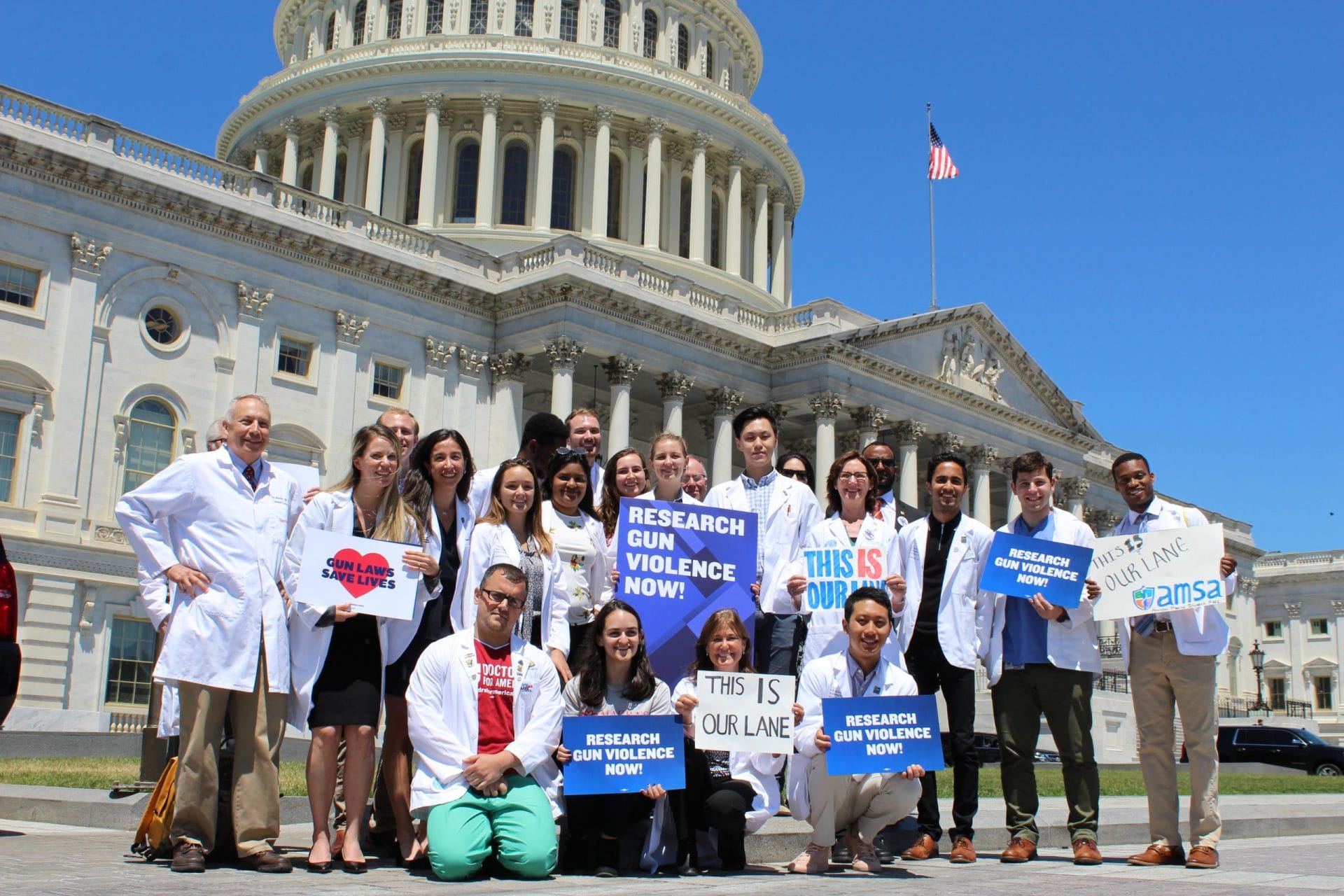
Approaching gun violence from a public health perspective requires consistent funding from the federal government to understand its causes and craft effective solutions. That’s why, in June 2024, the US Surgeon General issued an advisory declaring gun violence a public health crisis.
In recent years, there have been moderate federal investments in gun violence research, allowing researchers to start to investigate and answer pressing questions about gun violence and how to prevent it. The second Trump administration, however, has reversed course, making it harder for researchers to do their jobs and for Americans to access crucial resources.
But states can fight back. By dedicating state funding for gun violence prevention and establishing state offices of gun violence prevention, states can help fill in the dangerous void left by federal actions and build a safer future for their residents.
Historic Lack of Funding for Gun Violence Research
For decades, federal funding for research specifically aimed at preventing gun violence has been severely limited. This stems largely from the Dickey Amendment, which was attached to a budget bill in 1996 and stipulated that none of the CDC injury prevention funds may be used to “advocate or promote gun control.”
This amendment created a chilling effect, drastically reducing federally funded studies on gun violence and creating significant gaps in knowledge.
In addition to these gaps, the lack of investment in federal research has created massive gaps in our nation’s data infrastructure around firearm violence. Perhaps most glaringly, we do not have an adequate system to track nonfatal firearm injuries, meaning that we don’t know basic information about how often people survive gunshot wounds, the circumstances of these shootings, and their geographic distribution. A lack of dedicated funding has also stymied efforts to train investigators to study this issue.
Recent Federal Investments in Gun Violence Prevention Research
Congress recently took modest steps to clarify that the Dickey Amendment does not prohibit research related to gun violence prevention. For Fiscal Year 2019 and the following years, lawmakers allocated $25 million to be split evenly between the CDC and the National Institutes of Health in their budgets for firearm injury and mortality prevention research.
Since this funding was appropriated, the number of research articles on gun violence and gun violence prevention has steadily increased. This funding has also generated important new scholarship, including studies on:
- Voluntary and temporary firearm relinquishment programs run out of gun stores.
- Factors that influence youth gun carrying in rural areas.
- Ways to identify and mitigate risk for suicide among veterans.
The federal government has also initiated new programs to build up our nation’s firearm violence data infrastructure, including a pilot program to track nonfatal firearm injuries in 12 states.
The Trump administration has dramatically undermined the federal government’s capacity for an evidence-based approach, unwinding recent progress. Shortly after he took office, Trump removed the US Surgeon General’s advisory declaring gun violence as a public health crisis from the Department of Health and Human Services website, and shuttered the White House Office of Gun Violence Prevention, eliminating an important hub for disseminating research and translating it into policy.

The administration also fired experts who were actively researching gun violence, which removed critical knowledge and experience and jeopardized important data collection systems that inform policymaking. And, right now, it is trying to solidify the degradation of knowledge on gun violence by proposing a budget that cuts all funding for firearm injury and mortality prevention research and the national violent death reporting system.
These recent actions, in addition to the Dickey Amendment and the ongoing budget fight, represent a multifaceted federal failure in the realm of gun violence research. The active dismantling of expertise and coordinating infrastructure necessary to build an evidence base for policy is a major setback for the gun violence prevention movement. Federal retreat leaves policymakers at all levels working with incomplete information, hindering the development, implementation, and evaluation of the most effective strategies to save lives. It signals a disregard for a data-driven, public health approach to the gun violence epidemic—a disregard that must be countered.
Dedicate State Funding for Gun Violence Research
Given the federal government’s longstanding reluctance to fund gun violence research, in addition to recent actions by the second Trump administration, states must help bridge these gaps and establish dedicated funding streams to support gun violence research.
By investing in state-level research, policymakers can gain access to tailored, actionable data relevant to their own populations and challenges. This allows for more informed decision-making, better allocation of prevention resources, and the development of more effective, evidence-based state and local strategies.
Depending on a state’s specific context and needs, this funding could support a number of research priorities, including:
- Evaluating the effectiveness of existing state gun laws and policies, as well as the underlying mechanisms that drive policy impacts.
- Understanding the local drivers and patterns of gun violence, including geographic disparities and differences between urban, suburban, and rural areas.
- Analyzing specific types of gun violence prevalent in the state (e.g., community violence, domestic violence involving firearms, firearm suicide).
- Identifying and tracking emerging threats, such as the proliferation of privately made firearms (also known as ghost guns).
- Assessing the implementation and effectiveness of various prevention programs, including community violence intervention strategies.
Create Firearm Violence Research Centers
States like Washington, Maryland, and New York have appropriated funding for gun violence research and used it to support existing firearm violence research programs or create new ones. California and New Jersey have gone a step further by establishing firearm violence research centers, which help create a network of researchers who work together to investigate this issue from a variety of disciplines.
New Jersey’s Gun Violence Research Center is housed in both the School of Public Health and the School of Criminal Justice at Rutgers, allowing the state to foster a cohort of researchers across these disciplines to regularly publish studies together. This center, like the California Firearm Violence Research Center, has produced numerous studies with findings that are both state-specific and nationally relevant.
Consider Funding Gun Violence Research through Public Health Departments
States can also consider other funding streams and grant programs to support gun violence research, including providing funding to and through the state public health department. State health departments may be particularly poised to help states collect and disseminate better data on firearm injury and violence.
- In 2023, Colorado used funding from the state health department’s Office of Gun Violence Prevention to conduct a state-wide survey on firearms ownership and storage, lived experiences with firearm-related harms, and awareness of Colorado prevention practices and policies.
- Other state health departments, such as those in Michigan and Minnesota, have recently published interactive dashboards that comprehensively visualize violent deaths in the states, pulling from data already collected through the National Violent Death Reporting System run by the CDC.
State-funded research helps to fill the critical knowledge gap created by decades of federal inaction. At a time when the federal government has retreated once again from investing in this work, states must step in to study gun violence, identify solutions to this issue, and save lives.
Establish State Offices of Gun Violence Prevention
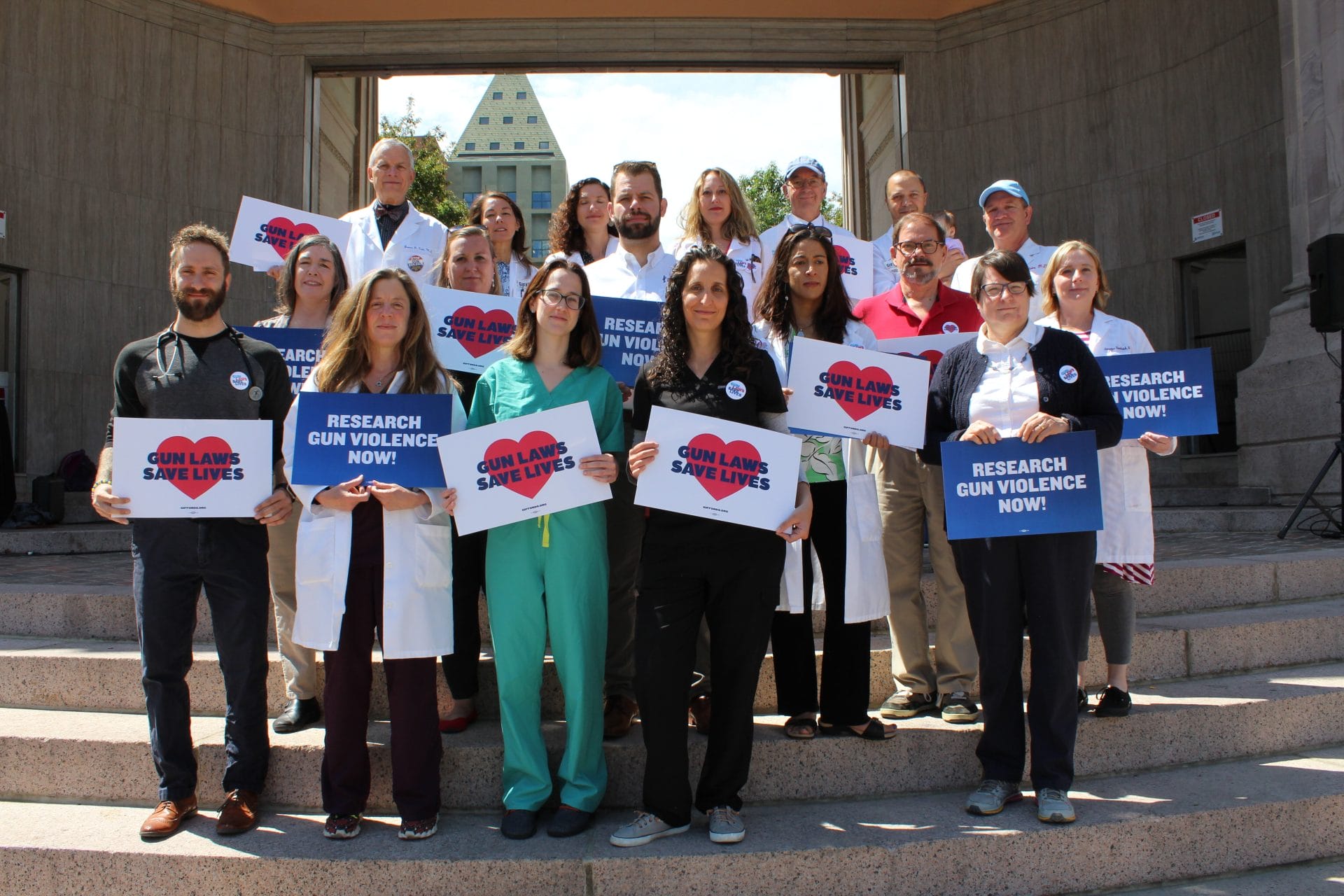
Beyond funding research, states need a dedicated infrastructure to coordinate efforts, translate research findings into actionable policy, and ensure a sustained, high-level focus on gun violence prevention across state governments. Sixteen states have established offices of gun violence prevention or violence prevention more generally, directly addressing the lack of centralized leadership evident at the federal level.
An office like this institutionalizes gun violence prevention within the state government, treating it as the public health crisis it is. It provides dedicated leadership, fosters collaboration, promotes data-driven decision-making, and ensures accountability for achieving measurable reductions in gun violence. By creating this infrastructure, states can mount a coordinated, strategic, and sustained response that directly counters the fragmented and often neglected approach seen at the federal level.
Drawing on models implemented in states like California, Colorado, Illinois, and Maryland, a state office of gun violence prevention can perform several vital functions:
- Coordination: Serve as a central hub to coordinate gun violence prevention efforts among various state agencies (e.g., public health, law enforcement, education, human services, and criminal justice), local governments, and community-based organizations.
- Research and Data Analysis: Oversee state-funded gun violence research initiatives, collect and analyze state-specific data on firearm injuries and deaths, identify trends and risk factors, and disseminate findings to policymakers and the public.
- Policy Development: Develop and recommend evidence-based legislative and administrative policies and program strategies to the governor and state legislature.
- Program Implementation and Support: Administer state grant programs for gun violence research and community violence intervention initiatives, providing technical assistance and oversight to grantees.
- Public Education and Awareness: Lead public health campaigns to raise awareness about gun violence as a preventable issue and promote safe firearm storage practices and other prevention measures.
As more states establish successful offices of gun violence prevention, they create powerful models and generate valuable data demonstrating effective state-level approaches. This growing network of state expertise and proven strategies can exert bottom-up pressure, potentially influencing future federal policy by building a stronger national consensus around evidence-based prevention and highlighting the need for federal support and coordination.
Despite the volatile federal landscape, hope resides in the proven power of state action. States have the responsibility—and opportunity—to mitigate the deadly consequences of federal rollbacks by treating gun violence as the public health crisis it is and building an evidence-informed approach to saving lives.
We know fewer people die from gun violence in states that care enough to pass gun safety laws. And it’s especially true for children—between 2011 and 2023, states with strong gun laws saw a decrease in children dying from guns, while states with weaker gun laws saw an increase in children dying from guns.
Solving this crisis is a matter of willpower, and GIFFORDS Law Center is ready and able to help. We work with state partners across the country to implement lifesaving legislation and help protect states’ hard-won progress on gun safety. Reach out today if you have questions, thoughts, or are ready to start drafting legislation.
HERE TO HELP
Interested in partnering with us to draft, enact, or implement lifesaving gun safety legislation in your community? Our attorneys provide free assistance to lawmakers, public officials, and advocates working toward solutions to the gun violence crisis.
CONTACT US