John Lindsay-Poland v. Bureau of Alcohol, Tobacco, Firearms & Explosives (ATF)
Challenge to the ATF’s refusal to release vital data on US gun trafficking, as required by federal transparency laws.
The US is fueling gun trafficking and cartel violence in Latin America. We successfully sued the ATF so that critical data to help stop this troubling trend could be published.
On December 19, 2023, the US District Court for the Northern District of California partially granted our cross-motion for summary judgment and denied the ATF’s motion for summary judgment, remanding the proceedings back to the ATF and ordering the agency to revisit and respond to plaintiff Lindsay-Poland’s FOIA request in accordance with the court’s opinion.
On June 27, 2024, plaintiff John Lindsay-Poland voluntarily dismissed the case after receiving the requested data from ATF, pursuant to a stipulated agreement. View the published data.
MEDIA REQUESTS
Our experts can speak to the full spectrum of gun violence prevention issues. Have a question? Email us at media@giffords.org.
Contact

GIFFORDS Law Center to Prevent Gun Violence, together with Cleary Gottlieb Steen & Hamilton LLP, represented the individual plaintiff John Lindsay-Poland in a lawsuit against the US Department of Justice and the Bureau of Alcohol, Tobacco, Firearms, & Explosives (ATF), for unlawfully withholding critical data on gun trafficking from the United States to Latin America. Our suit, brought under the Freedom of Information Act (FOIA), challenged the federal government’s refusal to disclose data that the public has a legal right to access and a legitimate interest in knowing.
Enacted in 1967, FOIA provides the public with the right to request access to records and information from any public agency. Except in narrow circumstances — such as national security, personal privacy, or other protected interests — agencies are legally required to release the requested information.
John Lindsay-Poland is a writer, journalist, researcher, and the coordinator of Stop US Arms to Mexico — a project dedicated to halting the flow of American weapons into Mexico. In 2021, Lindsay-Poland submitted a FOIA request seeking ATF data on firearms recovered and traced in Mexico, Guatemala, Honduras, and El Salvador since 2014. ATF denied the request without a proper reason, despite Lindsay-Poland being legally entitled to access the records. With the assistance of GIFFORDS Law Center, Lindsay-Poland filed an administrative appeal. After the ATF again wrongfully denied that appeal, we filed a complaint in federal court to compel the ATF to release the records and comply with the law.

Our complaint alleged that the ATF improperly withheld lawfully requested information in direct violation of the Freedom of Information Act and sought a court order compelling the agency to release the requested firearm trace data.
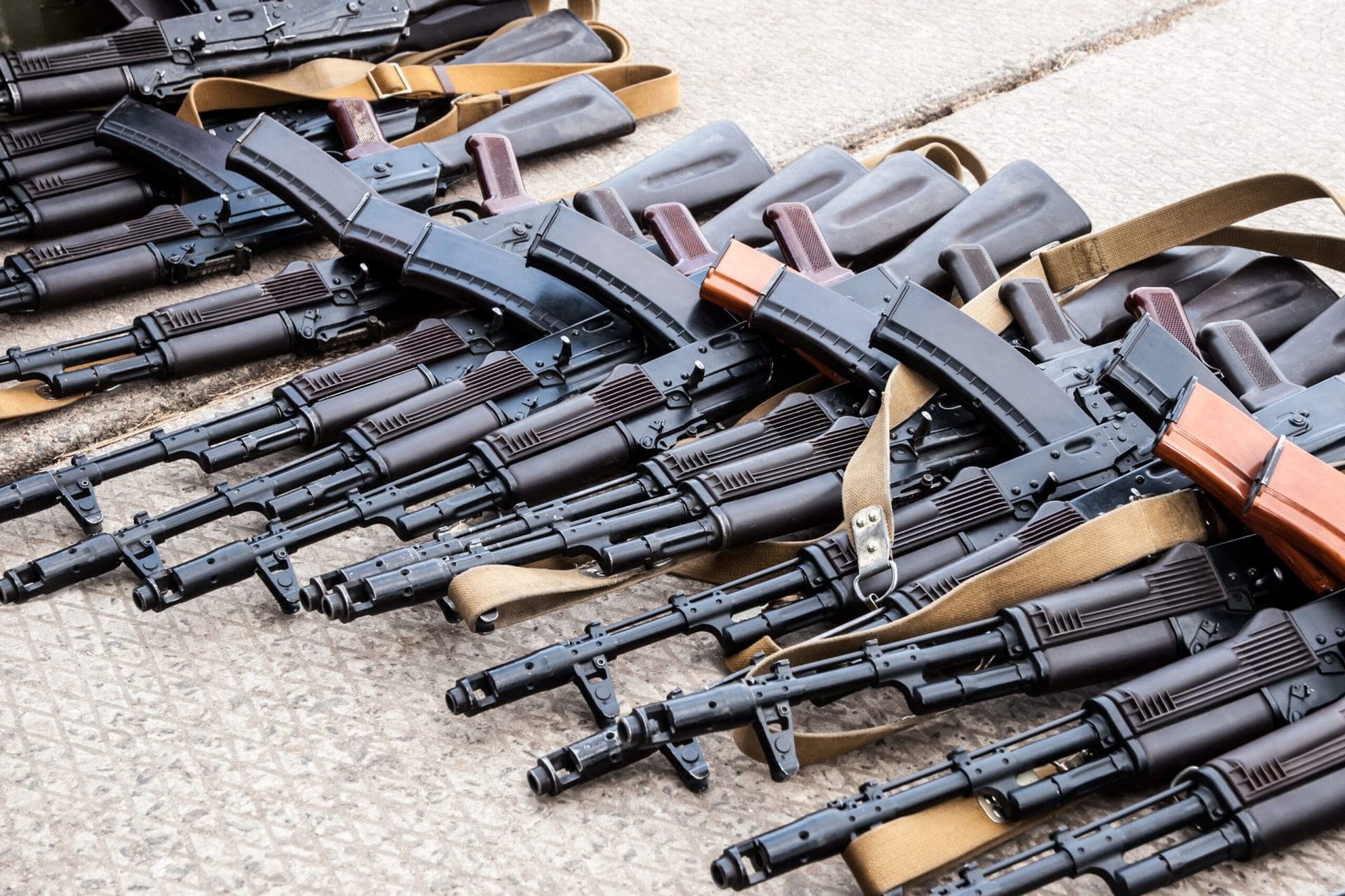
The records sought by Lindsay-Poland are vital for understanding how firearms sold by US gun dealers and manufacturers enter Latin America and fuel violence there. The United States, with more guns than citizens — at least 400 million — allows the gun industry to operate with so few restrictions that the consequences spill across borders. The result is devastating: American guns are the weapon of choice in cartel violence in Mexico and a major driver of armed violence throughout the region.
Because Mexico has only two gun stores — located on military bases — nearly all crime guns originate elsewhere, primarily the United States. So many weapons flow south that researchers have taken to calling it the “iron river.” From 2016 to 2021, roughly 68% of crime guns recovered in Mexico and submitted to the ATF for tracing were either US-manufactured or imported by US dealers — a figure that may actually be significantly higher due to incomplete trace data. If guns used in fatal shootings in Mexico follow this same pattern, American guns may be killing more people in Mexico than in the United States itself. From 2015 to 2022, 133,558 guns from the United States were recovered in Mexico and submitted for tracing, and 40,978 were recovered in Guatemala, El Salvador, and Honduras.
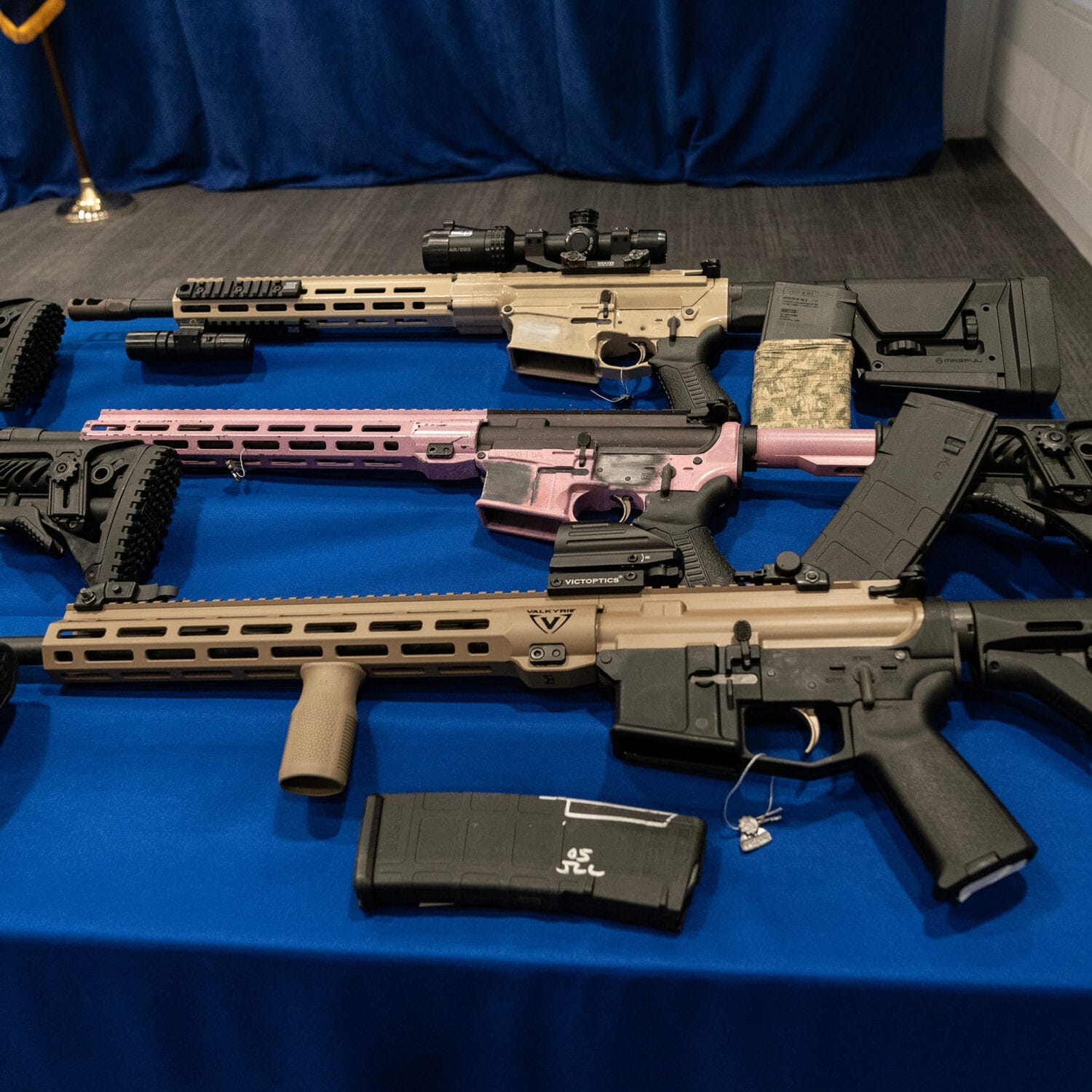
Indeed, gun trafficking is not just fueling gun violence in Mexico but also drug trafficking into the United States and migrant crises across the hemisphere. Armed groups in Mexico and the Northern Triangle of El Salvador, Guatemala, and Honduras rely on American weapons to secure drug and human trafficking routes, extort communities, and forcibly recruit new members. This has led to violence on the scale of war zones, driving families from their homes. Since 2014, more than two million people have fled Northern Triangle countries, most often in order to escape chronic violence: more than two-thirds of migrants and refugees from the Northern Triangle fled after their relatives were murdered, disappeared, or were kidnapped, and nearly 62% were exposed to a violent situation in the two years before leaving their home country. But the violence caused by these trafficked firearms doesn’t stop when migrants leave their homes — gun violence continues to threaten migrants throughout their journey, with disappearances and mass deaths reported along migration routes where criminal organizations are active.
American guns are also central to America’s own drug crisis. As drug traffickers in Mexico amassed greater firepower from the United States, they consolidated control of the illicit drug market, sending more drugs — and more lethal ones — north. Analysts warn that the role of Mexican criminal organizations in drug trafficking is only expanding, feeding the US overdose epidemic.
In our case, we demonstrated that John Lindsay-Poland — as a member of the news media and publisher of information — was legally entitled to access the requested data on firearm trafficking to Latin America for the public interest. We also showed that the FOIA exceptions invoked by ATF in its denial of Lindsay-Poland’s request did not properly apply to this scenario.
Guns trafficked from the US take innocent lives, enable trafficking of deadly narcotics, and embolden major criminal organizations whose control strips communities of essential services and sends refugees on dangerous journeys that often end in death. High-powered guns made in or imported into the United States and delivered across its southern border have shot down government helicopters, pierced armored law enforcement vehicles, assassinated journalists, killed refugees and children, and destroyed entire communities. Proper disclosure of the trace data sought by John Lindsay-Poland could inform lifesaving policies to disrupt this transnational cycle of violence.
Yet the ATF continued to withhold most of the comprehensive crime gun data it collected in Latin America. What little data the agency had made available was incomplete, omitting crucial details about weapons recovered in Mexico, Guatemala, Honduras, and El Salvador. Because these countries often lack centralized and accurate systems to track firearm seizures and sales, ATF’s data is uniquely valuable. The reality was that ATF already possessed the information needed to illuminate US gun trafficking’s role in regional violence, drug overdoses, and mass migration—but refused to share it.
Recognizing the United States’ role in exporting gun violence and the urgent need for public awareness, advocates like John Lindsay-Poland and groups like Stop US Arms to Mexico have worked tirelessly to stem the tide of gun trafficking and keep the public informed. Federal law enforcement agencies should share that commitment. Instead, ATF’s initial refusal to release this data and comply with FOIA demonstrated a troubling unwillingness to confront the consequences of US firearms trafficking — or to equip the public with the knowledge necessary to stop it.
The public cannot — and should not — rely on the government to voluntarily disclose information it is legally entitled to know. The ATF’s refusal to comply with John Lindsay-Poland’s FOIA request underscores this reality. Journalists and researchers like Lindsay-Poland play a crucial role in uncovering and filling these information gaps. Their work is essential to advancing public understanding of US gun trafficking and its far-reaching impact — and that role is only growing more vital. Journalists reporting from the Northern Triangle and Mexico face escalating threats. These regions are now among the most dangerous in the world for members of the press, particularly those investigating organized crime and trafficking networks. Reporters covering these topics are often censored — either through self-censorship, fear, or even targeted killings.
That’s why GIFFORDS Law Center took legal action on behalf of John Lindsay-Poland, holding the ATF accountable for unlawfully concealing critical information that the public has a right to know.
The case was filed on December 5, 2022, in the US District Court for the Northern District of California, and named as defendants the Bureau of Alcohol, Tobacco, Firearms, & Explosives (ATF) and the US Department of Justice.
On December 19, 2023, the Court ruled in our favor, granting in part our cross-motion for summary judgment and denying in part ATF’s motion for summary judgment. The court remanded the matter back to the ATF, requiring the agency to revisit and respond to Lindsay-Poland’s FOIA request in accordance with the court’s opinion.
On May 10, 2024, ATF released the requested data to Lindsay-Poland. On June 27, 2024, Lindsay-Poland voluntarily dismissed the case, pursuant to a stipulated agreement. He shared the published data on Stop US Arms to Mexico’s website, together with a map of the data and a report: Iron River of Weapons to Mexico: Its Sources and Contents.
Building on the success of this FOIA request and litigation, Lindsay-Poland submitted additional FOIA requests to ATF for tracing data regarding the zip codes in which firearms trafficked to Caribbean countries were purchased and time-to-crime data for firearms recovered in 24 countries. Stop US Arms to Mexico published the raw data from these requests, along with two additional reports: No Shelter from the Storm: Update on Iron River of Weapons (January 2025) and Corridors of Violence: More Data on Guns Trafficked to Mexico and Beyond (February 2026).
John Lindsay-Poland v. Bureau of Alcohol, Tobacco, Firearms, & Explosives (ATF) & US Department of Justice (DOJ)
Case No. 3:2022-cv-07663 (N.D. Cal.)
| Date Filed | Key Filing |
|---|---|
| 12/5/2022 | |
| 1/27/2023 | |
| 6/1/2023 | ATF Motion for Summary Judgment Defendants filed a motion for summary judgment, asking the court to affirm its denial of Lindsay-Poland’s FOIA request. |
| 7/31/2023 | Lindsay-Poland Reply in Opposition to ATF Motion for Summary Judgment & Cross-Motion for Summary Judgment We filed a reply opposing the Defendants’ motion for summary judgment and our own cross-motion for summary judgment, asking the court to order ATF to release the data requested in the FOIA request. |
| 8/7/2023 | Amicus Brief filed by Center for Investigative Reporting The Center for Investigative Reporting filed a “friend-of-the-court” brief in support of Plaintiff, Lindsay-Poland. |
| 8/21/2023 | Amicus Brief filed by Global Action Against Gun Violence Global Action Against Gun Violence filed a “friend-of-the-court” brief in support of Plaintiff, Lindsay-Poland. |
| 8/25/2023 | ATF Reply In Support of Its Motion for Summary Judgment Defendants filed a brief further supporting their motion for summary judgment. |
| 8/25/2023 | ATF Reply In Opposition to Plaintiff’s Cross-Motion for Summary Judgment Defendants filed a reply brief opposing John Lindsay-Poland’s motion for summary judgment. |
| 9/15/2023 | Lindsay-Poland Reply In Support of Cross-Motion for Summary Judgment and Reply in Opposition to ATF Motion for Summary Judgment We filed a reply brief further supporting our motion for summary judgment and opposing the ATF’s motion for summary judgment. |
| 12/19/2023 | Court Order Denying in Part ATF’s Cross-Motion for Summary Judgment and Granting in Part Lindsay-Poland’s Cross-Motion for Summary Judgment The Federal District Court for the Northern District of California partially granted Plaintiff John Lindsay-Poland’s motion for summary judgment while partially denying the ATF’s motion for summary judgment. The court found that the ATF had failed to raise adequate arguments that would justify withholding the requested information from the Plaintiff, most notably that the ATF had not even run the internal database search to produce the data the agency suggested could not be released to the public under the Tiahrt Amendments. Thus, the court remanded the proceedings back to the ATF and ordered the agency to revisit and respond to Lindsay-Poland’s FOIA request in accordance with the court’s opinion. |
| 6/27/2024 | Joint Stipulation for Voluntary Dismissal After the ATF ran the internal database search as ordered by the District Court and subsequently released the relevant data to the Plaintiff, the parties agreed to voluntarily dismiss the case. |
| 7/1/2024 | Order Dismissing Case The Federal District Court for the Northern District of California dismissed the case following the parties’ joint agreement to voluntarily dismiss. |
For press inquiries or questions about this lawsuit, please email our press team at media@giffords.org.

MAKE A GIFT
Every day, the experts at Giffords Law Center work tirelessly to craft, enact, and defend the gun safety policies and programs that save lives. A safer America is within reach, but we need your courage and commitment to get there.