My Son Was Shot and Killed. His Killer Walked Free Because of Florida’s Stand Your Ground Law.
Florida’s Stand Your Ground law only increases gun violence—and makes it much, much harder for survivors and victims to access justice.
When I think of my son, Dominic Jerome (DJ), I remember his radiant smile, the joy he found in music, his love for animals, the incredible bond he shared with his big sister Alauna, and his deep affection for his own son, Caiden.
My grandson was 12 years old when his father’s life was stolen on February 3, 2018, in an incident that can only be described as an execution.
DJ was shot four times in the head, the last two while he was lying helpless on the ground. His killer, Gardner Fraser, the son of a retired sheriff deputy, originally denied knowing DJ. He told the 911 dispatcher that “some Black male attacked me in my yard.” He claimed that DJ had just appeared uninvited at his door and attacked him, so he had no choice but to shoot him. He later admitted to responding officers that he knew DJ and that the shooting “was a practical joke from two weeks ago gone bad.”
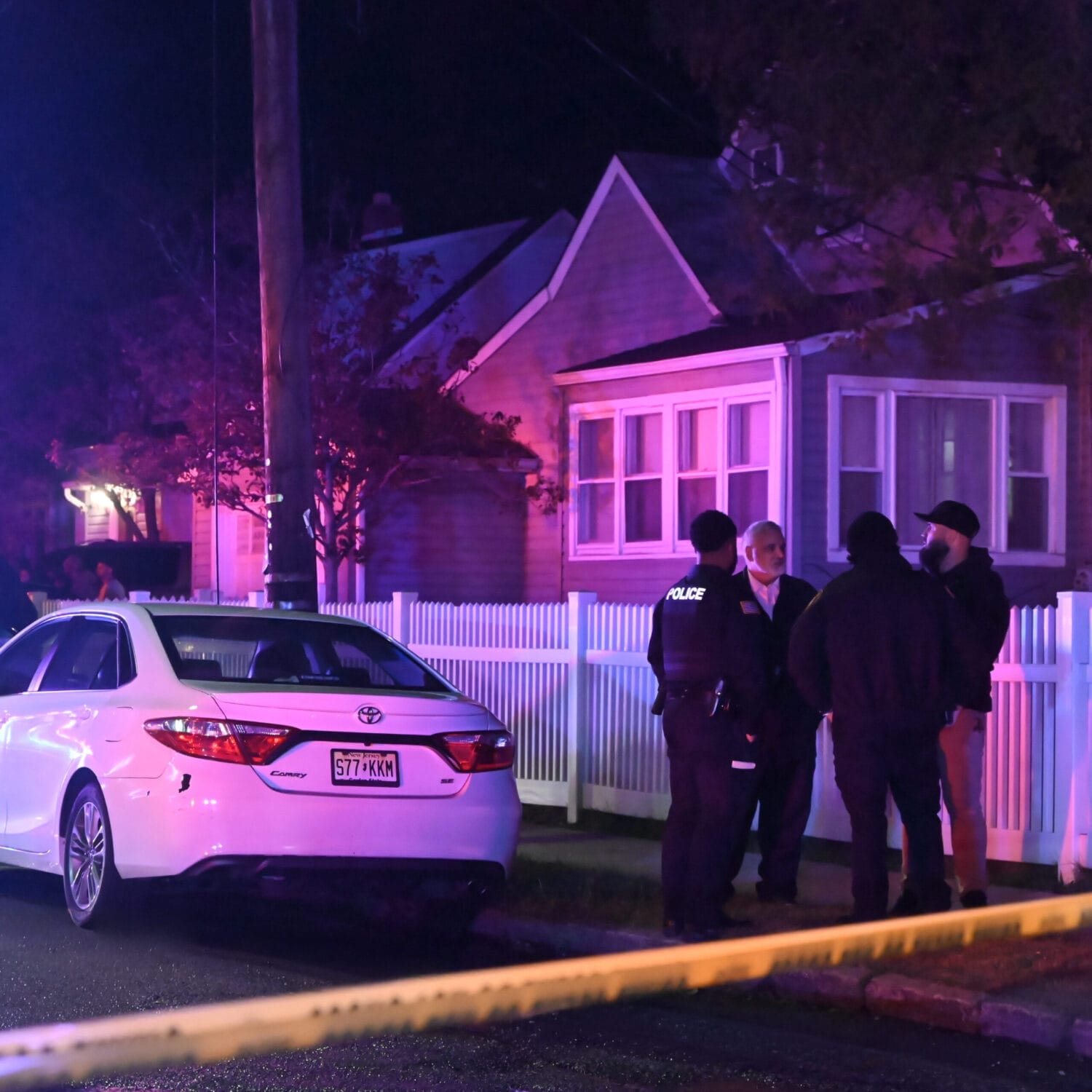
It turns out that the “practical joke” was on me and my family. There is no other way to describe how Florida’s “shoot first” laws protected my son’s murderer from legal consequences. Florida’s Stand Your Ground law—particularly as amended in June 2017 and signed by then Governor Rick Scott—aggressively shields killers from accountability when they claim they were defending themselves.
In those circumstances, the burden of proof no longer falls on the person who pulled the trigger; rather, the state must prove that the defendant was not fearful when the killing took place. This shift has made it nearly impossible to prosecute someone for killing another person, as long as they claim they were in fear for their life. No physical evidence is required to prove that fear, and when the only other witness is dead, there is no one left to contradict the shooter’s narrative.
Fraser pretended at first that he did not know DJ, that he was some anonymous Black man who decided to invade his home in a remote part of rural northern Florida. But the Florida Department of Law Enforcement discovered through digital forensics that he and DJ had engaged in a secret relationship for many months—that Fraser had sent my son over a hundred texts in a single day. Even then, Fraser was not arrested or charged.
It was only when the investigation revealed that Fraser had moved DJ’s body after the shooting and disposed of his phone that State Attorney Melissa Nelson finally charged Fraser—although the charge was merely for tampering with evidence. It was the very least they could do given the overwhelming evidence that Fraser had lied about his relationship with DJ, tried to cover his tracks by deleting messages on his phone and disposing of DJ’s phone, and called three family members—including his father, a retired sheriff’s deputy—before he called 911.
In Baker County, Florida, where interracial and same-sex relationships are still treated as taboo, Fraser’s real fear was not my son. It was being exposed as a white man in a relationship with a Black man. He feared the shame of becoming an outcast to his family and his community, especially as the son of local law enforcement and as a direct descendant of a leader of Florida’s mid–20th century Ku Klux Klan. And rather than confront those fears, Fraser chose to execute DJ. That is not self-defense. That is cowardice.
Not only did Florida law allow Fraser to get away with murder, but the whole process framed my son as a perpetrator, rather than a victim of violence. The investigation that followed DJ’s killing focused mostly on DJ’s past mistakes. Investigators largely downplayed Fraser’s history of racist violence, including the fact that he lost his job at the hospital after attacking an elderly Black patient.
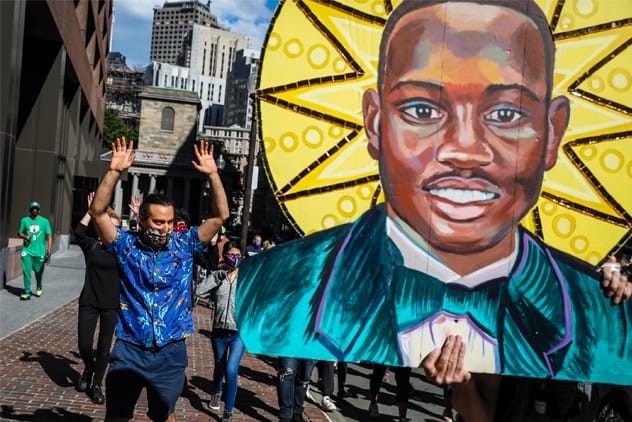
Fraser was aided and abetted by the state of Florida, which has hidden behind its deeply flawed and discriminatory Stand Your Ground laws to deny justice to a man who posed no threat—to a son, brother, and father whose family continues to grieve his absence.
State Attorney Nelson’s refusal to bring manslaughter charges in my son’s case is not just a legal failure—it is a moral one. She failed my son. She failed my family. And she failed the citizens of Florida.
The legal system continues to fail families like mine whose loved ones are gunned down under the pretense of Stand Your Ground with no real accountability. DJ was only 31 years old when his life was taken. He should be here today to celebrate his son’s graduation and to see him off to college. Instead, we are left with memories and unanswered questions, while his killer walks free—protected not by justice, but by legal loopholes rooted in systemic bias.
TAKE ACTION
The gun safety movement is on the march: Americans from different background are united in standing up for safer schools and communities. Join us to make your voice heard and power our next wave of victories.
GET INVOLVED