Implementing Gun Laws in California: Successes Provide Models for Other Jurisdictions
Twenty years ago this July, then California Attorney General Bill Lockyer released Keeping the Promise, a comprehensive report on how domestic violence cases were being handled in the state. The Department of Justice press release declared, “Attorney General Lockyer Report on Domestic Violence Finds Criminal Justice System is Failing to Protect Victims, Families,” and pointed to a number of issues, including that “[t]here is often lax enforcement of restraining orders, especially firearm prohibitions.”
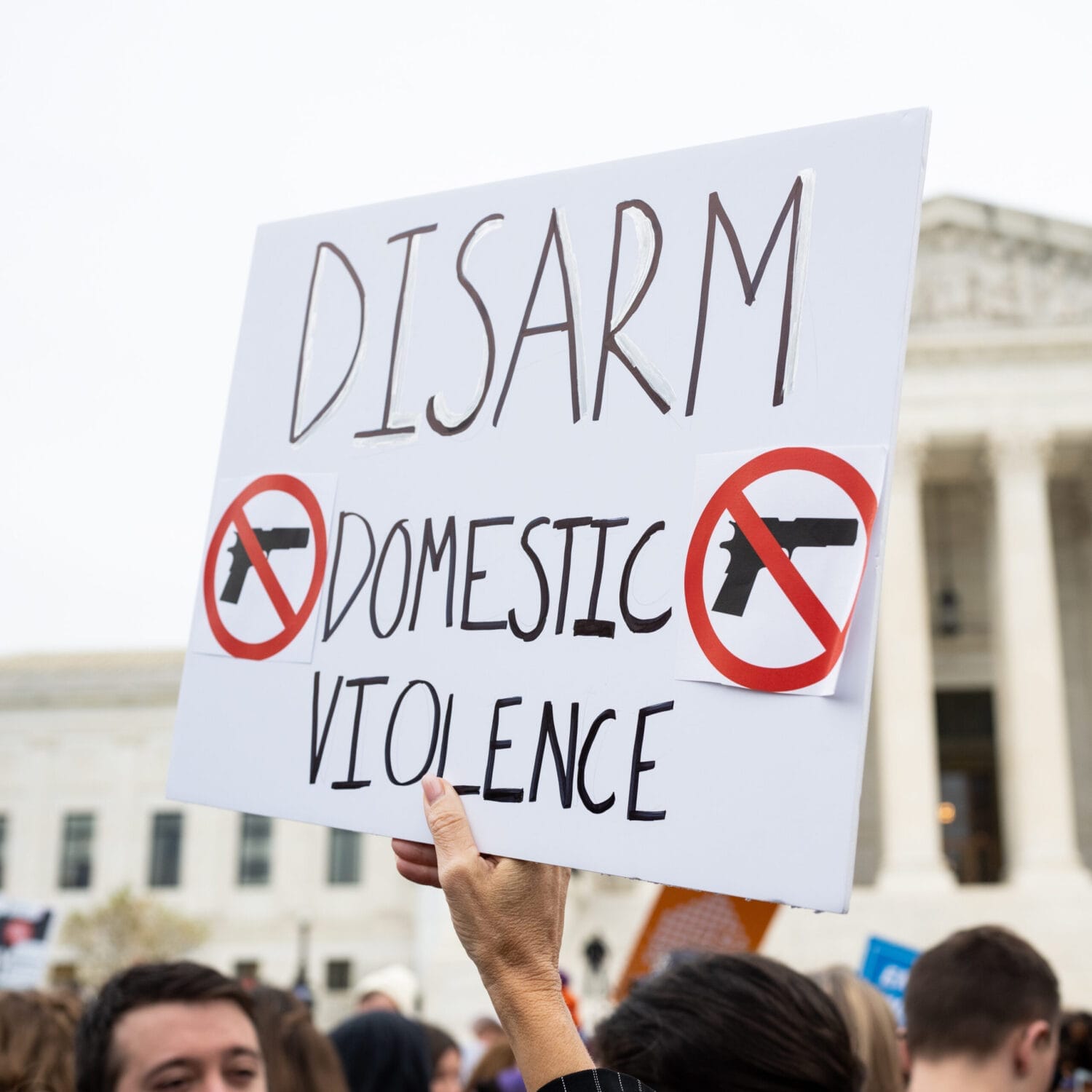
Since then, domestic violence calls for law enforcement assistance have decreased but still reflect a significant public safety concern in the state, with over 160,000 calls in 2024 (the last year for which data is available). Over 60% of those calls involved weapons of some kind.
In response to the 2005 report, the state judicial branch developed policies on relinquishment procedures, changed statewide forms, and implemented additional judicial and court staff training, some of which required that courts use an assessment tool to determine where there were significant implementation challenges. These efforts underscore the impact of California’s laws on this topic and the attorney general’s report, which provided the basis for much needed ongoing efforts to stop gun violence. In other words, adopting key policies is critical, but the work does not stop there.
For almost three decades, under California law, those who become prohibited from having firearms have been required to relinquish any currently owned firearms to law enforcement upon request or within 24 hours of the prohibiting order being issued. Within 48 hours of that order, the individual is required to provide proof to the court that those firearms have been relinquished. The judicial branch provides a statewide form for this purpose in each firearm-prohibiting civil case type, including domestic violence, civil harassment, workplace violence, elder abuse, school violence prevention, and gun violence restraining orders.
However, in 2021 Robert Lewis, a reporter with CalMatters, wrote “Outgunned,” a multi-part series on California’s failure to implement key firearms policies. Lewis reviewed 25 domestic violence restraining order cases where the perpetrator had firearms and the prohibiting restraining order was granted and found that in only one of those cases was there a receipt showing compliance with the firearm prohibiting order. Lewis’s article includes chilling details on some of these cases, reflecting the level of dangerousness in many civil domestic violence matters and the significant role firearms play in perpetrating intimate partner violence:
A 30-year-old Pasadena man did attend the hearing on his ex-girlfriend’s restraining order request. She accused him of texting ‘I have my gun, so if you want to involve your brother, I’ll shoot to kill.’
‘I’m going to execute you today. You’ll be gone forever. The minute you come outside, I’m going to shoot you,’ he texted. A transcript of the hearing shows the judge asked the man for his side of the story.
‘Your Honor, I don’t dispute anything that she said,’ the man stated. Despite the admission, the judge didn’t ask a single question about the supposed gun, nor did the judge tell the man he had to surrender his firearms.”
Reducing risk and increasing safety by preventing firearms violence requires a combination of recognizing the problem, adopting lifesaving policies, and implementing those policies fairly and effectively. These efforts build on each other; policies enacted and implemented between Keeping the Promise and the CalMatters article were important but clearly, based on the examples Lewis provided, there was and is more work to be done. Good policies weren’t enough.
Since 2021, the state has continued to improve on those policies and invest in implementation. As a result, California has witnessed a dramatic improvement in a variety of areas that can serve as models for measuring success and focusing on implementation at the state and local levels nationally. Three areas provide examples of promising practices:
Providing Information & Follow-up
SB 320 (effective 2022), a GIFFORDS-sponsored bill, built on long-standing firearm relinquishment procedures by requiring courts to provide local information on how to comply with the requirement to turn in or sell currently owned firearms to a dealer or law enforcement within 24 hours of becoming prohibited. It also required that courts review files or hold compliance hearings to determine whether the subject of the restraining order has complied; courts must then report non-compliance with the firearm prohibition to law enforcement and the prosecuting agency. Limited, one-time state funding was provided to courts through an RFP process to assist with implementation.
These projects are ongoing, but in the first 18 months, the same jurisdiction that had only one receipt in a file showing compliance has documented relinquishment of over 900 firearms in 239 domestic violence restraining order matters. The combination of giving people information about what compliance requires with the formality of the court indicating there will be follow up and consequences for non-compliance (which have rarely been needed) made a huge difference in a relatively short period of time.
Training & Technical Assistance
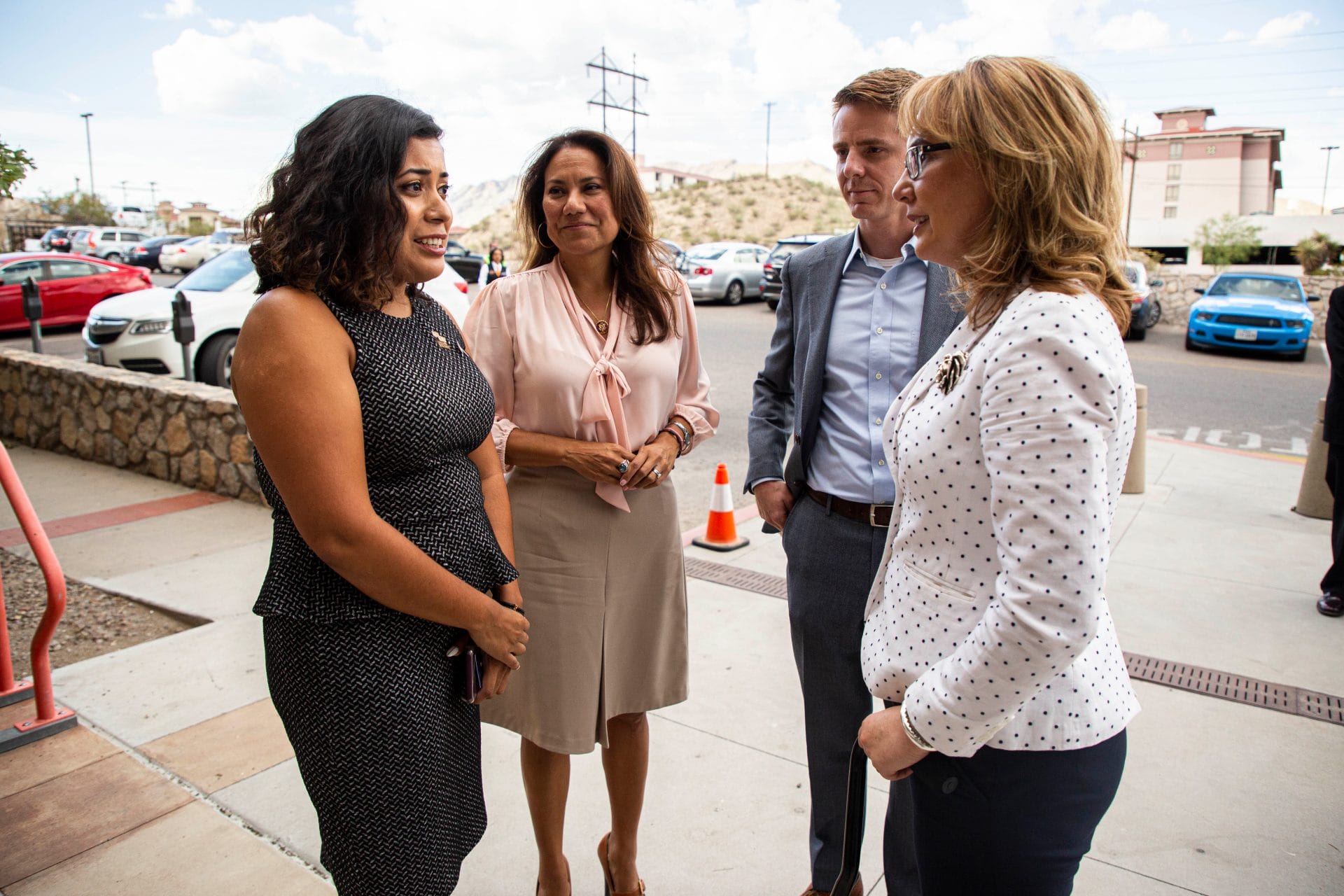
Funding has supported training for judges, law enforcement, court staff, community-based organizations, and victim advocates on risks associated with firearm access and ways to increase safety for those at most risk and the broader community. Communities have also used funding to contract with subject matter experts who provide technical assistance to overcome specific challenges and share best practice examples.
In response, several communities have adopted updated protocols for receiving firearms from those who have become prohibited or seek to store their firearms for safekeeping during a crisis. They’ve also improved coordination to address the particularly dangerous non-compliance cases and ensure there is a seamless process for communicating between the courts and law enforcement to support relinquishment as close to the time of prohibition as possible.
Post-training, one jurisdiction began sending letters to those in their community identified as non-compliant and received an 80% response rate from prohibited persons, some of whom had complied but not properly notified the court and others who then relinquished firearms for the duration of the prohibition based on the information the agency provided on how to comply.
Convening & Identifying Community Needs
Several jurisdictions have found that one of the most successful and efficient ways of changing the way a community is handling violence prevention is to bring key stakeholders together to discuss challenges and identify opportunities for improved coordination and implementation. GIFFORDS has provided assistance with many of these events: For example, hosting two convenings in 2019 on firearms relinquishment that helped support the enactment of SB 320, and another in 2022 in San Mateo County where key leadership—including Attorney General Bonta, former congresswoman Jackie Spier, and the local family law supervising judge—spoke.
At these events, law enforcement, prosecutors, defense attorneys, court staff, schools, victim advocates, legal service providers, and local businesses were invited to learn more about what they could do in their various roles to address firearms violence, with an emphasis on domestic violence and community safety. It was one of the first times the court was able to share details about the impacted calendars and challenges the system was experiencing.
Attendees spent the day learning more about community efforts and needs, and within a few days of the event, the county identified additional funding to support improvements in coordination and service delivery through the court and local providers. Since then, the community has increased coordination and improved consistency across firearm-prohibiting case types, produced a local information form on how to comply with prohibitions, and successfully obtained additional funding to support implementation of firearm restrictions in protective order cases.
These are just a few examples of the important, lifesaving work courts, law enforcement, victim advocates, policymakers, and community members are engaged in to advocate for and adopt evidence-based policies and implement those policies consistently and fairly. The work must include policies, procedures, and a sustained commitment to learning, coordinating, identifying challenges and opportunities that we can build and improve upon over time. We can and should be motivated to persist in this work by recalling those whose lives have been impacted or lost due to gun violence and recognizing that together, we can make a difference.
JOIN THE FIGHT
Gun violence costs our nation 40,000 lives each year. We can’t sit back as politicians fail to act tragedy after tragedy. Giffords Law Center brings the fight to save lives to communities, statehouses, and courts across the country—will you stand with us?
SPOTLIGHT
REDUCING RISK
Explore the options and strategies available for addressing specific types of gun violence and reducing the risk of a dangerous situation ending in tragedy.
Read MoreThe Latest

GIFFORDS, Brady, Former Civil Rights DAs, Highlight the Dangers of Trump DOJ Challenge to DCs Assault Weapons Ban

Gabby Giffords remembers victims and survivors of the Covenant school shooting in Nashville