Stand Your Ground Laws Do Not Deter Crime—They Make It Worse
Tragedy after tragedy proves that Stand Your Ground laws significantly increase gun violence.
On the evening of September 16, 2022, Carson Senfield was celebrating his birthday in style.
The University of Tampa student from Orchard Park, New York, was just hours away from turning 19, and he and his friends were enjoying Tampa’s nightlife on South Howard Avenue.
A few hours later, when Carson had become too unsteady to enjoy himself, his friends called a rideshare to take him to his apartment on West Arch Street. He arrived home around 1 am, but he did not make it inside. This is when an otherwise festive evening took a sinister turn.
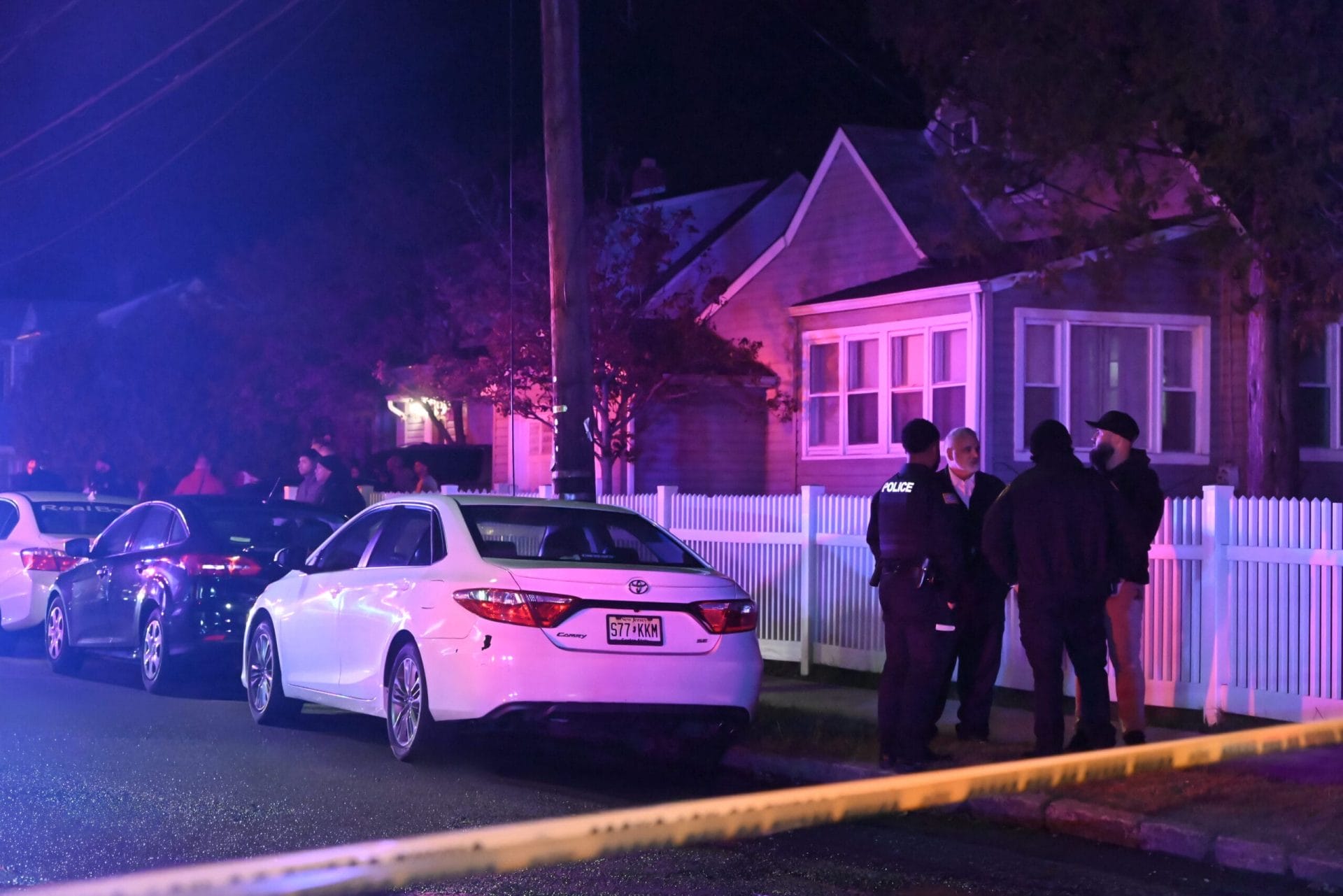
Carson seemed to have lost his keys on the way to his apartment, and his phone was almost out of charge. Possibly in an effort to find his way back to his friends, he approached a vehicle that was parked on the street. It’s likely that he mistook this car for the same or another rideshare, but we will never know what Carson was thinking when he opened the rear door and attempted to get in. The driver fired a single shot, striking him in the chest.
Carson collapsed and was later pronounced dead. His shooter remained at the scene and cooperated with police. Although there were no doubts as to whose bullet took Carson’s life, there were no arrests.
The Tampa Police Department investigated the incident, eventually turning the case over to the state attorney’s office, which decided not to press charges. The office cited Florida’s “Stand Your Ground” law, passed in 2005, which allows individuals to use deadly force if they believe it is necessary to prevent imminent death or great bodily harm, even when safe retreat is possible.
Historically, US laws governing self-defense mandated that people make an effort to avoid a violent confrontation if it was safe to do so. The “duty to retreat” was a duty to preserve life rather than resorting to violence in the first instance. Exceptions were made in cases of home invasion, in which case the “castle doctrine” removed the duty to retreat when defending oneself in one’s own home.

Beginning in the early 2000s, a number of states began adopting Stand Your Ground laws at the behest of the gun lobby. These laws overturned more than a century of precedent, dangerously encouraging an increasingly armed public to “stand their ground” and escalate confrontations in public, even if they could safely avoid violence by stepping away from the situation.
In other words, Stand Your Ground laws tend to allow people to use lethal force as a first step—rather than a last resort.
Take the recent case of Maria Florinda Rios Perez, a 32-year-old mother of four who was gunned down on the doorstep of a home in Whitestown, Indiana, on November 5. Ms. Rios Perez and her husband, Mauricio Velásquez, arrived in the morning to clean the home, only to discover their key didn’t work. The homeowner, who later claimed to police that he believed someone was trying to break into his home, fired his gun through the door, striking and killing Ms. Rios Perez. On Monday, November 17, Boone County Prosecutor Kent Eastwood filed a voluntary manslaughter charge against the shooter.
Today, 30 states have adopted Stand Your Ground laws, often based on a belief that they mitigate crime by empowering law-abiding citizens to use force against threatening strangers. Eight more states permit the use of deadly force in self-defense in public with no “duty to retreat” through a combination of statutes, judicial decisions, and/or jury instructions.
Yet most studies show that these laws have done just the opposite: Not only have they increased firearm homicide rates, they also intensify preexisting racial biases.
Critics often call them “shoot first” laws because they can encourage people to use deadly force in situations that do not require it. And this is exactly what happened to Carson.
Unfortunately, mistakes abound in the lives of harmless teens who find themselves in the wrong place at the wrong time. Renisha McBride was also 19 years old when she wrecked her car in a Detroit suburb late at night on November 2, 2013. She knocked on the door of Ted Wafer, who—upon seeing her face through his screen door—fired his shotgun and killed her. Like Carson, Renisha was unarmed and disoriented; she was not a threat to the person who killed her.

Sixteen-year-old Ralph Yarl was similarly unarmed and harmless when he too was shot by a homeowner after he knocked on a door in Kansas City in April 2023. Ralph was trying to retrieve his younger siblings from a playdate, and he mistakenly arrived at the home of Andrew Lester. Lester’s response to seeing a Black teen at his front door was to shoot him multiple times with his handgun. Ralph miraculously survived his injuries, but he may never escape the trauma of his terrifying encounter with an armed citizen who believed he was legally authorized to shoot someone who knocked on his door.
The men who shot Ralph Yarl and Renisha McBride were criminally prosecuted. Ted Wafer, McBride’s killer, was charged with second degree murder and is serving a 15–30 year prison term. Andrew Lester died several days after pleading guilty to second-degree assault. While these shooters received criminal charges, the man who shot Carson Senfield did not.
The decision not to charge Carson’s killer has proved deeply painful to the Senfield family, who have spoken out about their son’s character and their belief that his shooting was unjustified. The family questions the thoroughness of the state’s investigation and the application of Florida’s Stand Your Ground law, pointing out that Carson was unarmed, had no criminal history, and had no criminal intent when he tried to enter the shooter’s car. In these ways, Carson’s case appears similar to Ralph’s and Renisha’s.
All three of these tragedies highlight the risks associated with a gun-saturated social landscape where many armed individuals feel legally empowered to use their weapons—even in instances where a threat may not be imminent.
Do States Have Different Stand Your Ground Procedures?
In spite of clear evidence showing that the circulation of more guns in our communities contributes to more gun-related deaths and injury, a well-funded alliance of gun lobby allies, conservative politicians, and corporate leaders have pushed through policies like Stand Your Ground laws that lower the penalties for using deadly force. Since 2005, the laws have spread to the majority of states, even over fierce public opposition.
There is significant variation among state laws, with some providing greater degrees of immunity to people who claim self-defense after having harmed or killed someone. Florida’s Stand Your Ground law is particularly atrocious. It provides enhanced immunities for those who allege self-defense, including civil immunity, and the right of anonymity.
Florida became the first state to pass a Stand Your Ground law in 2005, allowing people to use deadly force in public if they reasonably believe it is necessary to prevent death or great bodily harm. In 2017, lawmakers went a step further by changing how these cases are handled in court. The update shifted the burden of proof from the defense to the prosecution—meaning it’s now up to the state, not the defendant, to prove that the person who used force was not acting in self-defense. This change made it significantly harder to prosecute shootings under the law.
Given how difficult it is to prove that a defendant did not experience fear, prosecutors are now less likely to bring homicide charges in cases where they lack definitive evidence of a defendant’s aggression or anger. Such provisions mean that those who claim self-defense after taking a life may escape legal consequences.
And Florida isn’t the only state to go above and beyond to protect those who use their firearms irresponsibly. While Michigan, where Renisha was shot and killed, has a standard Stand Your Ground law, Missouri, where Ralph was shot, also places the burden of proof on the prosecution. Because Ralph survived his injuries, he was able to provide testimony about his violent encounter with his shooter—but that’s not often the case in Stand Your Ground cases.
Unlike Ralph, Carson did not survive his injuries, and the perspective of his killer prevails in the Florida legal system. Evidence from the 911 recording suggests how one’s perspective might be distorted in ways that influence claims of self-defense. On the phone with Carson’s shooter, the 911 dispatcher suggested that the incident might be a carjacking, prompting the shooter to use that terminology when describing the encounter to law enforcement. This framing of the incident—as a violent carjacking rather than an unarmed teen’s mistake—may have influenced the investigation in favor of the shooter’s exoneration.
Even as the devastating effects of Stand Your Ground laws become clearer, states continue to adopt them based on a false claim that they will make us safer. In 2021, Ohio and Arkansas became the latest states to pass a Stand Your Ground law.
And even when there are legal consequences for some who “shoot first” and claim self-defense, those who have lost loved ones to alleged self-defenders continue to grieve the senseless loss of life.
While Wafer, Renisha’s killer, was incarcerated for second degree murder, there is no making up for her absence and the permanent hole in the lives of her loved ones. As Judge Dana Hathaway said in the 2023 resentencing hearing for Wafer, “You cannot murder someone for simply knocking on your door in the middle of the night.” It would seem that, in Florida at least, you can kill someone for mistaking your car for their rideshare.
TAKE ACTION
Students, veterans, survivors: Americans from all walks of life across the country are standing up for commonsense gun reform. If you’re fed up with politicians who care more about protecting gun lobby profits than your safety, stand with us in this fight.
Join UsThe Latest

GIFFORDS Florida condemns passage of dangerous gun industry immunity bill
Gabby Giffords statement on mass shooting in Austin, Texas