JOIN THE FIGHT
Nearly 47,000 Americans lose their lives to gun violence every year. GIFFORDS Law Center is leading the fight to save lives by championing gun safety policies and holding the gun lobby accountable. Will you join us?

| Filed | Report Name | Expert | Circuit/State | Issue | Summary | Resources |
|---|---|---|---|---|---|---|
| 4/18/2011 | Birdt, et al. v. Beck, et al. (Civil), Conrado Report at SJ | Torrez Conrado (Law Enforcement) | 9th Circuit | Licensing/Registration, Public Carry | Torrez provided the total number of homicide arrests each unit had in 2010, the number of those suspects that had prior felony convictions, and the number of those suspects that had prior domestic violence convictions. | Read the Report |
| 4/18/2011 | Birdt, et al. v. Beck, et al. (Civil), Conrado Report at SJ | Richard Tompkins (Law Enforcement) | 9th Circuit | Licensing/Registration, Public Carry | Tompkins explains CCW permit issuances and the “good cause” element. | Read the Report |
| 4/18/2011 | Birdt, et al. v. Beck, et al. (Civil), Embom Report at SJ | Rolf Embom (Law Enforcement) | 9th Circuit | Licensing/Registration, Public Carry | Embom provides statistics on arrests with prior felony convictions for 2008, 2009 and 2010. | Read the Report |
| 2/14/2013 | Kolbe et al. v. O’Malley et al. (Civil), Webster Report at SJ | Daniel W. Webster (Other) | 4th Circuit | Assault Weapons, Large-Capacity Magazines | Declaration by Webster explaining the effect of assault weapons on the likelihood of mass shootings. | Read the Report |
| 8/26/2013 | Corwin v. Armscor Precision International et al. (Civil), Irwin Report at Trial | Robert Irwin (Law Enforcement) | Nevada | Industry Accountability | Irwin provides a summary of his findings from an examination/inspection of the firearm relevant to the case. | Read the Report |
| 9/5/2013 | Morris et al. v. Army Corps of Engineers et al. (Civil), Austin Report at PI | Stephan B. Austin (Other) | 9th Circuit | Sensitive Places | Stephen B. Austin provides a detailed policy and regulatory rationale for the U.S. Army Corps of Engineers’ restrictions on the possession of loaded firearms on Corps-managed lands. He outlines the history and regulatory authority under 36 C.F.R. § 327.13, explains the balancing of safety, infrastructure security, and recreational access, and discusses operational limitations of Corps Park Rangers, who are not armed or empowered with full law enforcement authority. Austin argues that the current firearm restrictions are necessary to ensure public safety, particularly in high-density recreation areas and near critical infrastructure like dams, hydropower plants, and drinking water reservoirs. | Read the Report |
| 1/16/2014 | San Francisco Veteran Police Officers Ass’n, et al. v. City and County of San Francisco, et al. (Civil), Allen Report at PI | Lucy P. Allen (Economist) | 9th Circuit | Large-Capacity Magazines | Allen discusses (1) the number of rounds of ammunition fired by individuals in self-defense, and (2) the use of large-capacity magazines in mass shootings. | Read the Report |
| 1/16/2014 | San Francisco Veteran Police Officers Ass’n, et al. v. City and County of San Francisco, et al. (Civil), Zimring Report at PI | Franklin Zimring (Other) | 9th Circuit | Large-Capacity Magazines | Zimring addresses empirical evidence of the dangers of large capacity magazines in single-assailant attacks. | Read the Report |
| 1/16/2014 | San Francisco Veteran Police Officers Ass’n, et al. v. City and County of San Francisco, et al. (Civil), Zimring Report at PI | Franklin Zimring (Other) | 9th Circuit | Large-Capacity Magazines | Zimring addresses empirical evidence of the dangers of large capacity magazines in single-assailant attacks. | Read the Report |
| 2/24/2016 | Grace et al. v. District of Columbia et al. (Civil), Smalls Report at PI | Twana V. Smalls (Other) | DC Circuit | Licensing/Registration, Public Carry | Read the Report | |
| 2/24/2016 | Grace et al. v. District of Columbia et al. (Civil), Smalls Report at PI | Twana V. Smalls (Other) | DC Circuit | Licensing/Registration, Public Carry | Smalls explains Metropolitan Police Department’s application and approval process for concealed-carry licenses in DC, focusing on how applicants qualified under “good reason” or “proper reason” clauses. She summarizes several anonymized examples of approved applicants (e.g., business owners, prior threat victims). | Read the Report |
| 6/5/2017 | Wiese, et al. v. Bonta, et al. (Civil), Webster Report at Other | Daniel W. Webster (Other) | 9th Circuit | Large-Capacity Magazines | Webster concludes that there are data and good reasons to indicate that design and capabilities of firearms can potentially affect the likelihood that an intended target or by-stander at a shooting will be wounded as well as the severity of wounds resulting from criminal shootings. | Read the Report |
| 6/5/2017 | Duncan v. Bonta (Civil), James Report at PI | Ken James (Law Enforcement) | 9th Circuit | Large-Capacity Magazines | James concludes that the existence of high capacity magazines only serves to enhance the killing and injuring potential of a firearm. | Read the Report |
| 6/5/2017 | Duncan v. Bonta (Civil), Allen Report at PI | Lucy P. Allen (Economist) | 9th Circuit | Large-Capacity Magazines | Allen discusses (1) the number of rounds of ammunition fired by individuals in self-defense, and (2) the use of large-capacity magazines in mass shootings. | Read the Report |
| 6/5/2017 | Duncan v. Bonta (Civil), Donohue Report at PI | John J. Donohue (Lawyer) | 9th Circuit | Large-Capacity Magazines | Restrictions on assault weapons and the size of large-capacity magazines can be expected to reduce deaths and injury from gun violence. | Read the Report |
| 6/5/2017 | Duncan v. Bonta (Civil), Webster Report at PI | Daniel W. Webster (Other) | 9th Circuit | Large-Capacity Magazines | Webster concludes that there are data and good reasons to indicate that design and capabilities of firearms can potentially affect the likelihood that an intended target or by-stander at a shooting will be wounded as well as the severity of wounds resulting from criminal shootings. | Read the Report |
| 10/16/2017 | California Pistol & Rifle Ass’n, et al. v. Becerra, et al. (Civil), Donohue Report at SJ | John J. Donohue (Lawyer) | 9th Circuit | Public Carry | Donohue addresses a math error in a research paper written by Tomislav Kovandzic, a paper relied upon by plaintiff’s expert. | Read the Report |
| 1/16/2018 | Holloway v. Sessions et al. (Civil), Webster Report at Trial | Daniel W. Webster (Other) | 3rd Circuit | Prohibited Persons | Public health and policy expert opined on the risks associated with firearm possession by individuals convicted of DUI/DWI offenses. Citing epidemiological and criminological research, he concluded that such offenders—especially recidivists and those with very high BACs—are at substantially elevated risk of committing firearm violence, suicide, or unintentional shootings. He emphasized that alcohol dependence strongly predicts misuse of firearms and that laws prohibiting these individuals from possessing guns are effective at reducing violent and firearm-related offenses. | Read the Report |
| 4/9/2018 | Duncan v. Bonta (Civil), James Report at SJ | Ken James (Law Enforcement) | 9th Circuit | Large-Capacity Magazines | James concludes that the existence of high capacity magazines only serves to enhance the killing and injuring potential of a firearm. | Read the Report |
| 4/9/2018 | Duncan v. Bonta (Civil), James Report at SJ | Ken James (Law Enforcement) | 9th Circuit | Large-Capacity Magazines | James concludes that the existence of high capacity magazines only serves to enhance the killing and injuring potential of a firearm. | Read the Report |
| 4/9/2018 | Duncan v. Bonta (Civil), Graham Report at PI | Blake Graham (Law Enforcement) | 9th Circuit | Large-Capacity Magazines | Graham provides statistics on large capacity magazine weapons and legislation limiting large capacity magazines. | Read the Report |
| 7/26/2018 | Defense Distributed, et al. v. Department of State, et al. (Civil), Scharff Report at TRO | Joshua Scharff (Lawyer) | 5th Circuit | ATF/Agency Action, Ghost Guns | Attorney for the Brady Center declared in support of an emergency motion to intervene, citing Brady’s longstanding gun violence prevention work. He explained the organization’s diverted resources and FOIA requests related to the State Department’s settlement with Defense Distributed, emphasizing risks posed by the spread of downloadable 3D-printed gun files. | Read the Report |
| 7/27/2018 | Defense Distributed, et al. v. Department of State, et al. (Civil), Aguirre Report at TRO | Lisa V. Aguirre (Law Enforcement) | 5th Circuit | ATF/Agency Action, Ghost Guns | Senior State Department official provided a declaration supporting the government’s position on export controls under the International Traffic in Arms Regulations (ITAR). She detailed oversight of defense articles and argued that online publication of 3D-printed gun files would circumvent federal export laws, undermining U.S. foreign policy and national security. | Read the Report |
| 8/17/2018 | Maryland Shall Issue, Inc. et al. v. Hogan et al. (Civil), Russell Report at Other | James Russell (Law Enforcement) | 4th Circuit | Licensing/Registration | Declaration of Russell opining that requiring HQL applicants to take the firearms training contemplated by Section 5-117.1 of the Public Safety Article of the Maryland Code encourages responsible gun ownership and has numerous public benefits, including the prevention of accidental discharges of handguns. | Read the Report |
| 8/17/2018 | Maryland Shall Issue, Inc. et al. v. Hogan et al. (Civil), Webster Report at SJ | Daniel W. Webster (Other) | 4th Circuit | Licensing/Registration | Declaration by Webster expressing support of Maryland permit to purchase a firearm laws. | Read the Report |
| 8/17/2018 | Maryland Shall Issue, Inc. et al. v. Hogan et al. (Civil), Johnson Report at Other | James W. Johnson (Law Enforcement) | 4th Circuit | Licensing/Registration | Declaration of Johnson opining that Maryland’s HQL law is efficient and will make Maryland safer by reducing access of handguns to criminals, minor children and other persons not eligible to possess firearms. | Read the Report |
| 11/16/2018 | Maryland Shall Issue, Inc. et al. v. Hogan et al. (Civil), Webster Report at SJ | Daniel W. Webster (Other) | 4th Circuit | Licensing/Registration | Supplemental declaration by Webster to identify certain instances when Plaintiffs or their experts have misconstrued Webster’s work or his testimony. | Read the Report |
| 1/23/2020 | Miller, et al. v. Bonta, et al. (Civil), Allen Report at PI | Lucy P. Allen (Economist) | 9th Circuit | Assault Weapons | Allen discusses (1) the number of rounds of ammunition fired by individuals in self-defense, and (2) the outcomes when assault weapons and large-capacity magazines are used in public mass shootings, including the associated number of casualties | Read the Report |
| 2/6/2020 | State of Washington, et al. v. US Dep’t of State, et al. (Civil), Goldstein Report at PI | Adi Goldstein (Law Enforcement) | 9th Circuit | ATF/Agency Action, Ghost Guns | Expert opinion regarding the likely increase in crime rates and legal implications as a result of 3D printing ghost guns. | Read the Report |
| 2/6/2020 | State of Washington, et al. v. US Dep’t of State, et al. (Civil), Scott Report at PI | Thomas Scott (Other) | 9th Circuit | ATF/Agency Action, Ghost Guns | Expert opinion that, as students have access to 3D printers for school projects, the ability to 3D print weapons may result in increased school violence. | Read the Report |
| 2/6/2020 | State of Washington, et al. v. US Dep’t of State, et al. (Civil), Camper Report at PI | John S. Camper (Law Enforcement) | 9th Circuit | ATF/Agency Action, Ghost Guns | Expert opinion that the Temporary Modification of Category I of the United States Munitions List will undermine Colorado’s efforts to prevent the proliferation of dangerous weapons, allow individuals ineligible to possess firearms under state or federal law to easily obtain them without a background check, and hinder law enforcement’s ability to investigate criminal activity involving firearms. | Read the Report |
| 2/6/2020 | State of Washington, et al. v. US Dep’t of State, et al. (Civil), Liberty Report at PI | Randall A. Liberty (Law Enforcement) | 9th Circuit | ATF/Agency Action, Ghost Guns | Expert opinion regarding the possibility that 3D printed weapons will be unrecognizable to security measures and therefore may be more easily snuck into prison facilities, presenting added security risks. | Read the Report |
| 2/6/2020 | State of Washington, et al. v. US Dep’t of State, et al. (Civil), Rickard Report at PI | Dean M. Rickard (Law Enforcement) | 9th Circuit | ATF/Agency Action, Ghost Guns | Expert opinion regarding the likely increase in crime rates as a result of 3D printing ghost guns. | Read the Report |
| 2/6/2020 | State of Washington, et al. v. US Dep’t of State, et al. (Civil), Ferreira Report at PI | Kathleen Ferreira (Other) | 9th Circuit | ATF/Agency Action, Ghost Guns | Expert opinion regarding concerns that 3D printed weapons may be able to evade airport security. | Read the Report |
| 2/6/2020 | State of Washington, et al. v. US Dep’t of State, et al. (Civil), Graham Report at PI | Blake Graham (Law Enforcement) | 9th Circuit | ATF/Agency Action, Ghost Guns | Expert opinion regarding the prevalence of ghost guns (guns without serial numbers) in the United States, as well as serious crimes involving ghost guns. Also provided an opinion on the newfound ease of manufacturing for ghost guns. | Read the Report |
| 2/6/2020 | State of Washington, et al. v. US Dep’t of State, et al. (Civil), Herzog Report at PI | Robert Herzog (Law Enforcement) | 9th Circuit | ATF/Agency Action, Ghost Guns | Expert opinion regarding the possibility that 3D printed weapons will be unrecognizable to security measures and therefore may be more easily snuck into prison facilities, presenting added security risks. | Read the Report |
| 2/6/2020 | State of Washington, et al. v. US Dep’t of State, et al. (Civil), Lanier Report at PI | Cathy Lanier (Law Enforcement) | 9th Circuit | ATF/Agency Action, Ghost Guns | Expert opinion describing the District of Columbia’s firearm registration process. | Read the Report |
| 2/6/2020 | State of Washington, et al. v. US Dep’t of State, et al. (Civil), McCord Report at PI | Mary McCord (Lawyer & Law Enforcement) | 9th Circuit | ATF/Agency Action, Ghost Guns | Expert testimony regard the likely impacts of the largely unrestricted export and dissemination of files for the production of 3D-printed firearms to any interested person, entity, or foreign power, and have concluded that the likely effect would be detrimental to the national security, foreign relations, and public safety interests of the United States and the plaintiff States. | Read the Report |
| 2/6/2020 | State of Washington, et al. v. US Dep’t of State, et al. (Civil), Racine Report at PI | Mark Racine (Other) | 9th Circuit | ATF/Agency Action, Ghost Guns | Expert opinion that, as students have access to 3D printers for school projects, the ability to 3D print weapons may result in increased school violence. | Read the Report |
| 2/6/2020 | State of Washington, et al. v. US Dep’t of State, et al. (Civil), Patel Report at PI | Schwetak Patel (Other) | 9th Circuit | ATF/Agency Action, Ghost Guns | Expert opinion that, at that time, it was not possible to entirely 3D print a gun, but due to the rapid improvement of the technology, such a development is likely to occur in the near future. | Read the Report |
| 2/6/2020 | State of Washington, et al. v. US Dep’t of State, et al. (Civil), Kyes Report at PI | Brian Kyes (Lawyer) | 9th Circuit | ATF/Agency Action, Ghost Guns | Expert opinion on the potential increase of crime rates as a result of 3D printed ghost guns. | Read the Report |
| 2/6/2020 | State of Washington, et al. v. US Dep’t of State, et al. (Civil), Darling Report at PI | Andrew Darling (Law Enforcement) | 9th Circuit | ATF/Agency Action, Ghost Guns | Expert opinion regarding the possibility that 3D printed weapons will be unrecognizable to security measures and therefore may be more easily snuck into prison facilities, presenting added security risks. | Read the Report |
| 3/31/2020 | Mitchell, et al. v. Atkins, et al. (Civil), Jones Report at Other | Mark D. Jones (Law Enforcement) | 9th Circuit | Assault Weapons, Minimum Age Laws | Expert opinions on whether and to what extent Washington’s regulation of semiautomatic assault rifles in I-1639, by prohibiting their sale to non-residents and to those under 21 years of age, serves the state’s interest in public safety. | Read the Report |
| 3/31/2020 | Mitchell, et al. v. Atkins, et al. (Civil), Johnson Report at Other | Sara B. Johnson (Other) | 9th Circuit | Assault Weapons, Minimum Age Laws | Expert opinion on whether developmental science supports Washington State’s prohibition on the sale of semiautomatic assault rifles to those under 21 years of age. | Read the Report |
| 3/31/2020 | Mitchell, et al. v. Atkins, et al. (Civil), Aylward Report at Other | Elizabeth H. Aylward (Other) | 9th Circuit | Assault Weapons, Minimum Age Laws | Expert opinion on how brain development affects judgment and the propensity to engage in risk-taking behavior in young adults—and specifically whether developmental science supports Washington’s law prohibiting those under 21 from purchasing semiautomatic assault rifles. Based on my research, training, and experience in the field of neuroscience and neurodevelopment, my opinion is that individuals under age 21 should not be allowed to purchase a semiautomatic assault rifle. | Read the Report |
| 8/31/2020 | United States v. Tavey Sokun Ly (Criminal), Knox Report at Trial | Michael A. Knox (Other) | 11th Circuit | Silencers/Suppressors | Dr. Knox, a firearms and shooting incident expert, submitted a declaration explaining the technical operation and civilian utility of firearm suppressors (silencers). He describes how suppressors work by reducing the velocity and pressure of gases expelled when a firearm is discharged—thereby reducing sound, recoil, and muzzle flash. He states that suppressors enhance hearing protection, improve accuracy, and mitigate shooter fatigue, especially for sport shooters and individuals training extensively with firearms. The declaration argues that suppressors are commonly used by law-abiding civilians for safety purposes and are not inherently dangerous or designed for criminal misuse. | Read the Report |
| 12/3/2020 | NRA v. Bondi (Civil), Bhide Report at SJ | Pradeep Bhide (Other) | 11th Circuit | Minimum Age Laws | Dr. Bhide offers an expert opinion from developmental neuroscience, asserting that the age distinction in Florida’s firearm purchasing law (18 vs. 21 years) is scientifically justified. He explains that key brain regions develop at different rates, creating a “developmental mismatch” in adolescents. This mismatch, characterized by heightened impulsivity and diminished cognitive control in 18-year-olds, supports delaying firearm access until age 21. | Read the Report |
| 3/1/2021 | Miller et al. v. Smith et al. (Civil), Miller Report at SJ | Matthew Miller (Other) | 7th Circuit | Sensitive Places | Co-authored epidemiological analysis supporting Illinois regulations requiring secure storage of firearms in foster homes and daycare settings. Miller examined national and Illinois-specific child firearm injury and death data. He concluded that such regulations reduce the likelihood of child mortality, especially from suicide and unintentional shootings, and that relaxing them would lead to a net increase in preventable deaths. Report cites empirical studies showing increased risk of injury and death when firearms are present and improperly stored in homes with children. | Read the Report |
| 3/1/2021 | Miller et al. v. Smith et al. (Civil), Azrael Report at SJ | Deborah Azrael (Other) | 7th Circuit | Sensitive Places | Co-authored epidemiological analysis supporting Illinois regulations requiring secure storage of firearms in foster homes and daycare settings. Miller examined national and Illinois-specific child firearm injury and death data. He concluded that such regulations reduce the likelihood of child mortality, especially from suicide and unintentional shootings, and that relaxing them would lead to a net increase in preventable deaths. Report cites empirical studies showing increased risk of injury and death when firearms are present and improperly stored in homes with children. | Read the Report |
| 2/22/2022 | Doe, et al. v. Bonta, et al. (Civil), Studdert Report at PI | David Studdert (Historian) | 9th Circuit | Other Issues | Studdert discusses the relationship between access to firearms and risks of firearm-related mortality, including suicide and accidental deaths. | Read the Report |
| 2/22/2022 | Doe, et al. v. Bonta, et al. (Civil), Webster Report at PI | Daniel W. Webster (Other) | 9th Circuit | Other Issues | Webster discusses (1) whether individual-level, identifiable data from firearm purchases have provided important information for homicides, criminal violence, etc., (2) whether private individual information have been publicly disclosed, and (3) whether measures required by university institutions/researchers protect personally identifiable data. | Read the Report |
| 2/22/2022 | Doe, et al. v. Bonta, et al. (Civil), Wintemute Report at PI | Garen Wintemute (Other) | 9th Circuit | Other Issues | Wintemute discusses the lack of basic information on the epidemiology of firearm violence and how it has led to widespread misunderstanding of the firearm violence issue. | Read the Report |
| 2/22/2022 | Doe, et al. v. Bonta, et al. (Civil), Simmons Report at PI | Trent Simmons (Other) | 9th Circuit | Other Issues | Simmons addresses the internal processes at the Data Access and Analysis Section, including the application process for data extraction. | Read the Report |
| 7/1/2022 | Division 80, LLC v. Garland, et al. (Civil), Mastroianni Report at Trial | Christopher Mastroianni (Law Enforcement) | 5th Circuit | ATF/Agency Action | Hartford Police Sergeant declared in support of an amicus brief, reporting on the growing prevalence of “ghost guns” in Hartford. Data showed seizures of 7 ghost guns in 2020, 29 in 2021, and 32 in the first half of 2022, highlighting the escalating threat posed by unserialized firearms to public safety and law enforcement. | Read the Report |
| 7/6/2022 | Division 80, LLC v. Garland, et al. (Civil), Diaz Report at Trial | Adrian Z. Diaz (Law Enforcement) | 5th Circuit | ATF/Agency Action | Seattle Police Chief provided declaration regarding SPD’s seizure of firearms, including ghost guns. Reported that since May 2019, 83 ghost guns had been confiscated, with recoveries tripling proportionally since 2020, underscoring a concerning upward trend in ghost gun proliferation. | Read the Report |
| 7/7/2022 | Division 80, LLC v. Garland, et al. (Civil), Musto Report at Trial | John Musto (Lawyer) | 5th Circuit | ATF/Agency Action | Dayton deputy law director submitted a declaration supporting an amicus brief for major cities, citing police records documenting the seizure of a 6.5mm “ghost gun” rifle in connection with a domestic violence incident. Emphasized dangers of untraceable firearms and their role in criminal activity. | Read the Report |
| 8/4/2022 | Worth et al. v. Harrington et al. (Civil), Donohue Report at Trial | John J. Donohue (Lawyer) | 8th Circuit | Minimum Age Laws | Donohue provides an expert opinion on the relationship between Minn. Stat. § 624.714, subds. 1a & 2 (2020) and public health and safety; opine on social science and criminology research literature regarding risks of criminal violence in people 18-20 years old as well as associated neurobiological and behavioral factors. | Read the Report |
| 8/4/2022 | Worth et al. v. Harrington et al. (Civil), Cornell Report at Trial | Saul Cornell (Historian) | 8th Circuit | Minimum Age Laws | Cornell provides expert opinion on the history of firearms regulation in the Anglo-American legal tradition; opine on how the Founding-era generation understood the right to bear arms | Read the Report |
| 10/13/2022 | Miller, et al. v. Bonta, et al. (Civil), Busse Report at Other | Ryan Busse (Other) | 9th Circuit | Assault Weapons | Busse concludes that according to the definitions of “assault weapon” under AWCA, certain firearms may qualify as an “assault weapon” if they have certain accessories attached to them or if they are configured in some way. | Read the Report |
| 10/13/2022 | Miller, et al. v. Bonta, et al. (Civil), Rivas Report at Other | Brennan G. Rivas (Historian) | 9th Circuit | Assault Weapons | Rivas concludes that the proliferation of 19th century firearm regulations, including those enacted in Texas, Tennessee and Arkansas, demonstrate a robust governmental source of gun violence that swept the nation. | Read the Report |
| 11/10/2022 | Duncan v. Bonta (Civil), Rivas Report at Other | Brennan G. Rivas (Historian) | 9th Circuit | Large-Capacity Magazines | Rivas provides a summary of historical regulations that prohibit the public carry and possession of certain weapons. | Read the Report |
| 11/10/2022 | Duncan v. Bonta (Civil), Vorenberg Report at Other | Michael Vorenberg (Historian) | 9th Circuit | Large-Capacity Magazines | Vorenberg discusses the existence, usage, and regulation of high-capacity firearms during Reconstruction. | Read the Report |
| 11/10/2022 | Duncan v. Bonta (Civil), Busse Report at Other | Ryan Busse (Other) | 9th Circuit | Large-Capacity Magazines | Busse concludes that a large-capacity magazine is not necessary to use a firearm effectively for self-defense or other sporting purposes. | Read the Report |
| 11/30/2022 | Oregon Firearms Federation, Inc., et al. v. Kotek, et al. (Civil), Busse Report at PI | Ryan Busse (Other) | 9th Circuit | Large-Capacity Magazines, Licensing/Registration | Former firearms industry executive testified on the history, functionality, and marketing of large-capacity magazines (LCMs). Explained that firearms designed for LCMs can function with 10-round or fewer magazines, that manufacturers routinely provide these alternatives, and that LCMs are accessories rather than essential components. Described LCM sales as a profit-driven market strategy, not a functional necessity, and emphasized historical precedent for limiting magazine capacity without impairing firearm operation. | Read the Report |
| 12/5/2022 | Bolandv.Bonta(Civil), Gonzalez Report at SJ | Salvador Gonzalez (Law Enforcement) | 9th Circuit | Design Safety Standards | Gonzalez explains the requirements and details of California’s Unsafe Handgun Act. | Read the Report |
| 12/5/2022 | Boland v. Bonta (Civil), Gonzalez Report at PI | Salvador Gonzalez (Law Enforcement) | 9th Circuit | Design Safety Standards | California DOJ Special Agent Supervisor for the Bureau of Firearms testified about gun makeup and functionality, as well as safety precautions. | Read the Report |
| 1/27/2023 | Renna, et al. v. Bonta, et al. (Civil), Gonzalez Report at PI | Salvador Gonzalez (Law Enforcement) | 9th Circuit | Commercial Regulations, Design Safety Standards | Gonzalez explains the CA DOJ’s Roster of Certified Handguns and the qualifications for firearms pursuant to the Roster. | Read the Report |
| 1/31/2023 | Capen v. Campbell (Civil), Baron Report at PI | Dennis Baron (Historian) | 1st Circuit | Assault Weapons, Large-Capacity Magazines | Provide linguistic research findings to conclude that LCMs, magazines, ammunition cases, etc. were considered accoutrements and not arms during the Founding and Ratification Eras. | Read the Report |
| 1/31/2023 | Capen v. Campbell (Civil), Allen Report at PI | Lucy P. Allen (Economist) | 1st Circuit | Assault Weapons, Large-Capacity Magazines | Addresses the following: (1) number of rounds of ammunition fired by individuals using a gun in self-defense, (2) the outcomes when assault weapons and large-capacity magazines are used in public mass shootings, including the associated number of casualties | Read the Report |
| 1/31/2023 | Capen v. Campbell (Civil), Roth Report at PI | Randolph Roth (Historian) | 1st Circuit | Assault Weapons, Large-Capacity Magazines | Provide opinion on the history of homicides and mass murders in U.S., with special attention to the role that technologies have played in shaping the character and incidence of homicides and mass murders over time | Read the Report |
| 1/31/2023 | Capen v. Campbell (Civil), Spitzer Report at PI | Robert J. Spitzer (Other) | 1st Circuit | Assault Weapons, Large-Capacity Magazines | History of firearm restrictions, addressing machine guns, semiautomatic firearms, and ammunition feeding devices | Read the Report |
| 1/31/2023 | Capen v. Campbell (Civil), Yurgealitis Report at PI | James E. Yurgealitis (Law Enforcement) | 1st Circuit | Assault Weapons, Large-Capacity Magazines | Provide research and opinions related to M.G.L. s. 140, sections 121, 123 clause 16, and 131M; provide information and opinions about banned firearms, and firearm magazines, their history and their uses. | Read the Report |
| 1/31/2023 | Capen v. Campbell (Civil), Busse Report at PI | Ryan Busse (Other) | 1st Circuit | Assault Weapons, Large-Capacity Magazines | Provide overview of features and characteristics of “assault rifles”, with a focus on AR-15 rifles. | Read the Report |
| 1/31/2023 | Capen v. Campbell (Civil), Rivas Report at PI | Brennan G. Rivas (Historian) | 1st Circuit | Assault Weapons, Large-Capacity Magazines | Provide historical analysis on firearm restrictions in the nineteenth century, especially as it relates to assault weapons and LCMs. | Read the Report |
| 1/31/2023 | Capen v. Campbell (Civil), Cornell Report at PI | Saul Cornell (Historian) | 1st Circuit | Assault Weapons, Large-Capacity Magazines | Cornell provides expert opinion on the history of firearms regulation in the Anglo-American legal tradition; opines on how the Founding-era generation understood the right to bear arms. | Read the Report |
| 1/31/2023 | Capen v. Campbell (Civil), Vorenberg Report at PI | Michael Vorenberg (Historian) | 1st Circuit | Assault Weapons, Large-Capacity Magazines | Investigation into the existence, usage and regulation of high-capacity firearms during the Reconstruction period. | Read the Report |
| 1/31/2023 | Capen v. Campbell (Civil), Klarevas Report at PI | Louis Klarevas (Other) | 1st Circuit | Assault Weapons, Large-Capacity Magazines | Provides opinion and analysis of the relationship between assault weapons and criminal violence and mass shootings; concludes that restrictions on assault weapons and LCMs have the potential to save lives by reducing the frequency and lethality of high-fatality mass shootings. | Read the Report |
| 2/6/2023 | Oregon Firearms Federation, Inc., et al. v. Kotek, et al. (Civil), Cook Report at Trial | Mackenzie Cook (Other) | 9th Circuit | Large-Capacity Magazines, Licensing/Registration | Trauma surgeon testified on the medical impact of high-capacity firearm use, drawing on clinical experience treating gunshot victims. Discussed wound patterns, survivability, and how large-capacity magazines contribute to higher casualty counts in mass shootings. | Read the Report |
| 2/6/2023 | Oregon Firearms Federation, Inc., et al. v. Kotek, et al. (Civil), DeLay Report at Trial | Brian DeLay (Historian) | 9th Circuit | Large-Capacity Magazines, Licensing/Registration | Historian specializing in U.S. history testified regarding the historical regulation of firearms and ammunition, particularly laws restricting weapons capable of rapid fire or high-capacity magazines. Presented evidence that such regulations have longstanding precedent and align with the historical tradition of limiting dangerous weapons to protect public safety. | Read the Report |
| 2/6/2023 | Oregon Firearms Federation, Inc., et al. v. Kotek, et al. (Civil), Klarevas Report at Trial | Louis Klarevas (Other) | 9th Circuit | Large-Capacity Magazines, Licensing/Registration | Social scientist specializing in gun violence research analyzed data on mass shootings and high-fatality incidents. Concluded that large-capacity magazine bans are associated with significant reductions in both the frequency and lethality of mass shootings. | Read the Report |
| 2/6/2023 | Oregon Firearms Federation, Inc., et al. v. Kotek, et al. (Civil), Sweeney Report at Trial | Kevin M. Sweeney (Historian) | 9th Circuit | Large-Capacity Magazines, Licensing/Registration | Historian specializing in colonial and early American history examined historical firearm ownership and regulation, including militia requirements and storage practices. Provided evidence that historical regulation often restricted or controlled access to certain types of firearms and related equipment in ways consistent with modern large-capacity magazine restrictions. | Read the Report |
| 2/6/2023 | Oregon Firearms Federation, Inc., et al. v. Kotek, et al. (Civil), Allen Report at Trial | Lucy P. Allen (Economist) | 9th Circuit | Large-Capacity Magazines, Licensing/Registration | Economist provided statistical analysis on the impact of firearm regulations, focusing on the correlation between large-capacity magazine bans and reductions in mass shooting fatalities in comments on another declaration (“Kleck Declaration”). Used empirical data and modeling to support the conclusion that such laws can significantly reduce the number and severity of mass shooting incidents. | Read the Report |
| 2/6/2023 | Oregon Firearms Federation, Inc., et al. v. Kotek, et al. (Civil), Pauly Report at Trial | Roger Pauly (Historian) | 9th Circuit | Large-Capacity Magazines, Licensing/Registration | Historian provided expert analysis of firearms technology development and historical regulations governing weapons with enhanced firing capacity. Contextualized modern large-capacity magazine bans within a centuries-long pattern of restricting dangerous weaponry to protect public order and safety. | Read the Report |
| 2/6/2023 | Oregon Firearms Federation, Inc., et al. v. Kotek, et al. (Civil), Rivas Report at Trial | Brennan G. Rivas (Historian) | 9th Circuit | Large-Capacity Magazines, Licensing/Registration | Historian provided detailed analysis of nineteenth- and early twentieth-century U.S. weapons regulation, documenting extensive historical precedent for restrictions on especially dangerous weapons. Addressed concealed carry bans, taxation schemes, sales prohibitions, and licensing laws, concluding that large-capacity magazines, as modern dangerous technology, fall within a long tradition of regulating emerging threats to public safety. | Read the Report |
| 2/6/2023 | Oregon Firearms Federation, Inc., et al. v. Kotek, et al. (Civil), Yurgealitis Report at Trial | James E. Yurgealitis (Law Enforcement) | 9th Circuit | Large-Capacity Magazines, Licensing/Registration | Former ATF agent testified about firearm technology, functionality, and regulatory framework for large-capacity magazines. Explained operational differences, safety concerns, and law enforcement perspectives on restricting magazine capacity to reduce gun violence. | Read the Report |
| 2/24/2023 | B&L Productions, et al. v. Newsom, et al. (Civil), Charles Report at Other | Patrick Charles (Historian) | 9th Circuit | Sensitive Places | Charles discusses Bruen and the “Sensitive Places” Doctrine. | Read the Report |
| 2/24/2023 | Boland v. Bonta (Civil), Gonzalez Report at PI | Salvador Gonzalez (Law Enforcement) | 9th Circuit | Design Safety Standards | Gonzalez provides additional details on the semiautomatic pistols listed on the Roster of Certified Handguns. | Read the Report |
| 2/24/2023 | Boland v. Bonta (Civil), Gonzalez Report at PI | Salvador Gonzalez (Law Enforcement) | 9th Circuit | Design Safety Standards | California DOJ Special Agent Supervisor for the Bureau of Firearms testified about guns added to the Roster of Certified Handguns and their safety precautions. | Read the Report |
| 2/24/2023 | Boland v. Bonta (Civil), Cornell Report at PI | Saul Cornell (Historian) | 9th Circuit | Design Safety Standards | Chair in American History at Fordham University provided an expert opinion on the history of firearms regulation in the Anglo-American legal tradition, with a particular focus on how the Founding era understood the right to bear arms and the understanding of the right to bear arms held at the time of the ratification of the Fourteenth Amendment. | Read the Report |
| 2/27/2023 | Barnett v. Raoul (Civil), Busse Report at PI | Ryan Busse (Other) | 7th Circuit | Assault Weapons, Large-Capacity Magazines | Industry expert report on the design, marketing, and civilian use of assault weapons. Busse, drawing on his experience as a former gun company executive, testified that AR-15 style rifles and similar semiautomatic assault-style weapons were developed and marketed as military-style offensive firearms rather than for civilian self-defense. He explained how features like high-capacity detachable magazines, pistol grips, and rapid-fire capabilities make these guns effective in combat but unnecessary and even counterproductive for lawful self-defense (e.g. excessive penetration and risk to bystanders). His declaration supported Illinois’ position that such weapons are “dangerous and unusual,” not intended for routine self-defense, and thus appropriate to regulate. | Read the Report |
| 2/27/2023 | Barnett v. Raoul (Civil), Schreiber Report at PI | Martin A. Schreiber (Other) | 7th Circuit | Assault Weapons, Large-Capacity Magazines | Medical expert report on the trauma inflicted by high-velocity rounds from assault weapons and the implications for treating gunshot victims. Dr. Schreiber, a military and civilian trauma surgeon, testified that 223/5.56mm rounds fired by AR-15-style rifles cause significantly more catastrophic injuries than handgun rounds, including large wound cavities and extreme tissue damage, especially to children. He explained that these rifles propel bullets at velocities far exceeding what is necessary for self-defense, often resulting in over-penetration. His report concluded that the banned weapons’ firepower leads to more severe injuries and fatalities in shootings, straining medical resources and supporting the public health rationale for banning such weapons. | Read the Report |
| 2/27/2023 | Barnett v. Raoul (Civil), Klarevas Report at PI | Louis Klarevas (Other) | 7th Circuit | Assault Weapons, Large-Capacity Magazines | Social science expert report on mass shootings and the lethality of assault weapons and large-capacity magazines. Klarevas – an authority on mass violence – presented data showing that firearms classified as “assault weapons” and magazines holding more than 10 rounds are disproportionately used in mass shootings and result in significantly higher fatalities. He cited statistical research (including his own work Rampage Nation) demonstrating that limiting magazine capacity can reduce the deadliness of mass attacks. This report supported Illinois’ defense of its Assault Weapons Ban by quantifying the public safety benefits of restricting such weaponry. | Read the Report |
| 2/27/2023 | Barnett v. Raoul (Civil), Yurgealitis Report at PI | James E. Yurgealitis (Law Enforcement) | 7th Circuit | Assault Weapons, Large-Capacity Magazines | Technical expert report on firearm mechanics and the capabilities of semiautomatic “assault weapons” and magazines. Yurgealitis, a retired ATF senior special agent, provided detailed explanations of how semiautomatic rifles and large magazines work. He opined that features of the banned weapons (e.g. flash suppressors, barrel shrouds, rifle-length velocity) are military-oriented enhancements that facilitate rapid, sustained fire, yielding firepower beyond what is needed for civilian self-defense. He noted that in defensive gun uses, civilians fire very few shots on average (around 2), so large-capacity magazines (30 rounds) offer no self-defense advantage over standard magazines. His declaration bolstered the argument that Illinois’ limits on magazine capacity and assault-weapon features would not impair lawful self-defense but could reduce the harms of criminal misuse. | Read the Report |
| 4/6/2023 | Capen v. Campbell (Civil), Spitzer Report at PI | Robert J. Spitzer (Other) | 1st Circuit | Assault Weapons, Large-Capacity Magazines | Provide supporting points/evidence regarding a long tradition of new weapons technologies development, their spread into society, and subsequent regulation by the government as part of a centuries-long effort to protect the public from weapons’ harm and to dampen weapons-related criminality and violence. | Read the Report |
| 4/6/2023 | Capen v. Campbell (Civil), Klarevas Report at PI | Louis Klarevas (Other) | 1st Circuit | Assault Weapons, Large-Capacity Magazines | Addresses Plaintiffs’ questionable estimates regarding the number of assault weapons and LCMs that are owned by Americans as well as misrepresentation of mass shooting violence in the U.S. | Read the Report |
| 4/6/2023 | Capen v. Campbell (Civil), Klarevas Report at PI | Louis Klarevas (Other) | 1st Circuit | Assault Weapons, Large-Capacity Magazines | Addresses Plaintiffs’ questionable estimates regarding the number of assault weapons and LCMs that are owned by Americans as well as misrepresentation of mass shooting violence in the U.S. | Read the Report |
| 5/1/2023 | Wiese, et al. v. Bonta, et al. (Civil), Rivas Report at SJ | Brennan G. Rivas (Historian) | 9th Circuit | Large-Capacity Magazines | Rivas discusses historical firearm regulations similar to both California’s restrictions on large-capacity magazines. | Read the Report |
| 5/1/2023 | Wiese, et al. v. Bonta, et al. (Civil), Sweeney Report at SJ | Kevin M. Sweeney (Historian) | 9th Circuit | Large-Capacity Magazines | Sweeney discusses repeating firearms in eighteenth-century and early nineteenth-century America. | Read the Report |
| 5/1/2023 | Wiese, et al. v. Bonta, et al. (Civil), Klarevas Report at SJ | Louis Klarevas (Other) | 9th Circuit | Large-Capacity Magazines | Klarevas discusses the relationship between large-capacity magazines and mass shootings, including how restrictions on LCMs impact mass shooting violence. | Read the Report |
| 5/1/2023 | Wiese, et al. v. Bonta, et al. (Civil), Vorenberg Report at SJ | Michael Vorenberg (Historian) | 9th Circuit | Large-Capacity Magazines | Vorenberg discusses the existence, usage, and regulation of high-capacity firearms during Reconstruction. | Read the Report |
| 6/1/2023 | Nat’l Shootings Sports Foundation v. Ferguson (Civil), Webster Report at PI | Daniel W. Webster (Other) | 9th Circuit | Industry Accountability | Expert opinion about current research on the role of corrupt or negligent licensed gun dealers in facilitating the diversion of guns for use in crime and effective measures to prevent such diversions. | Read the Report |
| 6/1/2023 | Nat’l Shootings Sports Foundation v. Ferguson (Civil), Grundlach Report at PI | Gregory T. Grundlach (Lawyer) | 9th Circuit | Industry Accountability | Expert opinion on the following topics: First, there are widely acknowledged concrete steps that firearm industry members can take to reduce gun diversion through gun trafficking, straw purchasing, and theft, and research demonstrates the effectiveness of such steps. Second, the firearm industry, including the National Shooting Sports Foundation (NSSF), has long understood what these steps are and that they are necessary to protect public safety. Finally, other industries involving dangerous products have long adopted similar types of reasonable controls to those at issue here. | Read the Report |
| 6/1/2023 | Nat’l Shootings Sports Foundation v. Ferguson (Civil), Rivara Report at PI | Frederick Rivara (Other) | 9th Circuit | Industry Accountability | Expert opinion on the public health crisis of gun violence in Washington State and nationwide, especially with regard to minors. | Read the Report |
| 6/1/2023 | Nat’l Shootings Sports Foundation v. Ferguson (Civil), Busse Report at PI | Ryan Busse (Other) | 9th Circuit | Industry Accountability | Expert Opinion on the ability of gun industry members to institute reasonable controls to prevent theft, trafficking, and straw purchases of firearms by third parties, and to prevent misuse of firearms when the firearm industry member has reasonable cause to believe the person will commit self-harm or harm others. | Read the Report |
| 6/1/2023 | Nat’l Shootings Sports Foundation v. Ferguson (Civil), Cornell Report at PI | Saul Cornell (Historian) | 9th Circuit | Industry Accountability | Expert opinion on the history of firearms regulation in the Anglo-American legal tradition, with a particular focus on the understanding of the right to bear arms at the Founding and at the time of the ratification of the Fourteenth Amendment to the United States Constitution. | Read the Report |
| 6/16/2023 | A’ssn of New Jersey Rifle & Pistol Clubs et al. v. Platkin et al. (Civil), Allen Report at PI | Lucy P. Allen (Economist) | 3rd Circuit | Large-Capacity Magazines | Economist Lucy P. Allen analyzed the statistical relevance of firearm type and ammunition capacity in public mass shootings and self-defense scenarios. She concluded that use of assault weapons and large-capacity magazines (LCMs) significantly increases the number of casualties in public mass shootings. She also found that use of more than 10 rounds in self-defense incidents is rare, and rifles are infrequently used in such scenarios. | Read the Report |
| 7/1/2023 | Barnett v. Raoul (Civil), Spitzer Report at SJ | Robert J. Spitzer (Other) | 7th Circuit | Assault Weapons, Large-Capacity Magazines | Scholarly historical analysis of the regulation of firearms deemed dangerous/unusual throughout U.S. history, and the legal understanding of the Second Amendment. Prof. Spitzer – a leading Second Amendment scholar – documented numerous examples of weapon regulations, including colonial and 19th-century bans on especially dangerous weapons (clubs, Bowie knives, trap guns, machine guns, etc.), to demonstrate a tradition of weapon-specific restrictions. He argued that Illinois’ ban on assault weapons falls within this historical pattern of regulating weapons deemed to pose heightened danger. Additionally, Spitzer’s report rebutted claims that AR-15s are in “common use” for self-defense by noting the ubiquity of handguns for that purpose instead. | Read the Report |
| 7/1/2023 | Barnett v. Raoul (Civil), Roth Report at SJ | Randolph Roth (Historian) | 7th Circuit | Assault Weapons, Large-Capacity Magazines | Historical and statistical analysis of American homicide rates and firearm regulation from the colonial era through the 20th century. Prof. Roth provided an overview of how governments have responded to surges in violence by regulating especially dangerous weapons. He traced historical patterns showing that “dangerous and unusual” weapons (from Bowie knives to tommy guns) have been subject to bans or strict regulation during periods of high violence. His report used historical data to argue that Illinois’ modern ban on semiautomatic assault weapons fits within a longstanding historical tradition of weapon-specific regulation aimed at reducing violence. (Roth’s expertise as a historian of violence lent weight to the public-safety justification for the ban.) | Read the Report |
| 7/14/2023 | Wolford v. Lopez (Civil), Young Report at PI | Terence Young (Other) | 9th Circuit | Sensitive Places | Expert historical geography report examining the evolution of public parks and recreational spaces and their firearms restrictions. Young’s declaration outlined how the concept of public parks emerged in the mid-19th century and noted that firearms were commonly prohibited “from the outset” in such parks. By surveying historical park regulations (city, state, and national), he helped establish that keeping parks gun-free has longstanding precedent, bolstering Hawaii’s defense of its park firearm ban as consistent with historical tradition. | Read the Report |
| 7/14/2023 | Wolford v. Lopez (Civil), McCall Report at PI | Patrick McCall (Other) | 9th Circuit | Sensitive Places | Factual declaration describing the use and nature of Maui County’s public parks and recreational facilities. McCall detailed the mission and operations of Maui’s parks (which serve families, youth, and visitors) and noted existing regulations that prohibit firearms in these spaces to ensure safety and enjoyment for the public. This testimony underscored that Maui’s parks are widely used by children and community groups, supporting the argument that such locations are sensitive places where firearms have historically been restricted for public safety. | Read the Report |
| 7/14/2023 | Wolford v. Lopez (Civil), Rivas Report at PI | Brennan G. Rivas (Historian) | 9th Circuit | Sensitive Places | Historical research report on 19th-century firearm regulations. Rivas provided evidence of robust firearm restrictions in the 1800s, such as laws against carrying weapons in public without cause, to analogize Hawaii’s modern “sensitive place” restrictions. She traced how law and society in the post-Civil War 19th century addressed weapons in public, supporting the argument that Hawaii’s firearm carry limitations in certain places have deep historical precedents. (As a historian of firearms policy, Dr. Rivas has focused on the development of gun laws in the 19th-century United States.) | Read the Report |
| 7/14/2023 | Wolford v. Lopez (Civil), Cornell Report at PI | Saul Cornell (Historian) | 9th Circuit | Sensitive Places | Expert historical analysis of Anglo-American firearms regulation, focusing on the understanding of the right to bear arms in the Founding and Reconstruction eras. Cornell opined that modern public parks have, since their inception in the 19th century, consistently banned firearms, and that no true analogues to today’s urban parks existed in 1791 (when the nation was largely rural). His report supported Hawaii’s position that banning guns in parks and recreational areas is rooted in American historical tradition. | Read the Report |
| 7/14/2023 | Wolford v. Lopez (Civil), Thielen Report at PI | Laura H. Thielen (Other) | 9th Circuit | Sensitive Places | Factual declaration providing statistics and details on Honolulu’s park system and recreational programs. Thielen reported that Honolulu operates 402 parks (covering ~5,000 acres) and hosts thousands of organized activities and programs, many for youth and families. She noted that firearms are banned at these facilities to protect public safety. Her testimony highlighted the crowded, family-oriented nature of urban parks and community centers, reinforcing the designation of such areas as gun-free sensitive places. | Read the Report |
| 7/28/2023 | Nat’l Shootings Sports Foundation v. Bonta, et al. (Civil), Busse Report at Other | Ryan Busse (Other) | 9th Circuit | Design Safety Standards, Industry Accountability | Busse opines on the ability of gun industry members to institute reasonable controls to prevent theft, trafficking, and straw purchases of firearms by third parties, and to prevent misuse of firearms when the firearm industry member has reasonable cause to believe the person will commit self-harm or harm others. | Read the Report |
| 9/1/2023 | Sullivan et al. v. Ferguson et al. (Civil), Sweeney Report at Other | Kevin M. Sweeney (Historian) | 9th Circuit | Large-Capacity Magazines | Expert opinion on repeating firearms in eighteenth-century and early nineteenth-century America. | Read the Report |
| 9/1/2023 | Sullivan et al. v. Ferguson et al. (Civil), Rivas Report at Other | Brennan G. Rivas (Historian) | 9th Circuit | Large-Capacity Magazines | Expert opinion on the history of firearms restrictions enacted in the nineteenth century, especially as it relates to large capacity magazines, and to provide information about firearms or other weapons that might have been considered unusual or especially dangerous during that time period. | Read the Report |
| 9/1/2023 | Sullivan et al. v. Ferguson et al. (Civil), Klarevas Report at Other | Louis Klarevas (Other) | 9th Circuit | Large-Capacity Magazines | Expert opinion that (A) in terms of individual acts of intentional criminal violence, mass shootings presently pose the deadliest threat to the safety of American society in the post-9/11 era, and the problem is growing nationwide; (B) high-fatality mass shootings involving LCMs, on average, have resulted in a substantially larger loss of life than similar incidents that did not involve LCMs; (C) mass shootings resulting in double-digit fatalities are relatively modern phenomena in American history, largely related to the use of assault weapons and LCMs; (D) states that restrict LCMs experience fewer high-fatality mass shooting incidents and deaths, per capita, than states that do not restrict LCMs. | Read the Report |
| 9/1/2023 | Sullivan et al. v. Ferguson et al. (Civil), Allen Report at Other | Lucy P. Allen (Economist) | 9th Circuit | Large-Capacity Magazines | Expert opinion on (a) the number of rounds of ammunition fired by individuals using a gun in reallife self-defense incidents; and (b) the outcomes when large-capacity magazines (magazines capable of holding more than 10 rounds) are used in public mass shootings, including the associated number of casualties. | Read the Report |
| 9/1/2023 | Sullivan et al. v. Ferguson et al. (Civil), Spitzer Report at Other | Robert J. Spitzer (Other) | 9th Circuit | Large-Capacity Magazines | Expert opinion on the history of firearms restrictions, including those pertaining to fully automatic and semiautomatic firearms, ammunition feeding devices, the origins of multi-shot firearms, and the historical regulation of other dangerous weapons. | Read the Report |
| 9/1/2023 | Sullivan et al. v. Ferguson et al. (Civil), Baron Report at Other | Dennis Baron (Historian) | 9th Circuit | Large-Capacity Magazines | Expert opinion on the historical use of the terms arms and accoutrements in order to determine whether magazines, including large-capacity magazines (henceforth, LCMs), were considered arms during the Founding Era (1750–1820) and the period surrounding Reconstruction and the ratification of the Fourteenth Amendment (1868–1890). The term “magazine” was not generally used to describe a “bullet container” until well into the nineteenth century, and that use of “magazine” did not become common until the early twentieth century. Baron therefore evaluated the lexical evidence for the analogous ammunition cases in use before “magazine” became the common term: “cartridge case,” “cartridge box,” or “cartouch case, or box.” | Read the Report |
| 9/1/2023 | Sullivan et al. v. Ferguson et al. (Civil), DeLay Report at SJ | Brian DeLay (Historian) | 9th Circuit | Large-Capacity Magazines | Expert testimony in litigation challenging various aspects of Engrossed Substitute Senate Bill (“ESSB”) 5078. | Read the Report |
| 9/8/2023 | Nat’l Ass’n of Gun Rights et al. v. Garland et al. (Civil), Ciravolo Report at Other | Anthony Ciravolo (Law Enforcement) | 5th Circuit | ATF/Agency Action, Machine Guns | Contains a detailed technical evaluation by ATF firearms experts assessing whether specific firearm components, particularly Forced Reset Triggers (FRTs) and drop-in auto sears, qualify as machineguns under federal law. The expert analysis focus’ on the mechanical function of the devices and their capacity to enable automatic fire, often with minimal modification to semiautomatic weapons. It also reflects expert regulatory interpretations of what constitutes a machinegun under the Gun Control Act (GCA) and National Firearms Act (NFA). | Read the Report |
| 10/24/2023 | Rocky Mt. Gun Owners v. Polis (Civil), Cramer Report at Other | Clayton Cramer (Historian) | 10th Circuit | Point-of-Sale/Gun Dealer Regulations | Professor Cramer’s expert opinion on the history of firearms waiting periods, their effectiveness, and to address the Declarations of Robert Spitzer and Randolph Roth. | Read the Report |
| 10/30/2023 | Goldstein et al. v. Earnest et al. (Civil), Watkins Report at Other | Derek Watkins (Other) | California | Industry Accountability | Mr. Watkins testified regarding the design and function of AR-type rifles and opined as to whether the rifle used in a shooting would be considered an “assault weapon.” | Read the Report |
| 11/6/2023 | Nat’l Ass’n of Gun Rights et al. v. Garland et al. (Civil), Saier Report at PI | Craig Saier (Law Enforcement) | 5th Circuit | ATF/Agency Action, Machine Guns | Saier attests that forced reset triggers (FRT-15) and Wide Open Triggers (WOT) are machinegun conversion devices (“MCDs”) under federal law, capable of enabling automatic fire with a single trigger function. Saier details the widespread unlawful distribution of these devices—over 100,000 units—without background checks or recordkeeping, including sales to prohibited persons. He explains the public safety risks posed by these devices, including their use in violent crimes, their rapid rate of fire (comparable to M16 machineguns), and the significant burden they place on ATF retrieval efforts. Saier concludes that continued availability—especially under the court’s preliminary injunction—will exacerbate the proliferation and unlawful use of these devices, undermining public safety and law enforcement efforts. | Read the Report |
| 11/8/2023 | Rocky Mt. Gun Owners v. Polis (Civil), Poliquin Report at PI | Christopher Poliquin (Economist) | 10th Circuit | Point-of-Sale/Gun Dealer Regulations | Testimony regarding Colorado’s three-day firearm waiting period. Dr. Poliquin opined, based on a 45-year nationwide dataset, that handgun waiting period laws are associated with about a 17% reduction in gun homicides. | Read the Report |
| 11/8/2023 | Rocky Mt. Gun Owners v. Polis (Civil), Roth Report at PI | Randolph Roth (Historian) | 10th Circuit | Point-of-Sale/Gun Dealer Regulations | Preliminary injunction testimony providing an expert opinion on the history of violence in the United States, including homicides, weapons used in such crimes at different points in history, and responses of voters and their representatives to these changes in levels of violence and the nature of weapons that are used in homicides. | Read the Report |
| 12/7/2023 | Chavez v. Bonta (Civil), Winkler Report at PI | Adam Winkler (Historian) | 9th Circuit | Minimum Age Laws | This is a sur-rebuttal report to counter the Plaintiffs declarant, Cramer, who disputed the breadth of many historical restrictions on the carrying of firearms. Report Topic: Historical restrictions on carrying firearms. | Read the Report |
| 1/16/2024 | Scott v. Remington Arms Company, LLC (Civil), Watkins Report at Other | Derek Watkins (Other) | 11th Circuit | Design Safety Standards, Industry Accountability | Testimony regarding the design and engineering of Remington firearms. | Read the Report |
| 2/14/2024 | Scott v. Remington Arms Company, LLC (Civil), Ronkainen Report at Other | James Ronkainen (Other) | 11th Circuit | Design Safety Standards, Industry Accountability | Testimony regarding the design and engineering of Remington firearms. | Read the Report |
| 3/15/2024 | Chavez v. Bonta (Civil), Rivas Report at Other | Brennan Rivas (Historian) | 9th Circuit | Minimum Age Laws | Expert opinion on the history of firearms regulation in the Anglo-American legal tradition, with a particular emphasis on the regulation of sales and transfers of, and access to, firearms for those below the age of 21, including those old enough to participate in militias. | Read the Report |
| 3/15/2024 | Chavez v. Bonta (Civil), Donohue Report at Other | John Donohue (Lawyer) | 9th Circuit | Minimum Age Laws | This expert report provided an expert opinion in favor of restricting access to firearms in California to those 21 and older, as the 18-20 age group is the most dangerous for mass shootings. | Read the Report |
| 3/15/2024 | Chavez v. Bonta (Civil), Grabarsky Report at SJ | Todd Grabarsky (Other) | 9th Circuit | Minimum Age Laws | This report provides a survey of historical laws compiled from various sources from Defendant’s experts and review by the DOJ. | Read the Report |
| 3/15/2024 | Chavez v. Bonta (Civil), Klarevas Report at Other | Louis Klarevas (Other) | 9th Circuit | Minimum Age Laws | Expert report opining that 18-20 year olds are over-represented in mass shooting violence and that 18-20 year old mass shooters have a preference for long guns and particularly semi-automatic centerfire rifles. | Read the Report |
| 3/15/2024 | Chavez v. Bonta (Civil), Spitzer Report at Other | Robert J. Spitzer (Other) | 9th Circuit | Minimum Age Laws | This expert report contains Professor Spitzer’s opinion on the history of firearms restrictions and related historical context, including restrictions pertaining to minors (individuals under the age of 21), those enacted in the early twentieth century and earlier pertaining to fully automatic and semiautomatic firearms, and tracing those regulations back to earlier hardware and use restrictions on other types of weapons enacted in the nineteenth century and earlier. | Read the Report |
| 3/15/2024 | Chavez v. Bonta (Civil), Roth Report at Other | Randolph Roth (Historian) | 9th Circuit | Minimum Age Laws | This expert report contains Professor Roth’s opinions on the history of firearm hazards and mass shootings from the 1600s to present. Roth also discusses efforts to address threats from mass shootings. | Read the Report |
| 3/15/2024 | Chavez v. Bonta (Civil), Cornell Report at Other | Saul Cornell (Historian) | 9th Circuit | Minimum Age Laws | Expert opinion of Saul Cornell on the history of firearms regulation in the Anglo-American legal tradition, with a particular emphasis on the regulation of sales of and access to firearms of those below the age of 21, including those old enough to participate in the militias. | Read the Report |
| 6/25/2024 | O’Neil v. Neronha (Civil), Spitzer Report at PI | Robert J. Spitzer (Other) | 1st Circuit | Licensing/Registration, Public Carry | Spitzer provides an expert historical analysis of weapons regulation from the 1600s to the early 1900s. His report supports Rhode Island’s defense of its modern public carry licensing laws by demonstrating the extensive and consistent historical tradition of weapons regulation in the United States. The report categorizes this tradition into six areas: concealed carry restrictions, open carry laws, long gun restrictions, brandishing and display laws, licensing systems, and group-based permitting. | Read the Report |
| 6/27/2024 | O’Neil v. Neronha (Civil), Rivas Report at Appeal (Amicus) | Brennan G. Rivas (Historian) | 1st Circuit | Licensing/Registration, Public Carry | Dr. Brennan Rivas, a historian specializing in American firearms policy, provides a comprehensive expert declaration on behalf of the State of Rhode Island. Her report supports the constitutionality of Rhode Island’s restrictions on public carry of firearms. Using a historical lens, Dr. Rivas outlines the legal and cultural traditions in American history that support the regulation of weapons (especially deadly, concealable arms such as pistols and bowie knives) within public spaces. She challenges the modern narrative that such restrictions are unprecedented or unconstitutional under the Second Amendment, asserting that licensing, sales limitations, location-based restrictions, and concealed carry prohibitions have deep historical roots. | Read the Report |
| 1/3/2025 | Beckwith v. Frey (Civil), Spitzer Report at PI | Robert J. Spitzer (Other) | 1st Circuit | Point-of-Sale/Gun Dealer Regulations | Spitzer’s declaration supports the idea that the absence of waiting periods in early U.S. history does not preclude their legitimacy under the Constitution, especially given historical parallels in delaying firearm access under certain conditions. His conclusion is that waiting periods are consistent with both historical legal frameworks and public safety objectives. | Read the Report |
| 1/3/2025 | Beckwith v. Frey (Civil), Donohue Report at PI | John Donohue (Lawyer) | 1st Circuit | Point-of-Sale/Gun Dealer Regulations | Donohue critiques plaintiffs’ assertions that waiting periods harm law-abiding citizens, arguing that those claims are anecdotal, unsubstantiated, and vastly outweighed by the proven public safety benefits. He concludes that Maine’s law is a proportionate, evidence-based response to firearm violence that aligns with longstanding regulatory traditions. | Read the Report |
| 1/3/2025 | Beckwith v. Frey (Civil), Roth Report at PI | Randolph Roth (Historian) | 1st Circuit | Point-of-Sale/Gun Dealer Regulations | Roth provides a detailed historical analysis of firearm regulation in the United States. He emphasizes how governments at all levels have historically responded to gun-related violence through legal restrictions. Roth traces the evolution of gun policies from colonial times through the early 20th century, highlighting how changes in firearms technology (such as the advent of concealable weapons and revolvers) led to rising homicide rates and prompted regulatory responses. | Read the Report |
| 2/19/2025 | Nat’l Ass’n of Gun Rights et al. v. Garland et al. (Civil), Varisco Report at Appeal (Amicus) | Matthew P. Varisco (Law Enforcement) | 5th Circuit | ATF/Agency Action, Machine Guns | Explains the Bureau of Alcohol, Tobacco, Firearms, and Explosives (ATF) compliance efforts following a federal court’s ruling in National Association for Gun Rights, Inc. v. Bondi. The ruling required ATF to return confiscated Forced Reset Triggers (FRTs), devices previously classified as illegal machine guns under federal law, but later deemed legal under the court’s decision. The declaration details the operational burden of returning thousands of gun-related devices, including background checks, inventory management, and coordination across ATF field offices. This raises practical questions about how to enforce gun safety in the absence of broad regulatory authority. | Read the Report |
| 6/11/2026 | Black, et al. v. Hook, et al. (Civil), McKevitt Report at PI | Andrew McKevitt (Historian) | Virginia | McKevitt’s declaration supports the idea that the state’s regulations on assault weapons and large capacity magazines are analogously similar to a substantial body of twentieth-century firearms regulations. He concludes that SB 749 is consistent with a longstanding tradition of regulating certain firearms based on their characteristics, countering claims that such categorical regulation is historically unprecedented. He also refutes plaintiffs’ claim that assault weapons and large capacity magazines have been in common use throughout American history, showing that the civilian market for AR-style and other military-style semiautomatic rifles is a recent phenomenon, driven by changes in manufacturing, marketing, regulation, and consumer demand, and thus the present-day popularity of these firearms and accessories is not evidence of timeless commonality. | Read the Report |
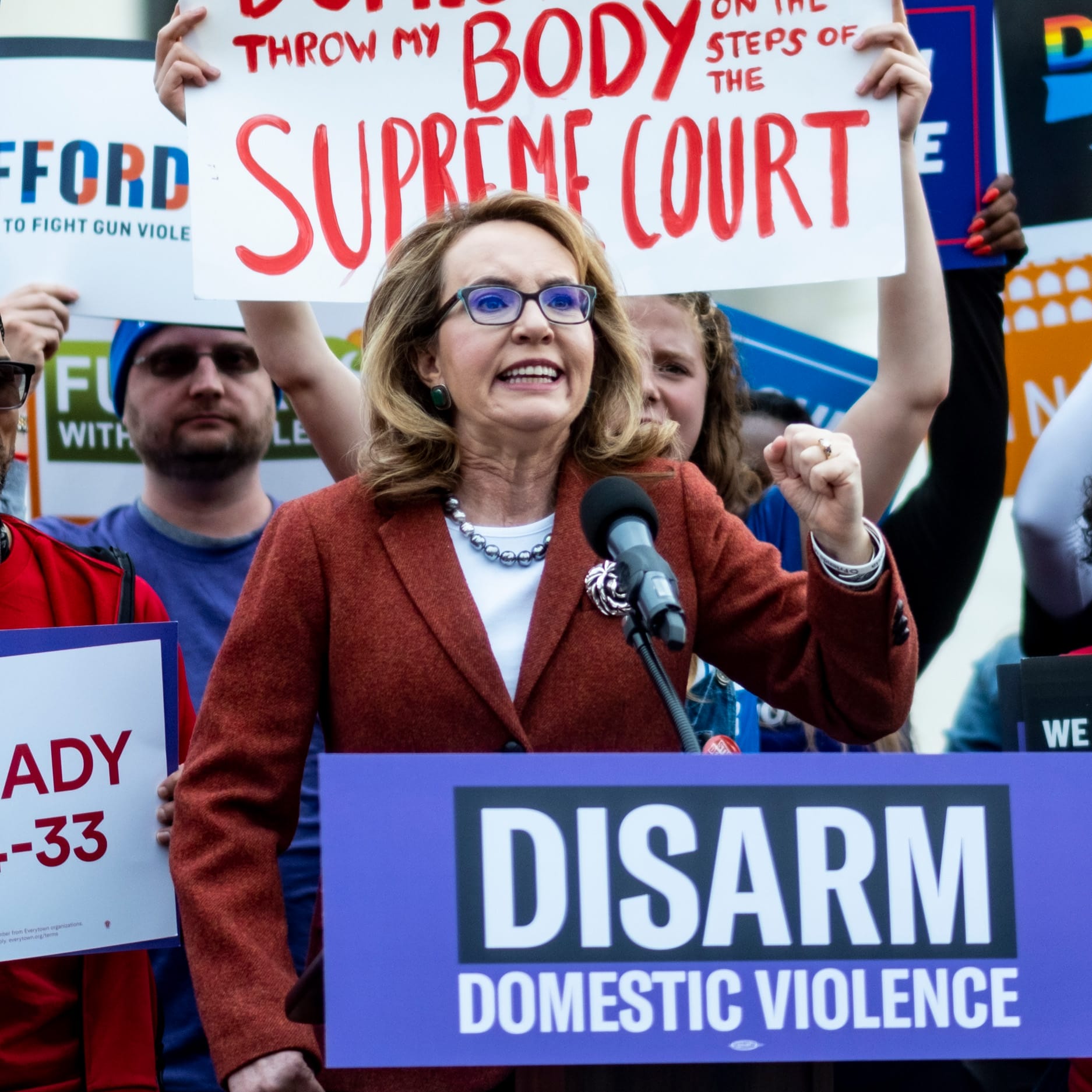
Explore our work defending lifesaving gun laws in the courts and fighting to debunk the gun lobby’s dangerous arguments about the Second Amendment.
Nearly 47,000 Americans lose their lives to gun violence every year. GIFFORDS Law Center is leading the fight to save lives by championing gun safety policies and holding the gun lobby accountable. Will you join us?