Charlie Kirk Was Murdered. Gun Safety Laws Can Prevent Further Violence.
Armed political violence is a growing threat in the United States—both to the people who live here and to democracy itself.
Two days ago, conservative commentator Charlie Kirk was assassinated while speaking at an event at Utah Valley University.

This is the second targeted assassination of a political figure in recent months. In June, Minnesota State Representative Melissa Hortman and her husband, Mark, were murdered in their home. And we only need to look back a year to the assassination attempts on then presidential candidate Trump.
But this recent violence didn’t come out of nowhere—and these are far from the only examples. In 2011, our organization’s founder and namesake Gabby Giffords was the target of an assassination attempt when she was a young congresswoman in a purple district. In 2017, Republican Representative Steve Scalise and others were attacked during a congressional baseball practice.
What all of these violent incidents had in common was that the weapon of choice was a gun.
Armed political violence is a growing threat in the United States—both to the people who live here and to democracy itself. Extremist groups and individuals have increasingly turned to guns as a tool to sow fear and chaos—encouraging acts of intimidation and creating cycles of fear that fuel gun sales and political polarization. What has emerged is a twisted ideology—one that treats firearms as the remedy for perceived government overreach and, in doing so, legitimizes and normalizes violence as a tool of politics.

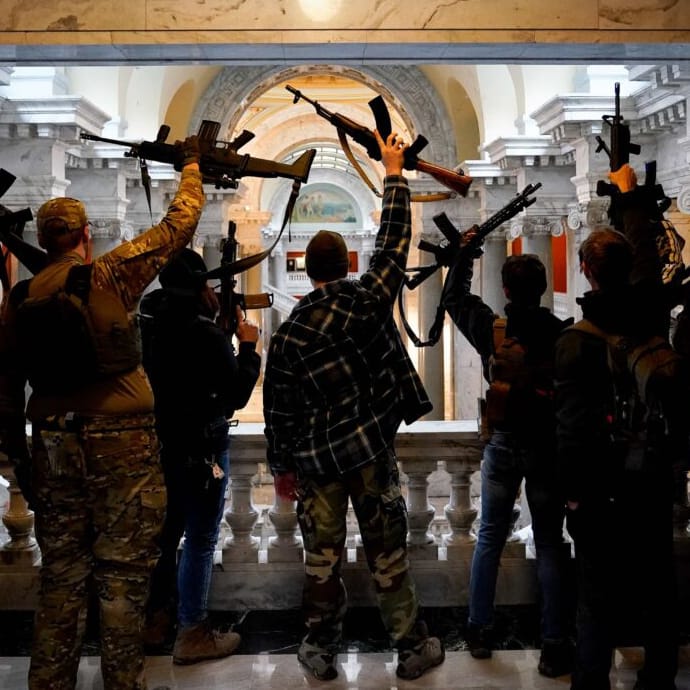
Americans should never have to choose between participating in democracy and feeling safe. The numbers are stark: In 2023, the Southern Poverty Law Center identified more than 1,400 active hate and extremist groups operating across the country. Armed demonstrations have surged. Researchers found that between January 2020 and June 2021, there were more than 560 documented incidents of protesters openly carrying or brandishing firearms. Firearms are now the most common weapon of extremist killings, used in 93% of domestic extremist murders in 2022.
And threats against public officials—not just politicians, but also the everyday people who serve as election officials—have skyrocketed, forcing many to resign or live under constant fear for their families’ safety.
This cannot be our country’s new normal. Any and all forms of political violence are assaults on democracy itself. The January 6th insurrection, where extremist groups violently stormed the US Capitol to overturn election results, is a grave example of how extremist rhetoric and armed intimidation can threaten the very foundations of democracy.
Greater numbers of guns in public, more gun violence, and growing extremism threaten participation in all facets of our democratic process: at legislative hearings, school board meetings, demonstrations, rallies, the voting booth, and in vote tabulation centers. Any conversation about political violence must be accompanied by a conversation about gun violence.
Our leader, former Congresswoman Gabby Giffords, published an op-ed in TIME yesterday, titled “I Mourn for Charlie Kirk’s Family.” about Charlie Kirk’s assassination, political violence, and the gun law loopholes that fuel this violence. Here’s an excerpt:
I didn’t agree with almost anything he said, but he had a right to speak. Just as he had a right to go on a work trip and return safely to his wife and two young children at home in the state we share, Arizona.
Just as Melissa Hortman, the former Speaker of the Minnesota State Legislature, deserved to be safe at home with her husband and her dog. Instead they were all three shot dead together one night in June.
Just as President Donald Trump had the right to campaign without fear of being assassinated, as two different people tried to do last summer.
[…]
What we share, and what puts all of us in danger—from elected leaders to little children, like those shot while praying in church in Minnesota a few weeks ago—is the overwhelming prevalence of guns in this country and the loopholes that make it appallingly easy for dangerous people to access them.
In America, we now have more guns than people. Many states take sensible steps—background checks, extreme risk protection orders, and safe storage laws—all policies that help reduce gun crime and gun deaths. Other states—like Utah, which year after year receives a F grade in the annual Gun Law Scorecard released by my organization, GIFFORDS—do far too little to save lives. Utah has expanded gun access in recent years, and gun deaths have increased along with that, soaring by 45% from 2014 to 2023, according to the CDC.
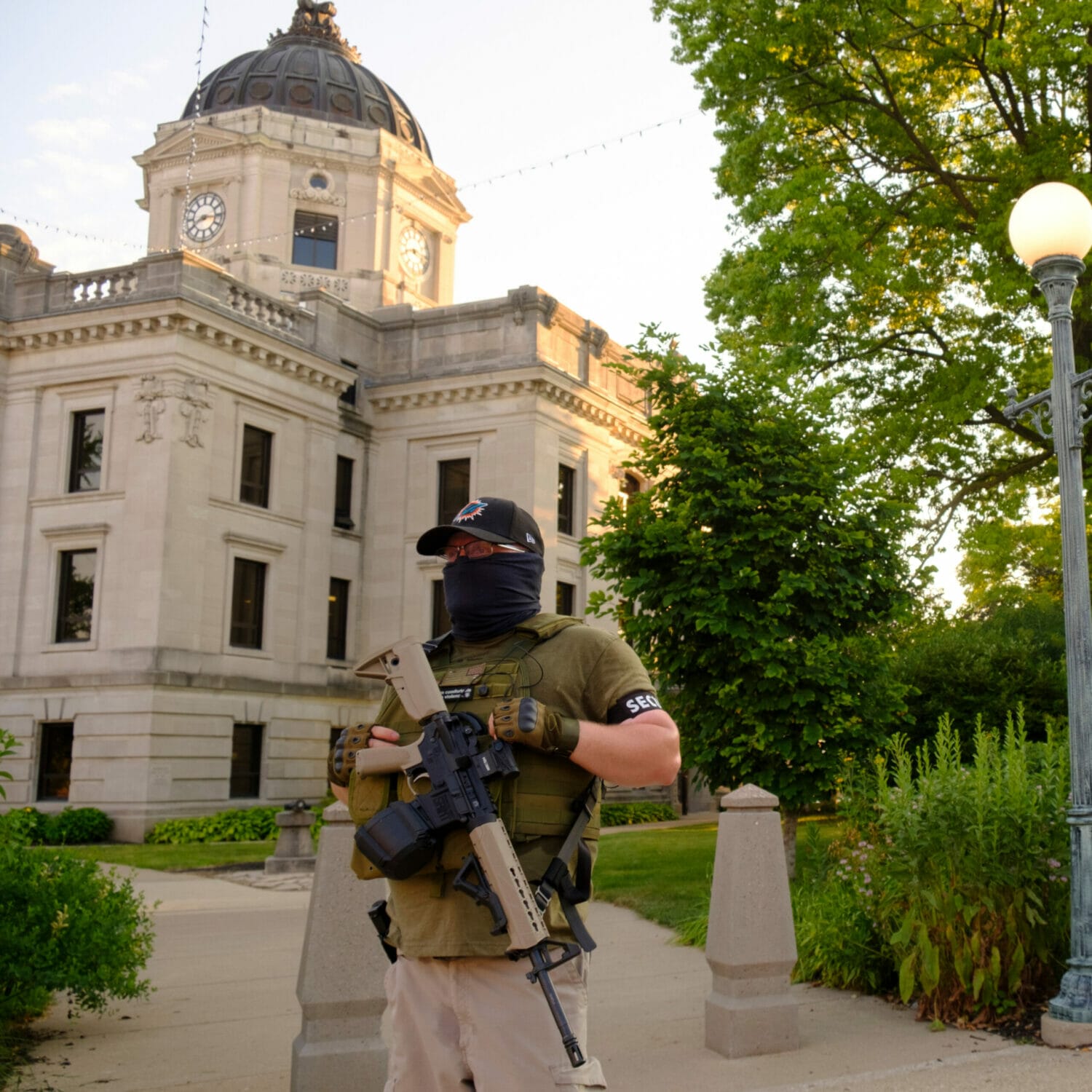
For too many Americans, political violence has already become a serious concern. Election workers are harassed. Voters are watched by armed vigilantes at ballot drop boxes. Public figures are threatened, and even killed. This is not democracy—it is fear replacing freedom. And it is being fueled by the gun industry and the extremists it emboldens, who exploit weak gun laws to turn intimidation into a political weapon.
This is not the democracy we deserve. Armed intimidation erodes civic participation, silences community voices, and puts every voter, election worker, and public official at risk. If we allow political violence to become routine, we risk losing the very foundation of American democracy.
To protect our democracy from armed extremism, lawmakers must take urgent action:
- Pass the PEACE Act. The PEACE Act expressly recognizes the intimidating presence of guns at polling places and other election sites, and strengthens protections against armed voter intimidation.
- Implement sensitive space restrictions. Similar to the PEACE Act, sensitive space restrictions help keep guns out of spaces like polling places, ballot drop boxes, government buildings, state capitols, and political demonstrations—where their mere presence can create fear and obstruct the free exercise of speech and civic rights.
- Prohibit those who commit hate crimes from accessing guns. People who have been convicted of violent hate crimes—including violent misdemeanors that are not subject to federal restrictions—should not be able to access firearms.
- Reject widespread gun carrying. The presence of guns in public spaces, carried both concealed and openly, has time and again proven to increase the risk that disagreements will turn violent. Instead, keeping guns stored locked and unloaded when not in use helps reduce the risk of gun violence.
- Hold the gun industry accountable. The gun industry knowingly markets weapons to extremists, profits from political violence, and irresponsibly targets youth and vulnerable populations through social media. We must pass laws that set standards of conduct for businesses in the industry and then follow through with legal action when these laws are broken.
Armed extremism is not inevitable—it is a policy choice. The deaths of Charlie Kirk and Melissa Hortman are horrifying tragedies, and like all gun violence, they were preventable.
When our leaders fail to close loopholes, extremists exploit them. When dangerous rhetoric spreads unchecked on social media, extremists amplify it with violence. And when guns remain more accessible than voting, extremists will continue to reach for them first.
We must act now. Democracy depends on more than elections. It depends on our ability to argue, protest, and disagree without fear of violence. The murder of Charlie Kirk was a horrific act. It was also a warning that no one is safe when guns enter our politics—not voters, not officials, not even citizens exercising free speech. Protecting democracy means protecting all of us who believe differences should be settled with ballots, not bullets.
MEDIA REQUESTS
Our experts can speak to the full spectrum of gun violence prevention issues. Have a question? Email us at media@giffords.org.
Contact
SPOTLIGHT
GUNS & DEMOCRACY
The use of guns to intimidate and threaten voters, elected officials, and peaceful demonstrators poses a serious threat to our democracy. We’ve gathered resources on the deadly connection between guns and extremism, and how to stop it.
Read More