State of California, et al. v. ATF, et al.
Suing the ATF for failing to correctly regulate dangerous ghost guns as firearms.
The ATF isn’t enforcing the law against ghost guns—we’re suing to make sure they do.
GIFFORDS Law Center, alongside California Attorney General Rob Bonta, is suing the ATF for failing to classify AR-15 ghost gun products as firearms under federal law, which leads to the proliferation of dangerous and untraceable firearms. The lawsuit seeks to hold the ATF accountable for failing to do its job, allowing the ghost gun industry to exploit loopholes of its own creation, and endangering countless American lives in the process.
The Gun Control Act of 1968 (GCA) is one of the cornerstone federal gun laws. It determines who can legally purchase a gun, and when, where, and how those purchases can be made. It also requires background checks for firearms sold from retail gun stores and requires serial numbers and record-keeping so that guns can be traced by law enforcement if they are connected to a crime. These provisions are all designed to keep firearms out of dangerous hands and help law enforcement solve crimes.
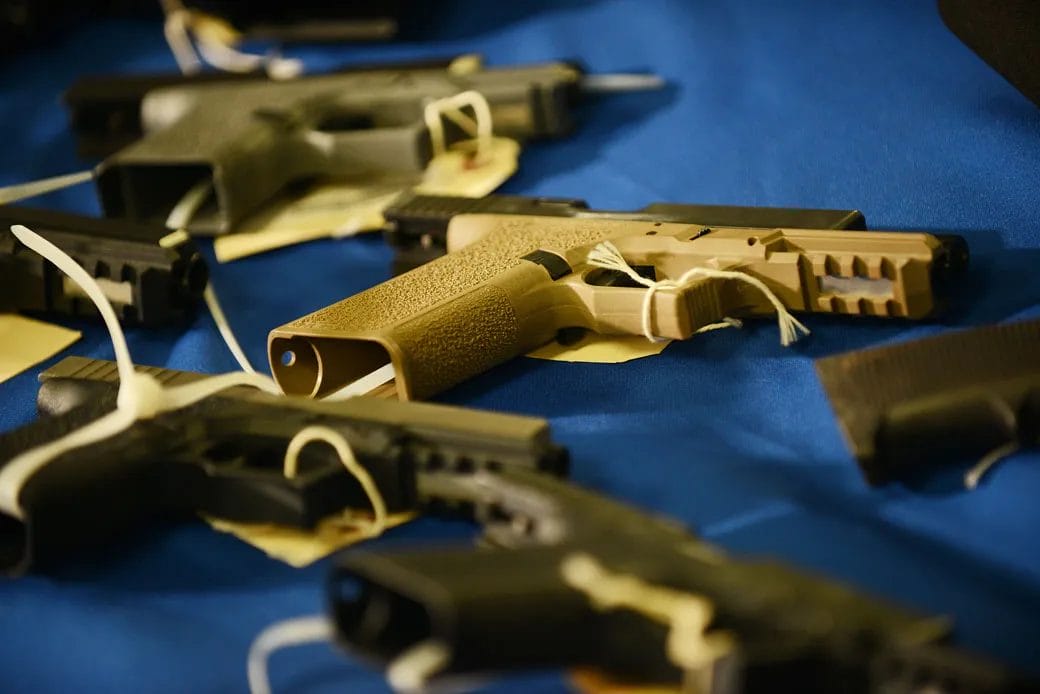
A ghost gun is a gun specifically designed to evade these laws. Lacking serial numbers, these weapons are untraceable — hence their name. More importantly still, they can be sold without a background check, allowing individuals who are legally prohibited from owning firearms — due to criminal convictions, restraining orders, or age restrictions — to obtain them with ease.
MEDIA REQUESTS
Our experts can speak to the full spectrum of gun violence prevention issues. Have a question? Email us at media@giffords.org.
Contact
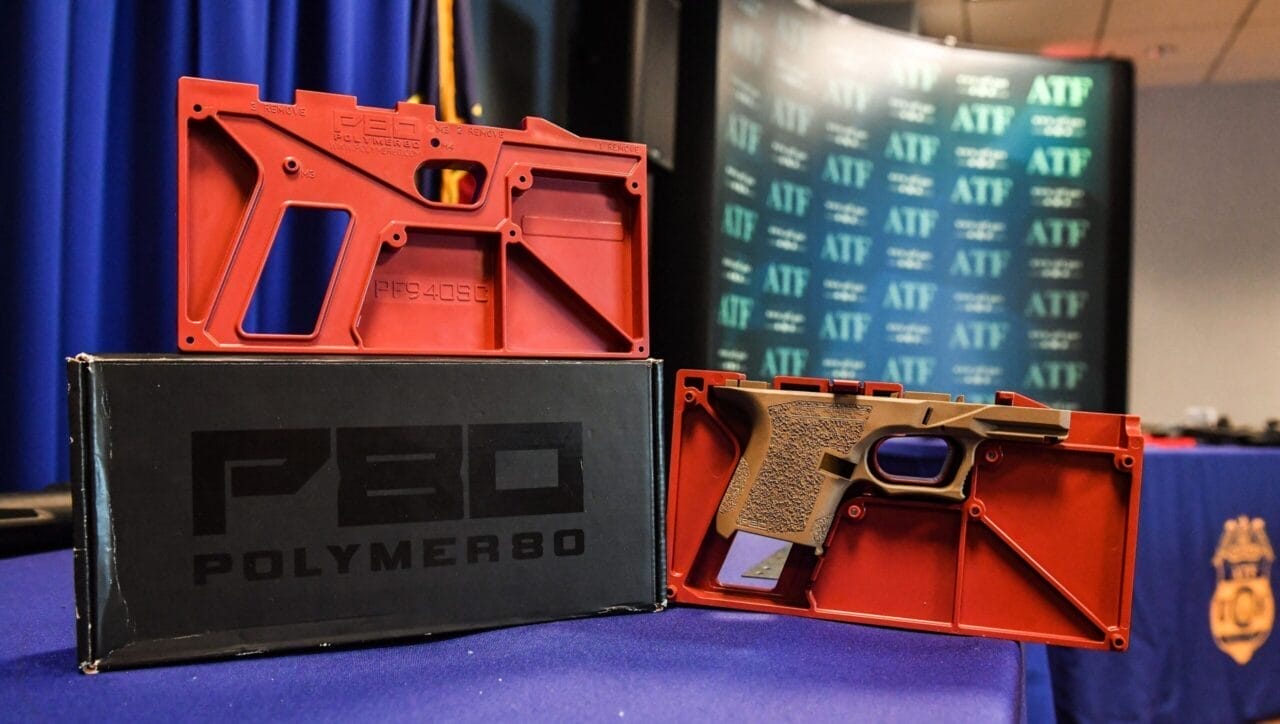
Ghost guns are sold in partially incomplete form, and the sellers claim that the product is not yet a gun because it requires some additional work from the purchaser to become a functional firearm. The amount of work required varies, but ghost gun companies have strived to make it as simple, straightforward, and quick as possible. The work can be done with nothing more than commonly owned tools, like a drill or a file, and the tools are sometimes even included in a pre-packaged kit along with the gun parts. As a result, ghost guns have proliferated rapidly in the last decade.
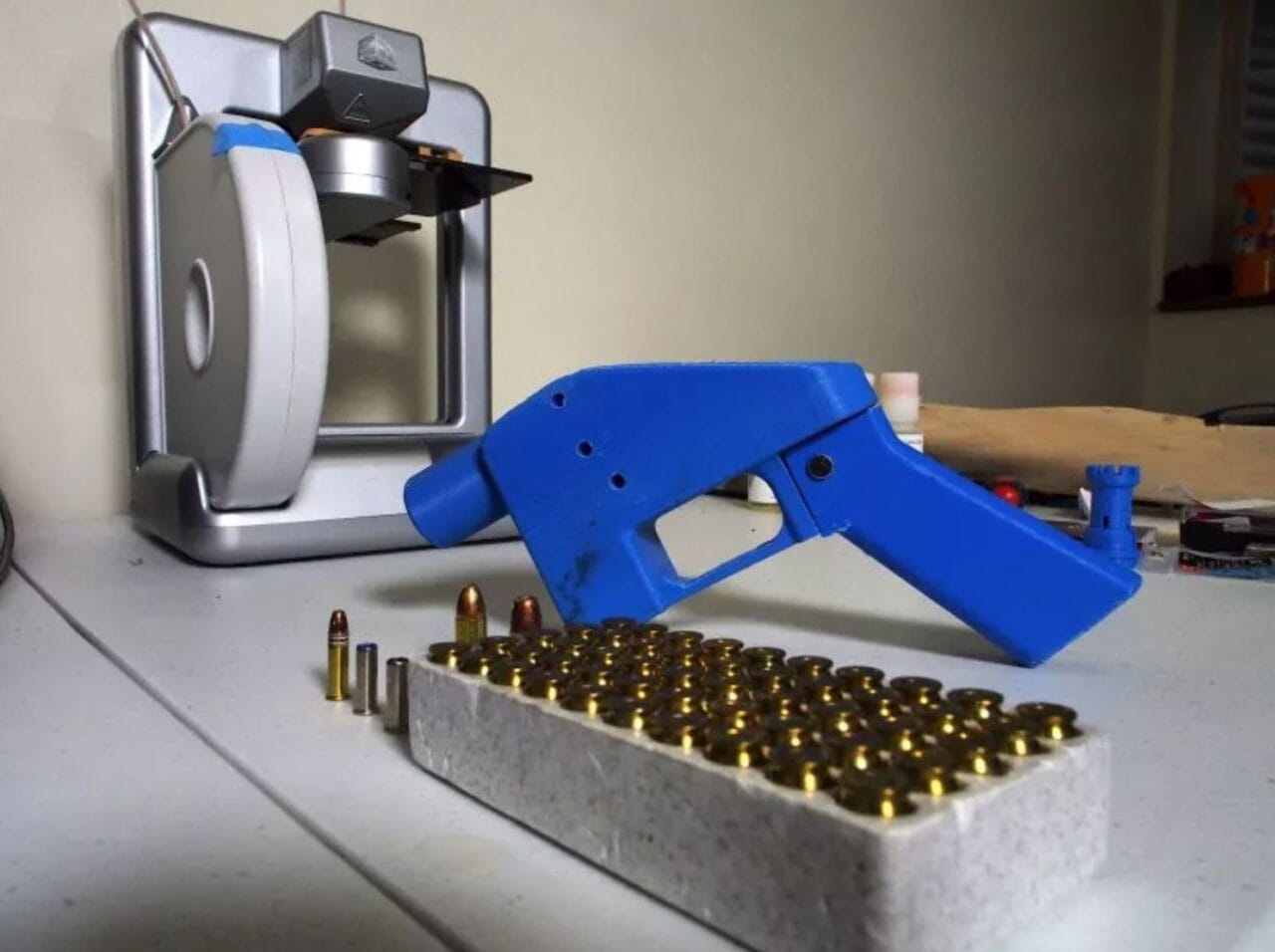
While ghost guns lack serial numbers and aren’t subject to background checks, they are capable of firing bullets just the same. Ghost guns are, in effect, a lethal do-it-yourself project that allows anyone at home to build a fully operable firearm within minutes.
Consequently, ghost guns have become the weapon of choice for illegal gun traffickers, organized crime, mass shooters, and anyone who wants to use a gun for criminal activity and murder. In fact, ghost gun companies have intentionally and specifically crafted products that are just slightly unfinished enough to evade federal law, knowing their primary market is those who are not legally eligible to own guns.
Under the plain language of the GCA, ghost guns should already be treated as firearms. The GCA definition of a firearm is not limited to the traditional, ready-made version of the weapon that comes to mind when you think of a gun, but expressly provides that a “frame or receiver” — the core components of a gun — qualify as firearms, as do products that are “designed to or may readily be converted” into functional weapons. That’s precisely what ghost gun kits contain.
Despite this, the ATF has failed to consistently regulate ghost guns and their component kits like traditional firearms. This means they have left the door open for anyone to sidestep federal law to obtain access to a gun if they so sought. If they don’t want to undergo a background check or other key protections, all they have to do is buy a ghost gun kit instead.
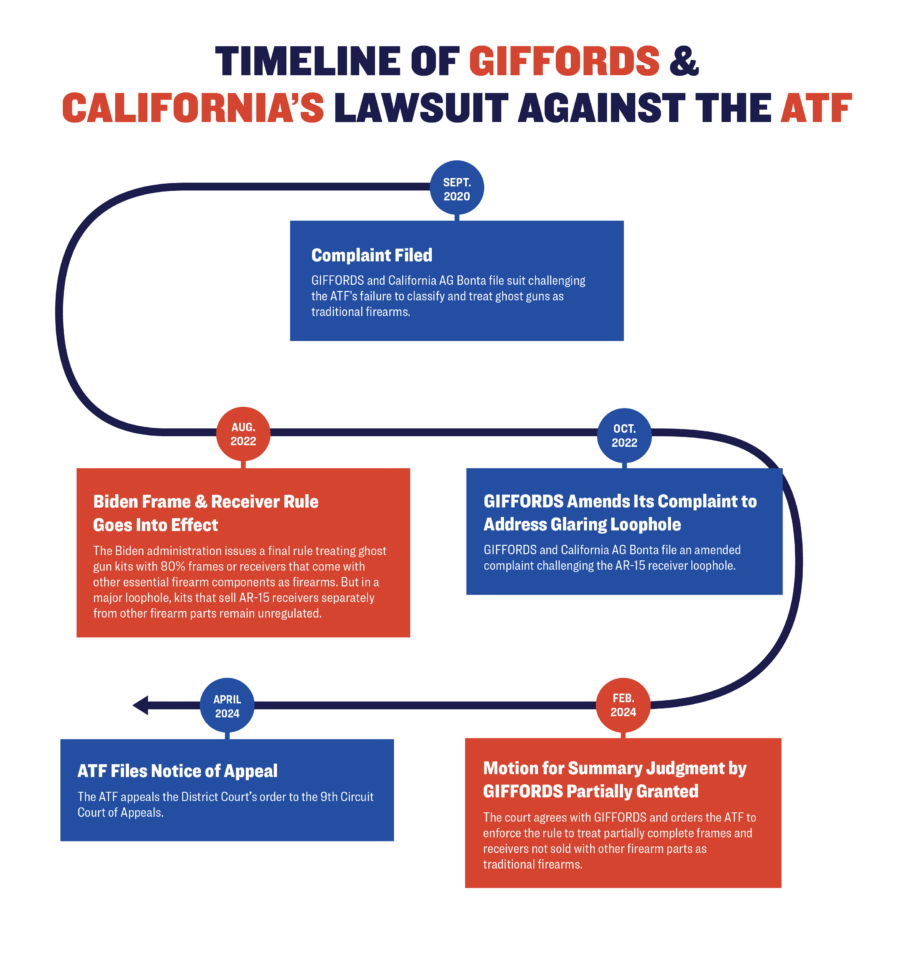
When GIFFORDS Law Center filed this lawsuit in 2020, we challenged the ATF’s policy of refusing to classify all ghost gun kits as firearms — including kits containing frames or receivers sold with assembly tools, as well as those offering just the core frame or receiver.
In 2022, during the course of this litigation, the Biden administration issued a much-needed Final Rule directing the ATF to treat ghost gun kits that include 80 percent frames and receivers, plus other essential firearm parts, as firearms under federal law. While this directive was a critical step toward addressing the rapid proliferation of ghost guns, the rule left a glaring loophole: the rule would not cover AR-15 receivers sold alone, so ghost gun sellers could simply split the same parts into separate transactions, bypassing serialization and background check requirements entirely. In fact, one seller — Juggernaut Tactical — went so far as to instruct its customers to individually purchase all the necessary parts to create a firearm from an 80 percent receiver or frame — an easy, blatant workaround of the rule’s intent.
In response, we have since amended our complaint to close this loophole and ensure that federal agencies are held accountable for enforcing our nation’s gun laws to the fullest extent, whether the parts are sold in a single kit or piecemeal. By failing to properly regulate ghost guns as firearms under the GCA, the ATF and its leadership have allowed ghost gun companies to put profit over lives and deadly weapons into the hands of dangerous criminals. In the process, the agency has put the lives of the millions of Americans it’s entrusted to protect at risk.

ATF’s Final Rule has arbitrarily determined that only 80 percent receivers sold with jig kits, templates, or similar items qualify as firearms under the GCA — leaving 80 percent receivers themselves entirely unregulated.
Our complaint alleges that the ATF’s Final Rule arbitrarily and capriciously ignores the widely acknowledged truth that 80 percent receivers sold apart from build kits may still “readily be”converted into operable firearms quickly, and therefore should be regulated as traditional firearms as the plain text of the GCA mandates.
ATF’s determination that 80 percent receivers are not firearms isn’t just contrary to the law — it’s contrary to common sense.
80 percent receivers are pieces of metal forged for one purpose only: to be quickly and easily transformed into fully functional firearms. In fact, to the lay eye, 80 percent receivers are in all material respects indistinguishable from a ready-to-fire receiver.

A graphic included in our complaint showcasing the near-identical nature of an 80% frame as part of a ghost gun kit to that of a finished frame in a ready-made firearm.
It’s true: ghost gun manufacturers have gone to great lengths to make the conversion process as fast and foolproof as possible, selling jig kits, milling machines, and blueprint instructions alongside the unfinished receivers so that individuals can create a gun that fires in less than 15 minutes. But even without these products, anyone with internet access can easily find detailed instructions for completing their receiver with common household tools — or just buy these items directly from the manufacturer’s website in a separate transaction.
The ATF’s Final Rule is so narrow in scope and insufficient to curb the sale of ghost guns that sellers themselves have openly admitted it has “very little practical effect” and “will not stop anyone who really wants to make a gun from building their own.”
Thus, we bring this lawsuit to ensure that ATF fully and faithfully enforces the GCA, as written, and close the loopholes that allow ghost gun manufacturers to continue flooding our communities with untraceable, unregulated firearms.

Today, 80 percent receivers are widely available at gun stores, gun shows, and online for purchase without a background check. Many communities have seen an explosion in the unregulated and untracked sale of “DIY” ghost gun kits and related products — and, predictably, a parallel surge in the number of these weapons showing up at crime scenes.
Between 2017 and 2023, the ATF reported a staggering 1,600% increase in the number of ghost guns recovered by law enforcement nationwide. That translates to 92,702 privately made, untraceable firearms, assembled without background checks or licenses and increasingly used to commit violent crimes. This not only endangers countless Americans, but makes it harder for the ATF to do its job to solve gun crimes and prevent gun deaths.

The gun industry’s turn to ghost guns was no accident — it was a deliberate strategy to evade federal regulations designed to keep guns out of the wrong hands. For the industry, those regulations meant a loss of profit they could not stomach — but the loss in lives, they could. Even after the Biden administration issued its Final Rule to rein in the sale of ghost gun kits with the express acknowledgment that these products were costing Americans their lives, the industry was not satisfied with only being able to sell to lawful purchasers. Instead of complying, it simply shifted tactics again, devising a new way to offer them to the public in a manner that ensured no background checks would be required and no questions would be asked.
The ATF has both the authority and the obligation to shut this loophole down. Instead, it has abdicated its responsibility, allowing unregulated gun kits and parts to flood the market unchecked. This lawsuit demands that the ATF do what the law — and public safety — requires: enforce existing rules and protect our communities from the growing threat of ghost guns.
Our lawsuit seeks the following forms of relief:
- A court order declaring that 80 percent receivers are “firearms” under the GCA, even when sold without a kit, template, or other materials;
- Declaring null and void, with no force and effect, the portions of ATF’s Final Rule and guidance providing that 80 percent receivers are not “firearms” under the GCA unless sold with a kit, template, or other materials;
- Preliminarily and permanently enjoining the ATF from implementing and enforcing any agency action, decision, or guidance providing that 80 percent receivers are not “firearms” under the GCA.
This case is about more than a single federal agency’s policy or even one statute’s interpretation — it’s about safeguarding the integrity of our nation’s commonsense gun laws. After all, what value do our laws hold if the very agencies charged with enforcing them refuse to act? Regulations mean nothing without enforcement, and without enforcement, communities across the country are left vulnerable to preventable gun violence.
The civil lawsuit against the ATF, California et al. v. ATF, et al., was filed on September 29, 2020, in the federal district court for the Northern District of California (Case No. 3:20-cv-06761). The plaintiffs included the State of California and Giffords, as well as Bryan Muehlberger and Frank Blackwell — two parents who lost children in the November 2019 tragedy at Saugus High School committed with a ghost gun. The Court subsequently dismissed the individual plaintiffs on procedural grounds.
The defendants named in the suit included the Bureau of Alcohol, Tobacco, Firearms, and Explosives (ATF); Regina Lombardo, in her official capacity as Acting Deputy Director of ATF; Michael R. Curtis, in his official capacity as Chief of the Firearms Technology Industry Services Branch of ATF; the United States Department of Justice (DOJ); and William Barr, in his official capacity as Attorney General of the United States.
Following the District Court’s February 26, 2024, ruling on the parties’ cross motions for summary judgment, Defendants appealed the case to the 9th Circuit Court of Appeals.
Proceedings in the 9th Circuit were stayed pending the US Supreme Court’s decision in Garland v. VanDerStok (SCOTUS No. 23-852), and the stay was lifted following the Supreme Court’s March 26, 2024 decision.
State of California et al. v. Bureau of Alcohol, Tobacco, Firearms, & Explosives (ATF) et al.
Case No. 3:20-cv-06761 (N.D. Cal.)
| Date Filed | Key Filing |
|---|---|
| 9/29/2020 | |
| 11/30/2020 | ATF Motion to Dismiss Defendants filed a motion to dismiss the case. |
| 12/30/2020 | Our Reply in Opposition to ATF’s Motion to Dismiss We filed a brief opposing Defendants’ motion to dismiss the case. |
| 1/11/2021 | ATF Reply In Support of Its Motion to Dismiss Defendants filed a reply brief further supporting their motion to dismiss the case. |
| 3/19/2021 | Our Statement of Recent Decision We filed a letter notifying the court of a recent ruling from another circuit, City of Syracuse v. ATF (S.D.N.Y. 1:20-cv-06885-GHW), supporting our opposition to ghost gun companies attempting to intervene in the case. |
| 5/20/2021 | Joint Stipulation with Proposed Order to Stay Case We filed a joint stipulation with the court to stay the case pending the issuance of ATF’s new Final Rule on ghost guns. |
| 5/21/2021 | Court Order Granting Stipulation to Stay the Case The court granted our motion, staying the case until ATF’s new Final Rule is issued. |
| 10/20/2022 | Our First Amended Complaint In light of the loophole left behind in ATF’s new Final Rule, we filed an amended complaint updating our claims against Defendants to address ghost gun kits selling frames or receivers separately from other essential parts. |
| 11/18/2022 | ATF Motion to Dismiss Amended Complaint Defendants filed a motion to dismiss the case for lack of jurisdiction in response to our amended complaint. |
| 12/21/2022 | Our Reply in Opposition to ATF’s Motion to Dismiss We filed a brief opposing Defendants’ motion to dismiss the case. |
| 1/12/2023 | ATF Reply in Support of Its Motion to Dismiss Defendants filed a reply brief further supporting their motion to dismiss the case. |
| 2/9/2023 | Court Order Granting in Part and Denying in Part ATF’s Motion to Dismiss The court granted in part and denied in part ATF’s motion to dismiss the case, dismissing individual plaintiffs Frank Blackwell and Bryan Muehlberger, but allowing California and GLC to move forward with the case. |
| 2/23/2023 | ATF Answer to Our Amended Complaint Defendants filed a brief answering to the claims in our amended complaint. |
| 7/10/2023 | ATF Statement of Recent Decisions Defendants filed a letter notifying the court of two recent rulings from other jurisdictions, VanDerStok v. Garland (N.D. Tex. 4:22-cv-00691-O) and Blue Mountains Biodiversity v. Jeffries (9th Cir. 22-35857). |
| 9/7/2023 | Our Supplemental First Amended Complaint Pursuant to the court’s directive, we filed a supplemental first amended complaint. |
| 9/28/2023 | ATF Notice of Filing of Certified Supplemental Administrative Record (Part I) Defendants filed a supplemental administrative record containing all ATF documents relevant to the administrative procedure at issue in the case. |
| 9/28/2023 | ATF Notice of Filing of Certified Supplemental Administrative Record (Part II) Defendants filed a supplemental administrative record containing all ATF documents relevant to the administrative procedure at issue in the case. |
| 10/5/2023 | ATF Motion for Summary Judgment ATF filed a motion for summary judgment in the case. |
| 10/26/2023 | Our Reply in Opposition to ATF’s Motion for Summary Judgment & Cross-Motion for Summary Judgment We filed a brief opposing Defendants’ motion for summary judgment and simultaneously seeking summary judgment in our favor. |
| 12/1/2023 | Everytown for Gun Safety Amicus Brief In Support of Our Motion for Summary Judgment and In Opposition to ATF’s Motion for Summary Judgment Everytown for Gun Safety filed a friend-of-the-court brief supporting our motion for summary judgment asking the court to decide the case in our favor. |
| 12/7/2023 | ATF Reply in Support of Its Motion for Summary Judgment and in Opposition to Our Cross-Motion for Summary Judgment Defendants filed a reply brief opposing our cross-motion for summary judgment and further supporting their motion for summary judgment asking the court to decide the case in their favor. |
| 1/4/2023 | Our Reply in Support of Our Cross-Motion for Summary Judgment We filed a reply brief further supporting our cross-motion for summary judgment. |
| 2/26/2024 | Court Order Granting in Part and Denying in Part ATF’s Motion for Summary Judgment, and Granting in Part and Denying in Part Our Motion for Summary Judgment The court granted in part and denied in part both Plaintiffs’ and Defendants’ motions for summary judgment, holding that we have standing to bring this suit against the ATF and that ATF acted arbitrarily and capriciously in determining that AR-type partially complete receivers sold without additional assembly parts are not firearms under the GCA. |
| 4/26/2024 | Notice of Appeal Defendants appealed the court’s 2/26/24 order on the motions for summary judgment. |
State of California et al. v. Bureau of Alcohol, Tobacco, Firearms, & Explosives (ATF) et al.
Case No. 24-2701 (9th Cir.)
| Date Filed | Key Filing |
|---|---|
| 5/9/2024 | ATF Motion to Stay Proceedings Defendant-Appellants filed an unopposed motion to stay the case pending the Supreme Court’s decision in Garland v. VanDerStok (23-852), another case challenging ATF’s ghost gun rule. |
| 5/13/2024 | Court Order Granting ATF’s Unopposed Motion to Stay Proceedings The Court granted the motion, staying the case until resolution of the Supreme Court decision in Garlandv. VanDerStok (23-852). |
| 4/2/2025 | ATF Motion to Remand Following the Supreme Court’s decision in Garland v. VanDerStok, Defendants asked the 9th Circuit court to vacate the District Court’s 2/26/24 ruling on the motions for summary judgment and remand the case to the district court for further proceedings. |
| 4/14/2025 | Our Reply Opposing ATF’s Motion to Remand We filed a reply brief opposing Defendants’ motion to remand to the District Court for further proceedings. |
| 4/21/2025 | ATF Reply Further Supporting Its Motion to Remand Defendant-Appellants filed a reply brief further supporting their motion to remand the case to the District Court. |
| 5/21/2025 | Court Order Denying ATF’s Motion to Remand The Court denied Defendant-Appellants’ request to remand the case to the district court, allowing appellate proceedings to continue before the 9th Circuit. |
| 8/29/2025 | ATF Opening Brief Defendant-Appellants filed their opening brief in the case, arguing that the District Court erred in its ruling vacating the challenged agency actions regarding AR-type receivers sold alone, and that Plaintiff-Appellees lack standing to sue the ATF. |
| 10/29/2025 | Our Answering Brief We filed a brief in reply, arguing that the District Court properly ruled when it vacated the ATF Final Rule excluding AR-type receivers sold as firearms under the GCA, and that both the state of California and GIFFORDS have standing to sue the ATF. |
For press inquiries or questions about this lawsuit, please email our press team at media@giffords.org.

MAKE A GIFT
Every day, the experts at Giffords Law Center work tirelessly to craft, enact, and defend the gun safety policies and programs that save lives. A safer America is within reach, but we need your courage and commitment to get there.