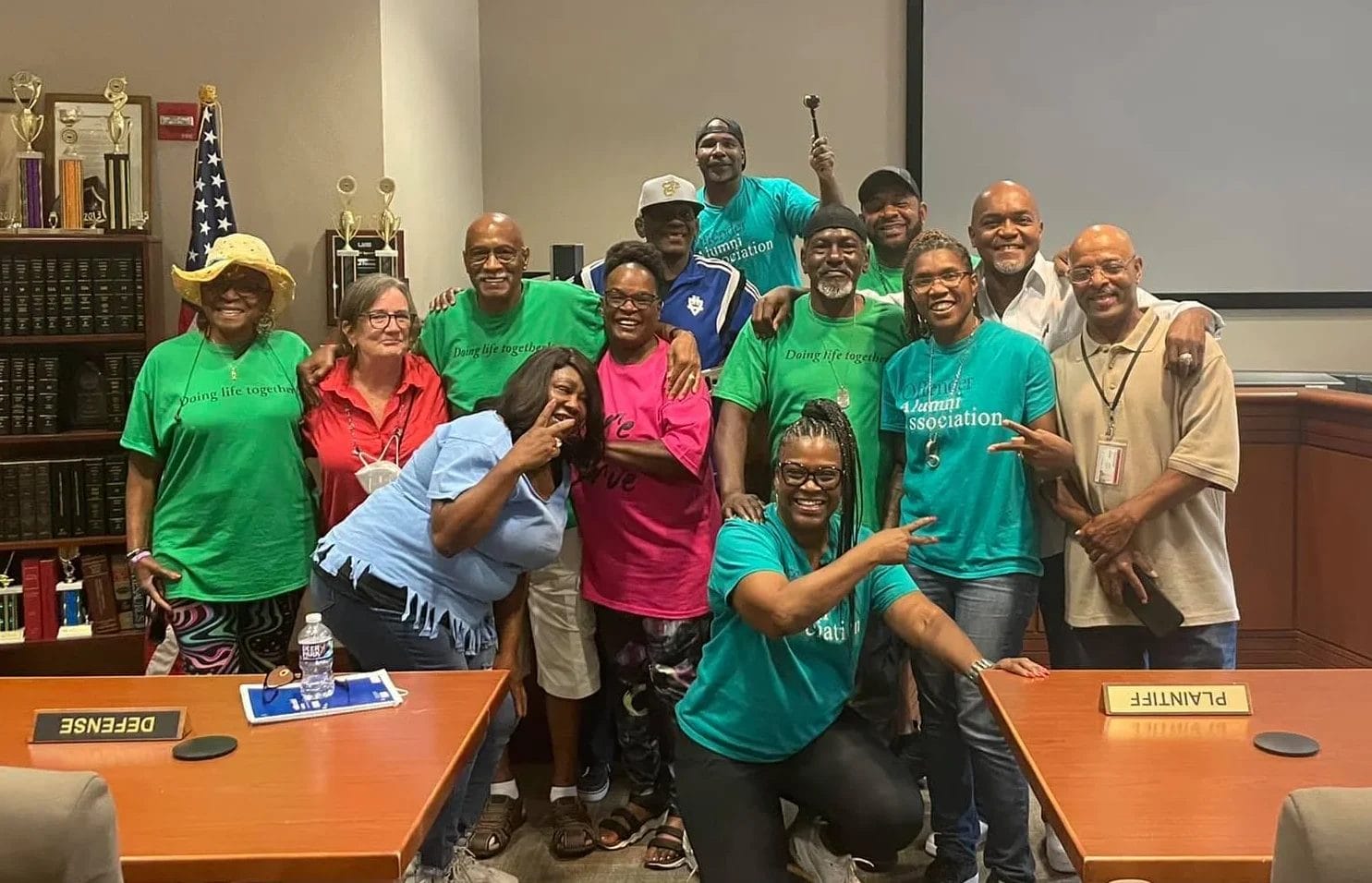
Champions for Peace: A Conversation with Dena Dickerson
Community violence intervention relies on concerned individuals willing to serve as peacemakers within their communities. They work tirelessly to prevent violence by engaging those at highest risk of using or being injured by a gun to alter the trajectory of their lives and curb the spread of violence. In this series, we hope to highlight the invaluable contributions of CVI workers and foster a deeper understanding of CVI from the perspective of the front lines.
This quarter’s Champion for Peace is Dena Dickerson, chief operating officer and a founding member of the Offender Alumni Association (OAA) in Birmingham, Alabama. With chapters in Birmingham and Gaston, Alabama, and Atlanta and Savannah, Georgia, OAA empowers formerly incarcerated individuals—“alumni” of the criminal legal system—to serve as credible messengers and peacemakers in their communities. Through hospital-based intervention, re-entry support, and youth mentoring, OAA is working to break cycles of violence and build safer, stronger neighborhoods.
This interview is edited for length and clarity.
Chief Operating Officer, Offender Alumni Association | Birmingham, Alabama
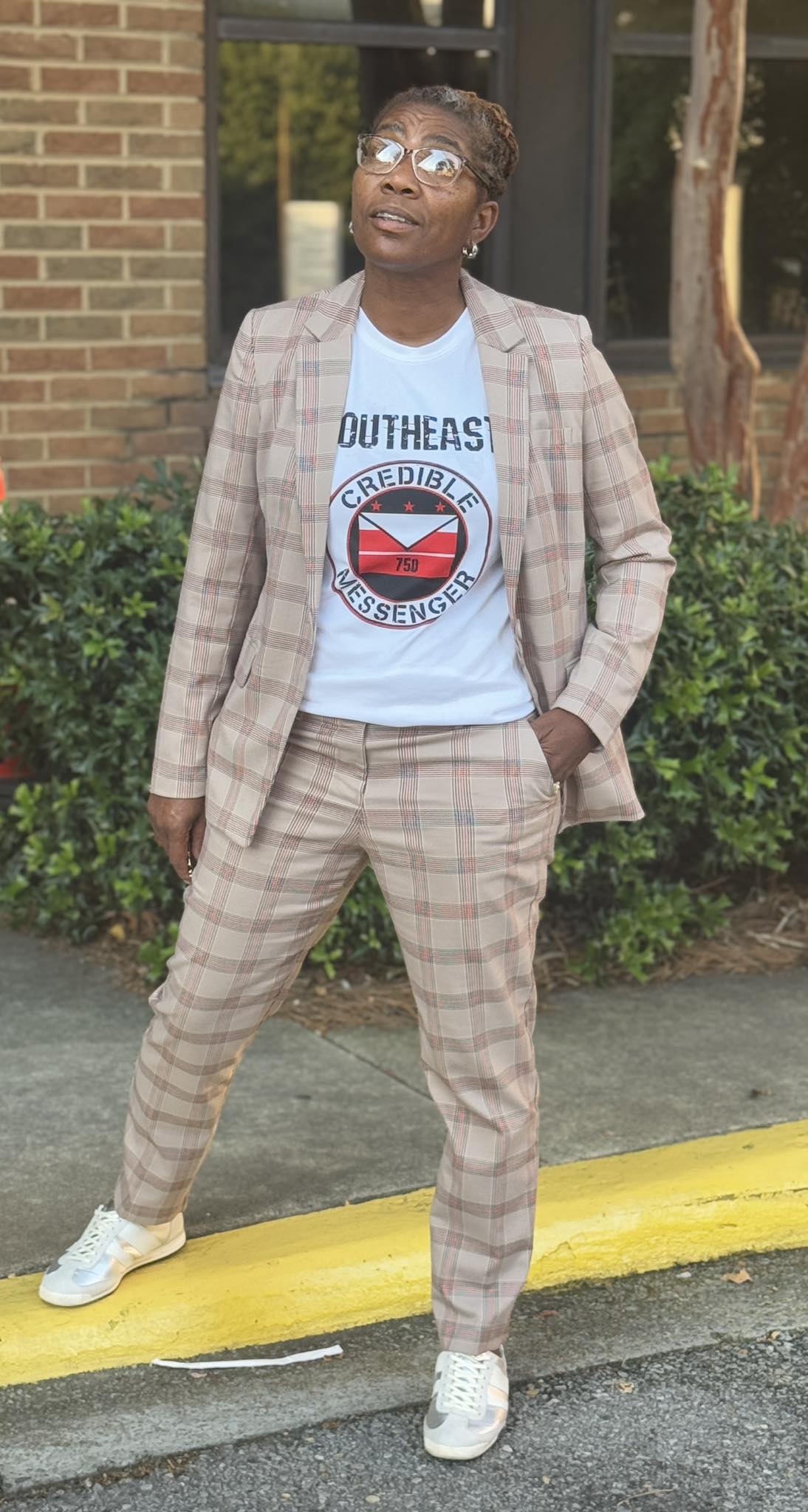
GIFFORDS Center for Violence Intervention: What does community violence intervention mean to you?
It’s interrupting those things that create the cycle of violence across communities of Black and Brown people who are most affected. Violence isn’t always physical. We have to look at the mental onslaught from systems and institutions that create the conditions where individuals feel moved to do the things that we try to disrupt.
For example, some places are starved for certain resources, like access to quality education. If we have poor education, we’re going into early adulthood lacking things we need in the job market. That starts a perpetual cycle of poverty, and poverty breeds violence.
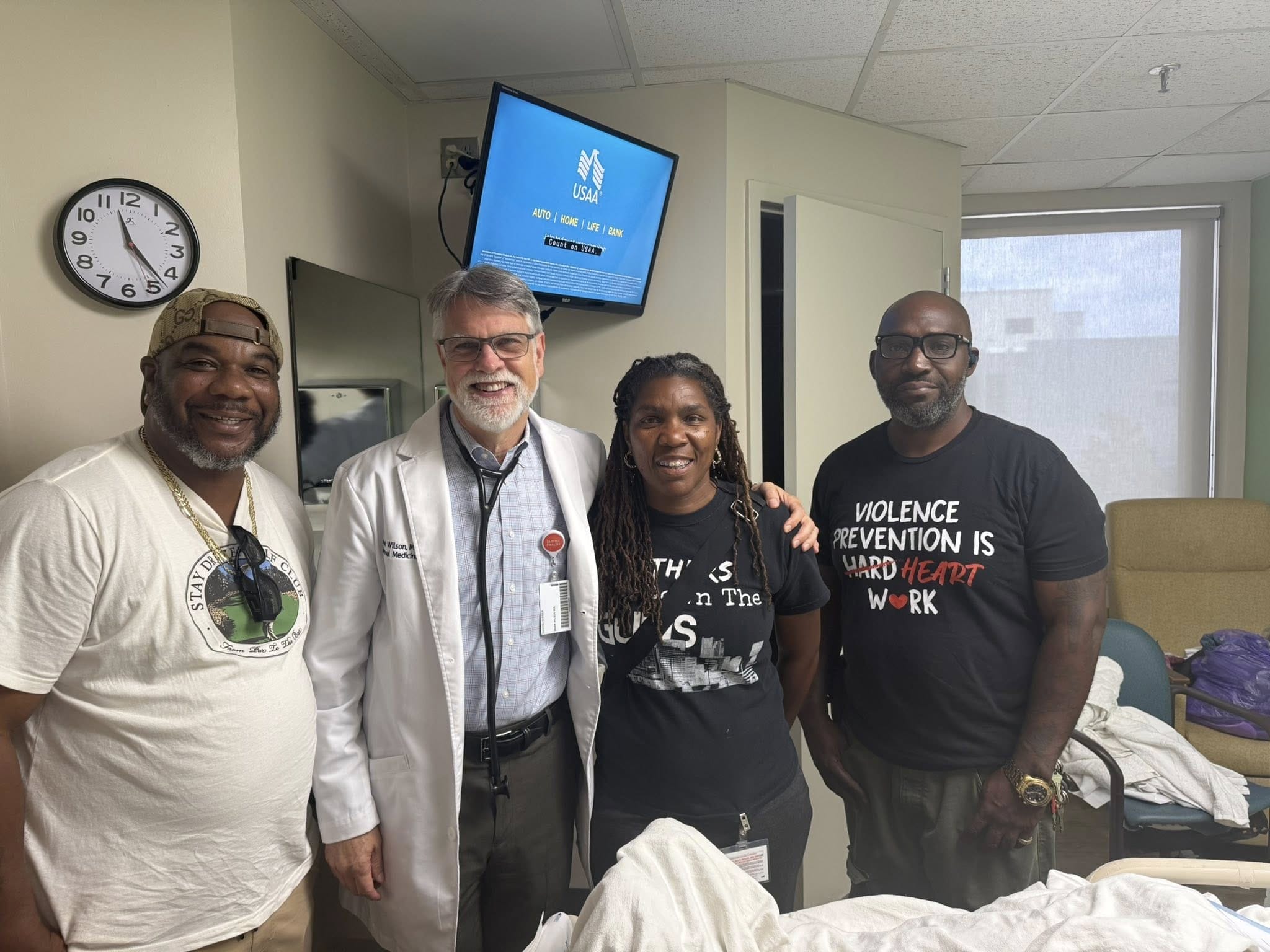
With life coaching and motivational interviewing, we’re not making a person feel judged by the conditions they’re in. We’re at the hospital bedside with gunshot victims. We’re building rapport, conducting assessments, and finding out what a person is lacking—what their ACES (adverse childhood experiences) score is and their goals are. When you’re doing this, you’re building a relationship and can guide them to a space where they might be willing to give something a shot.
It’s about cultivating a conversation that opens people up and expands them a little bit, so they can start making more informed choices based on what they want.
What brought you to this work, and how do you stay motivated?
I left prison 14 years ago wanting to do something meaningful. I knew I was going to make a difference in my life and help others, but I didn’t know exactly where or how. Then our founder, Deborah Daniels, called a luncheon and introduced the offender alumni concept. She shared her thoughts, her hopes, and her passion for it.
We started a sort of AA group the next week and we’ve been meeting every Monday since. From there, it just started evolving based on our passion and knowledge. It gave me the freedom to really dig into the community and learn.
What keeps me motivated is when the light switches on in someone and they start doing the work—showing up, making their appointments. When you see one person reach out to someone who was once in their place, that’s motivating to me.
We were able to hire one of our Heroes in the Hood recently as an ambassador and program assistant. We’ve been working with him since he was 14, and now he’s a 20-year-old dad—and helping him helps his son.
What do you wish more people understood about addressing violence?
Take the labels off. Check your biases. Understand trauma is real.
I have two grandsons—my oldest just turned seven today. They’re cute. They’ll always be cute to me, but society is going to see them in a different light depending on how they present.
If I don’t give them the best options I possibly can to help them with a fight they’re already in, they’ll be labeled a bad kid just like their grandmother was.
No one saw me at six years old walking into the bathroom during my mom’s suicide attempt, and how my walls went up in that moment. I didn’t know that six-year-old Dena was going to run my life—that she would lead me to prison with a 114-year sentence, to alcoholism, to resentment toward my mom after I was taken from home.
I eventually started to understand more about myself and what motivated my decisions. The resentment wasn’t there anymore. My mom was 27 years old with four children and none of their fathers in the house, so I started to see things differently.
That’s what I do now at OAA, guide people to their inner child without all of the heavy two-hour classes. People don’t want to go to painful places, but if you can get someone to trust you, slowly, you can help them do that.
The other thing I wish people understood is that we have to start investing in people. Bottom line. Break that trauma. We’re doing trauma-informed care and getting trained on it, and I try to use it myself—because if you’re practicing it with clients but not within yourself, are you really using it? I tell the team they’re just as important as the clients.
What is the hardest part of your job?
The hardest part is finding ways to support the people doing this work. This is heart work. It really is. There are so many people who have the heart for it, but they’re also trying to take care of themselves.
We know that you need self-care days. So let’s build a healing space in the office where you can light your candles, sit in the dark, and meditate. I want to create that within the office because we can’t always take off work.
Another challenge is that we are the experts of this community. People want metrics and KPIs, but sometimes a person might take 15 months to show progress while the program only funds 12 months. Just because someone doesn’t do it within the time you expect doesn’t mean we drop them.
We tell people, “We’re giving you a 90-day extension.” We won’t have funds to help with everything, but they can still come in. You can’t just drop people when they aren’t technically in the program anymore.
We need the freedom and agency to say, “This is a 12-month program, but some people we’re going to continue engaging for the next three months because they’re right on the cusp, and it may take us another month or two.” Or we need to create programs and funding streams that are multi-year.
What insights or advice do you have for other women in this work?
Girls continue to be the shoulders that so many others stand on. People talk about how strong we are and our resilience, but they don’t always understand what we go through to make that happen.
Love yourself first, continuously. Don’t let things outside of your control put pressure on you to the point of throwing your hands up. Know exactly who you are and what you were called to do. Great job, and keep it up—because oftentimes we don’t get recognized.
Know that you belong in this space.
Males and females, especially younger people, don’t see a lot of healthy interaction. Seeing us engage with the guys in a positive way—being respected, and us respecting them—it says a lot. Seeing them value us and even call us in on things.
Nothing is happening without us. Our faces have been in so many different spaces over the last several years. There are so many women-led organizations now, and it’s helped me see that we’re doing more than what’s being shown.
What is your biggest hope for the future of your work and the field of CVI?
My biggest hope for the future is decreasing barriers to community healing and promoting community love. Definitely a reduction in community violence—people loving themselves and others.
My hope is to create pockets of thriving communities—housing, workforce development, healing. That’s what I see the future of OAA being. Building people up to know they belong, that they can make enough money to go on vacations with their children or take care of their household as a father.
The way Homeboy Industries built somewhere you can start but isn’t where you have to stay—we need to create what people need. That can be how people spin off into whatever their career is going to be. I hope we can create paths and say, “Now you can take the yellow brick road, and it will definitely lead you home.”
Thank you, Dena Dickerson, and the team at the Offender Alumni Association. We look forward to bringing you more conversations with other dedicated peacemakers.
CHAMPIONS FOR PEACE
Our Champions for Peace series honors the people working on the ground to stop violence in their communities before it happens. If someone comes to mind as you read this, take a moment to nominate them.
Learn More
SPOTLIGHT
TRACKING CVI LEGISLATION
Community violence intervention is a crucial approach to fighting gun violence. Keep up to date on the latest CVI legislation in your state with the Giffords Community Violence Intervention Policy Analysis & Tracking Hub—CVI-PATH.
Read More
STAY CONNECTED
Interventions are most effective when they are supported by strong community networks. Sign up for Giffords Center for Violence Intervention’s newsletter to learn more about what’s happening in the field, relevant legislation, and funding opportunities.