
Gun Violence Continues to Drop
The CDC just released its data detailing the impact of gun violence in America in 2024.
In 2024, the US saw record declines in gun violence, with the gun death rate falling at its highest percentage since 1995.
A new release of final data from the Centers for Disease Control and Prevention (CDC) on 2024 gun deaths shows the most substantial signs of progress in addressing our nation’s gun violence epidemic in decades. The national gun death rate fell 7% from 2023 to 2024, resulting in 2,281 fewer lives lost. This marks the largest decline in the total gun death rate since 1995.

While the US saw modest declines in gun violence in 2022 and 2023, this decrease is especially welcome after the surges in gun violence this nation experienced between 2015 and 2021. Importantly, with these decreases, the US saw a lower number of gun deaths than it has since 2020. However, gun deaths overall still remained higher than 2019 levels.
The decline in gun deaths overall was largely driven by a substantial decrease in gun homicides, with the gun homicide rate falling 16% from 2023 to 2024. Homicide declines were felt across the country, and resulted in 2,563 fewer lives being lost.
Although the news of falling gun violence is encouraging, the data is not all good news. 44,447 Americans lost their lives to gun violence in 2024, the fifth-highest number of gun deaths on record. That represents one person dying from gun violence every 12 minutes. Additionally, the number of gun suicides, which represented 57% of all gun deaths in 2024, increased by nearly 300 deaths. As a result of this increase, gun suicides reached their highest level on record. In total, 27,593 Americans lost their lives to gun suicide in 2024.

Gun violence also continued to be the leading cause of death for American children ages one to 17 for the fifth year in a row. One out of every 16 children under 18 who died in 2024 was killed by a gun. And substantial racial disparities in gun violence continued to persist: In 2024, Black Americans were 12 times more likely to be killed in gun homicides than white Americans.
The CDC’s mortality data, which is based on data compiled from death certificates, is the most complete and accurate source for information on gun deaths in America. These data not only provide insight on the past, but also help us chart a course forward for understanding how we can build on progress. Understanding the different and disparate impacts of gun violence on various geographic and demographic communities can help us better design policies and programs to effectively combat this crisis.
However, this data alone is not sufficient. These numbers merely provide insight into what has changed about gun violence in America—not why it changed. There are several theories about the drivers of these declines in gun homicides, from the waning of the pandemic to increased investments in local communities, including dedicated funding for community violence intervention programs. It is critical that we invest in future research to explore these factors further and provide more insight into what propelled this progress.
GET THE FACTS
Gun violence is a complex problem, and while there’s no one-size-fits-all solution, we must act. Our reports bring you the latest cutting-edge research and analysis about strategies to end our country’s gun violence crisis at every level.
Learn More
Below, we dive into the specific trends we’re seeing across different types of gun violence.
Gun Homicide
Our nation’s sharp decrease in gun homicides fueled the reduction in the overall gun death rate. 15,364 people were killed in gun homicides in 2024—down from 20,958 people in 2021.
Gun homicides declined in nearly every corner of the US, though not all states have returned to pre-2020 homicide levels.
- All but six states—South Dakota, Nebraska, Wyoming, Delaware, Minnesota, and West Virginia—had a lower gun homicide rate in 2024 compared to 2023. However, 33 states had higher gun homicide rates in 2024 than they did in 2019.
- Among a sample of 243 counties with at least 10 homicides in 2023 and 2024, roughly three in every four counties had a lower gun homicide rate in 2024 compared to 2023. Decreases were seen in rural, suburban, and urban counties.
Guns continue to drive our nation’s homicide crisis, but the share of homicides committed with guns is down slightly.
- Guns were used in 76% of 2024 homicides—down from 81% in 2021.
- Since 2015, the number of gun homicides has increased 18%; non-firearm homicides did not substantially change over this period.
- Importantly, however, much of the fall in homicides since 2022 has been driven by a decrease in gun homicides. Gun homicides have fallen 27% since 2021; non-gun homicides have fallen just 5% over this same period.
Furthermore, decreases in gun violence were observed across nearly all demographic groups.
- The gun homicide rate fell for every racial group, although the magnitude of gun homicide rate decreases varied. Asians and Native Hawaiians and Pacific Islanders experienced the largest decreases in gun homicide rates (26% and 22%, respectively), followed by Latinos (18%), Black people (17%), American Indian/Alaska Natives (11%), white people (11%), and people of more than one race (10%).
- The gun homicide rate fell 16% for men and 13% for women.
- The gun homicide rate fell for nearly every age group, except those over the age of 75.
Gun Suicide
While the US saw great progress reducing homicides in 2024, the number of gun suicides continued to rise. In 2024, gun suicide claimed the lives of 27,593 Americans. This number represents the highest number of gun suicides on record. In fact, this is the fourth year in a row that the US has set a new record high number of gun suicides.
Importantly, the gun suicide rate did decrease slightly, because the increase in suicide deaths was proportionally smaller than the increase in the total US population. The gun suicide was 0.8% lower in 2024 compared to 2023.
The 2024 data indicates that firearms overwhelmingly fuel our nation’s suicide crisis.
- In 2024, 57% of suicides were gun suicides—the highest percentage on record.
- There are some indications that trends in firearm and non-gun suicides are diverging. The number of gun suicides increased by 1% in 2024 compared to 2023, while the number of non-gun suicides fell by nearly 4% over this same time period. Non-gun suicides have fallen in three of the last five years, while gun suicides have risen in all of those same years.
There was substantial geographic variability in trends in gun suicide rates from 2023 to 2024.
- Although the overall national gun suicide rate fell slightly, 24 states had a higher gun suicide rate in 2024 than in 2023.
- The largest increases in gun suicide rates were observed in Connecticut (31%), South Dakota (27%), and Massachusetts (22%). States with the largest decreases in the gun suicide rate were Hawaii (40%), Vermont (16%), West Virginia (15%), and Utah (11%).
Overall, gun suicides fell for most age groups and most racial groups. However, suicide rates rose sharply for some young people of color.
- The firearm suicide rate fell for nearly every age group, with increases observed only for the 45–54 year and 55–64 year age groups.
- The firearm suicide rate also fell for most racial groups from 2023 to 2024. The gun suicide rate fell 37% of Native Hawaiians and Pacific Islanders, 9% for Asians, 7% for American Indians and Alaska Natives, and 1% for Black people. However, gun suicide rates rose for people of more than one race (10%) and Latinos (3%). The gun suicide rate among white people did not meaningfully change over this period.
- Despite these trends overall, young people of color saw troubling increases in gun suicides. The gun suicide rate for 10–24 year old American Indian/Alaska Natives rose 23% from 2023 to 2024. Increases were also seen for Black youth (3%), Latino youth (3%), and young people of more than one race (2%). Asian and white people of the same ages saw declines in the gun suicide rate (15% and 2%, respectively).
Unintentional Gun Deaths
In 2024, 450 people were killed in unintentional shootings, slightly down from 463 deaths in 2023. In fact, 2024 saw the lowest number of unintentional gun deaths on record, and the unintentional gun death rate is 48% percent lower in 2024 than 20 years earlier in 2005.
Children continue to be disproportionately impacted by unintentional gun violence.
- Nearly one-third (32%) of unintentional gun deaths in 2024 were of children under 18. Studies show that the vast majority of these deaths involve children accessing improperly stored firearms in their homes or the homes of trusted adults.
- The number of unintentional child gun deaths increased slightly from 2023 to 2024, from 133 in 2023 to 142 in 2024.
- Children of color see an even more disparate impact of unintentional gun violence compared to white children: 61% of unintentional shooting deaths among children in 2024 involved children of color.
Police Shootings
The new CDC data shows that law enforcement shot and killed 636 people in 2024—an increase from 604 in 2023. However, the CDC’s accounting of police shootings has been shown to be unreliable and incomplete due to undercounting and misclassification. Therefore, using CDC data to understand fatal police shootings and other police violence distorts the complete picture of this problem.
Mapping Police Violence, an independent organization that tracks incidents of fatal police violence across the country, found that law enforcement shot and killed 1,210 people in 2024, more than double the CDC’s number. In the overwhelming majority of these deaths—95%—people killed by police were killed with guns.
This new data is a strong signal that our nation’s gun violence crisis is declining, and preliminary indications suggest that the decreases in gun homicides continued to grow in 2025. This progress is meaningful: It means that 2,281 people survived and that 2,281 families did not have to mourn the loss of a loved one.

But unfortunately, our nation’s gun violence crisis is nowhere near over. While we must celebrate our progress, this nation is still at a crisis point. The number of gun suicides rose to record levels, kids are still more likely to die from gun violence than any other cause, and 44,447 people lost their lives from this epidemic in a single year.
Now is not the time to take our foot off the gas—We must continue to meet this epidemic with action. We know what works to prevent gun violence, from strong gun policies like purchaser licensing and extreme risk laws to meaningful investments in community violence intervention programs. Our leaders must double down on these proven strategies to build on the gains we saw.
TAKE ACTION
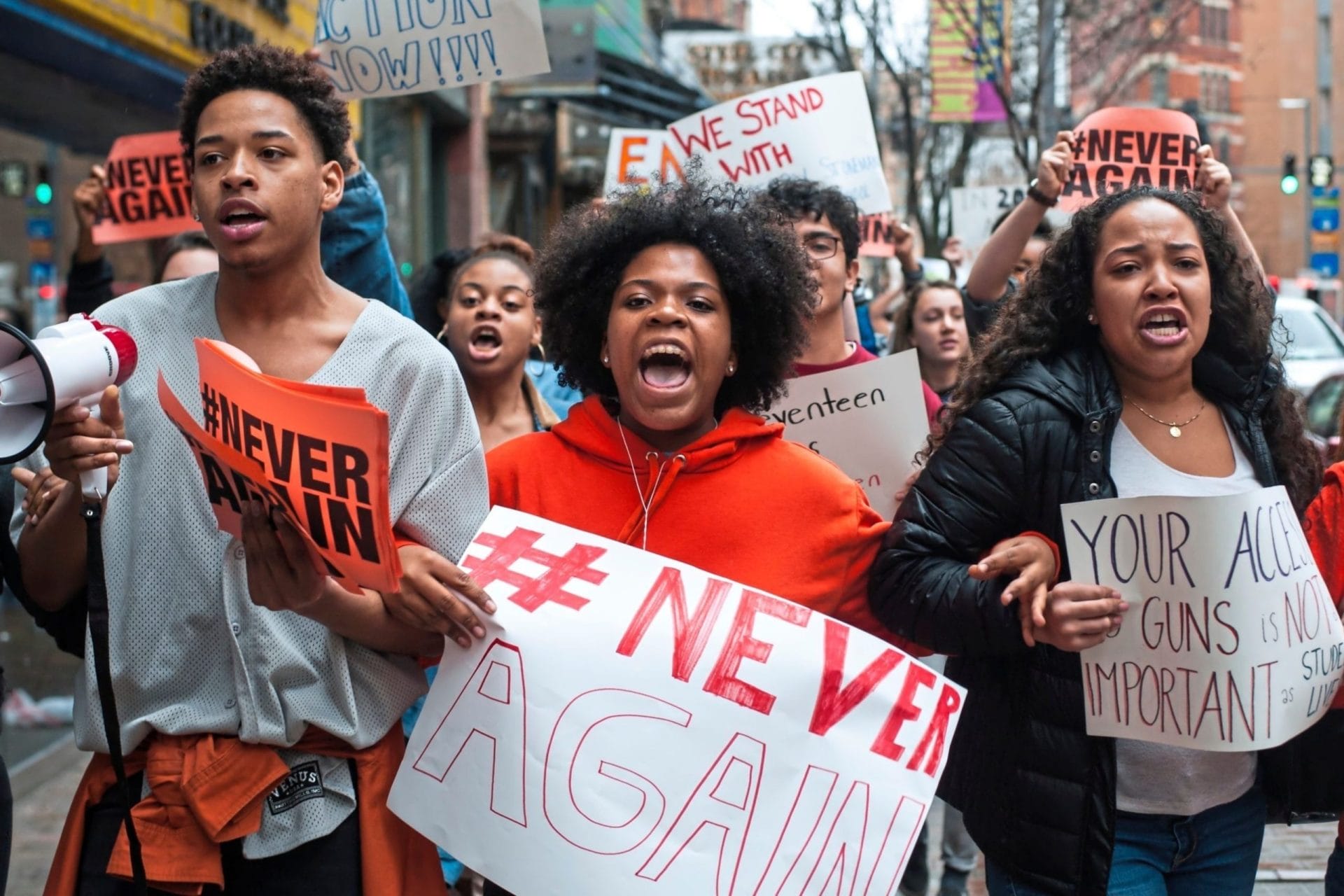
Students, veterans, survivors: Americans from all walks of life across the country are standing up for commonsense gun reform. If you’re fed up with politicians who care more about protecting gun lobby profits than your safety, stand with us in this fight.
Join Us