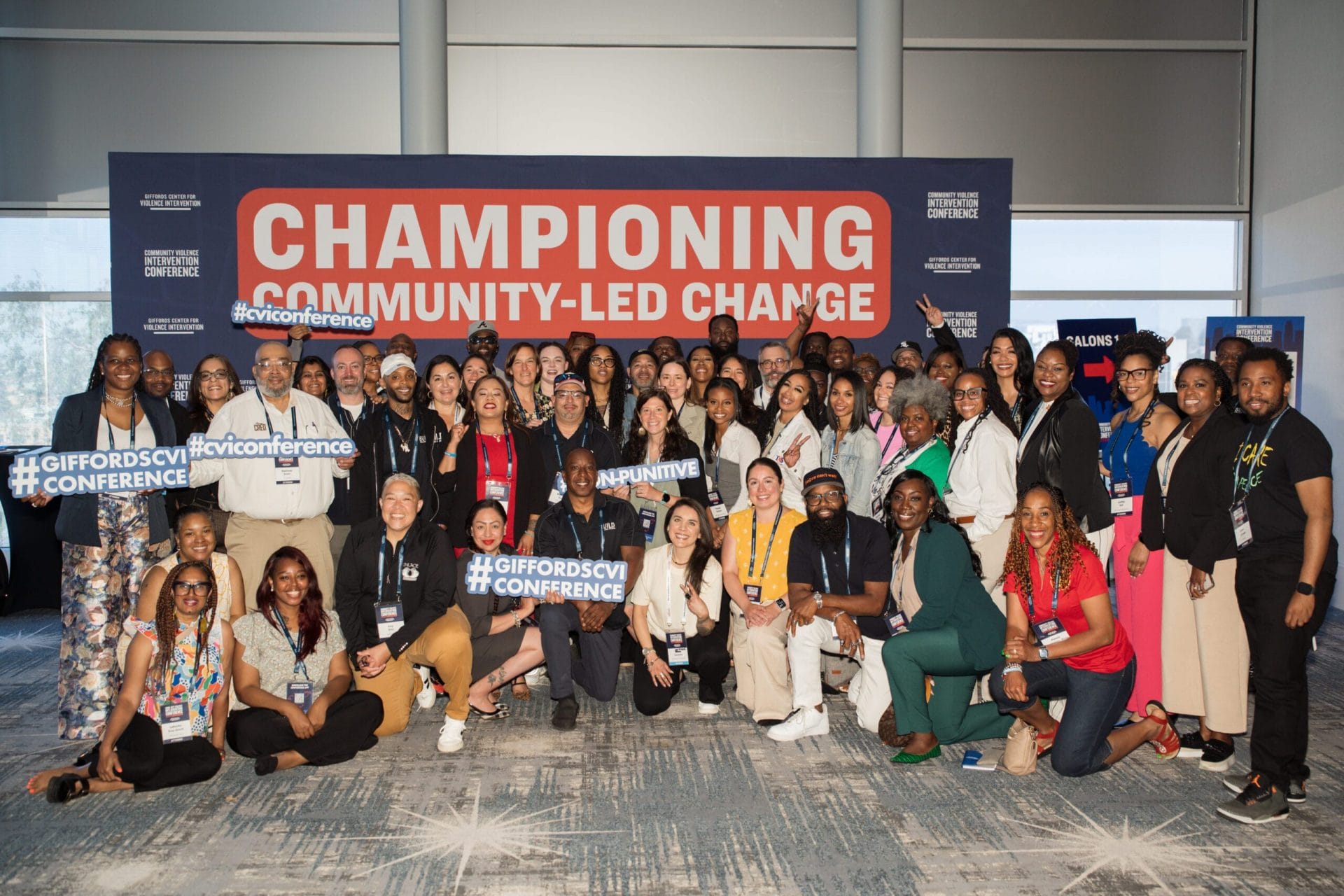
Building the Future: Reflecting on the Community Violence Intervention Conference
Our movement came together to commemorate, grow, and continue to shape community-led safety.
In June, GIFFORDS Center for Violence Intervention convened nearly 1,000 people for its third annual CVI Conference.
In the past, I showed up like most attendees do: to represent my organization, connect with leaders doing powerful work, and learn from the stories and strategies shaping this field. I wasn’t thinking about everything that goes into planning a conference of this magnitude—especially one that seeks to convene participants from across the country and amplify insights from the frontlines of violence intervention work over just two days.
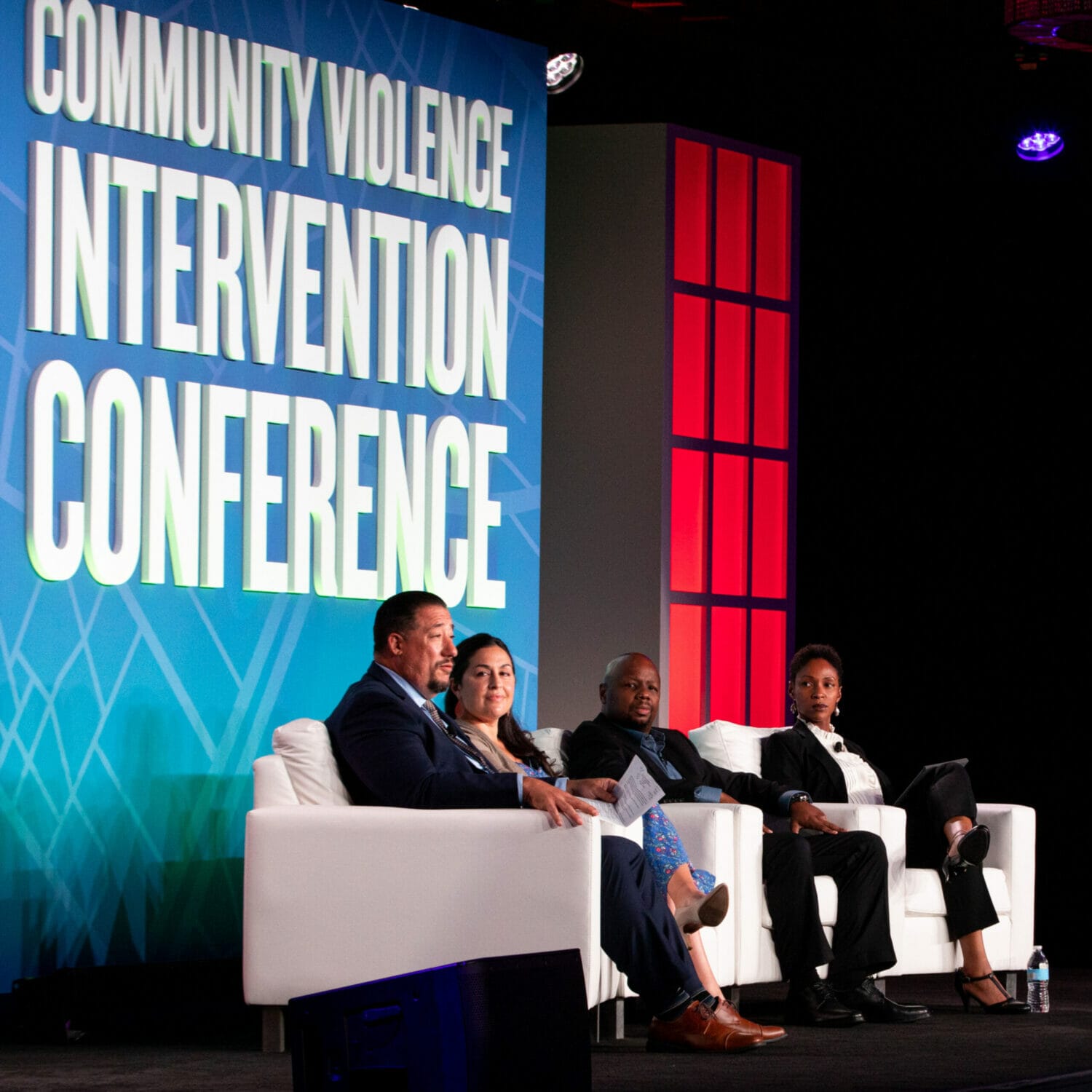
But this year was different. I’m the newest member of the GIFFORDS Center for Violence Intervention team, and for the first time I got to help plan, build, and execute the nation’s largest convening dedicated exclusively to community violence intervention (CVI). And when you’re on that side of the work, you see everything it takes to create a space like this. I witnessed our team leverage the challenges facing our movement to affirm the core elements of this work: community building, healing, and peacemaking.
And this year, we faced more challenges than usual. The CVI field has become one of the many casualties of federal cuts, with over $800 million rescinded in grants to local gun violence prevention and crime reduction programs—including $145 million in federal Community-Based Violence Intervention and Prevention Initiative (CVIPI) grants. As our movement continues to deal with the fallout of this funding cut, the futures of many organizations and peacemakers are uncertain.
But to us, these dangerous actions highlighted just how important it was to create a safe space for those doing this work. Our team adapted to our new circumstances and doubled down on our mission to ensure those most impacted by gun violence lead the conversation and shape the direction of national strategy despite efforts to erase their work. It is an honor to be part of such a driven team of compassionate leaders who are dedicated to furthering CVI.
Prior to the conference, there were several times I found myself overwhelmed as I took in everything that goes into ensuring 1,000 people take part in a worthwhile experience. My colleague Kris McLucas kindly reminded me to “trust the process,” and his reassuring message grounded my approach to the experience. I also watched how this approach resonated with attendees throughout the conference—the exchanges of fellowship, curiosity, and courage reinforced a fundamental truth: while this movement is navigating uncertain ground, homegrown peacemakers have not faltered in their trust that this work works and will continue to exist regardless of political challenges.
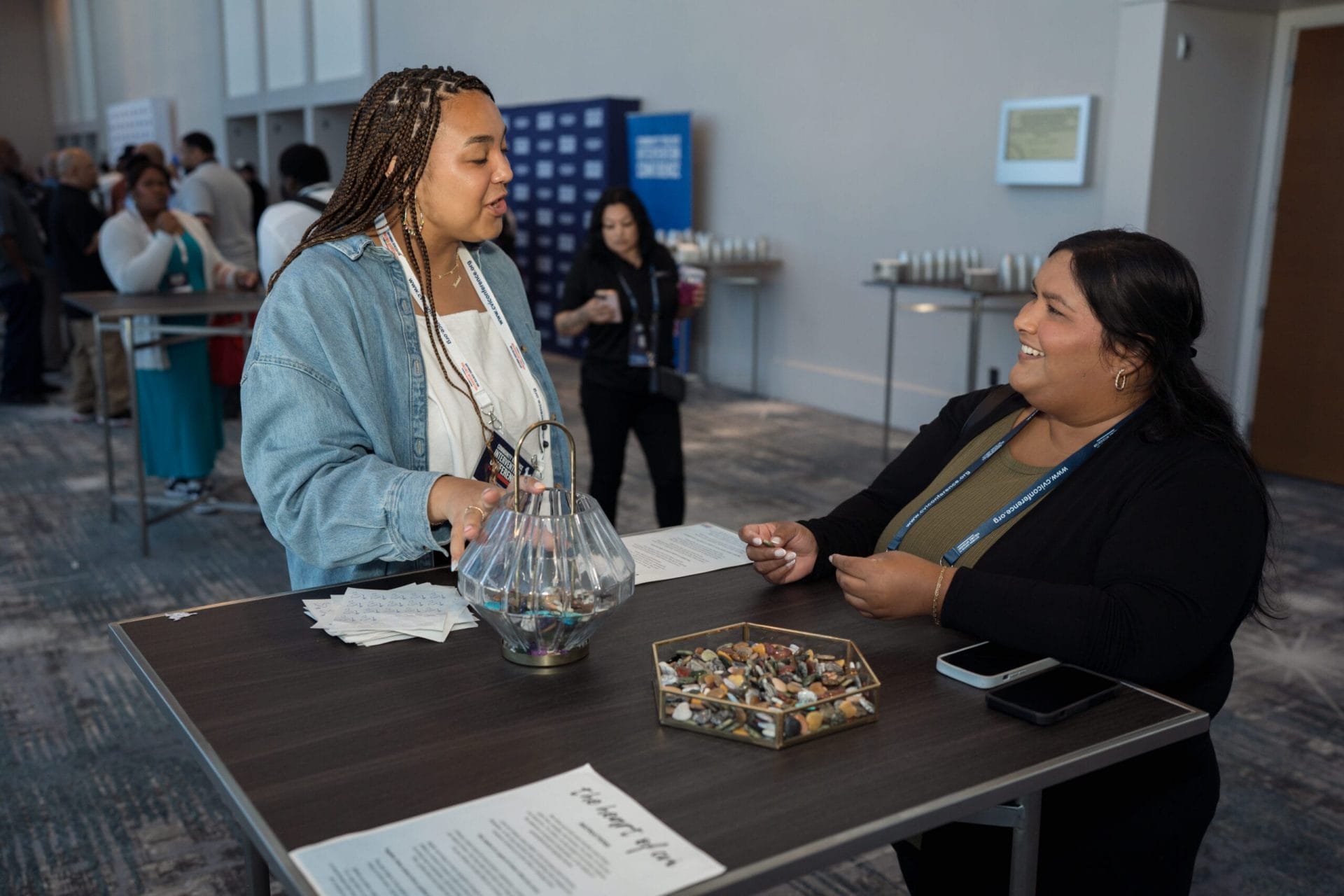
I was honored to be a part of inaugurating our collective remembrance station, which greeted participants as they made their way into the space. This station, “The Heart of CVI: A Collective Act of Remembrance,” was an interactive memorial that offered attendees an opportunity to pause, reflect, and pay homage to the people and experiences that brought each of us to this work. Participants were invited to choose a heart-shaped stone in recognition of a person or experience they wanted to honor—I heard stories of loved ones lost to violence, the weight of surviving harm, the absence of someone incarcerated, or the impact of trauma still felt. After that moment of reflection, each person placed their stone into a large glass container alongside everyone else’s to symbolize a powerful reminder of our shared grief and collective remembrance.
Providing this station was important for our team, because we know firsthand that as part of this movement, our motivations come from a mixture of grief, love, memories, and purpose that stems from loss in our communities. Often, the motivation that drives so many of us gets lost in trying to push good work forward—so we made the decision to ensure our conference is a space that honors what we carry and who we do this work for.
Day 1
Even today, I’m still remembering the power of Monday morning. During part of conference’s opening plenary session, “In Their Own Words: The Sacrifices and Struggles of CVI Workers,” our vice president of GIFFORDS Center for Violence Intervention, Paul Carrillo, asked Skipp Townsend from 2nd Call and Sam Castro from the Institute for Nonviolence Chicago to reflect on moments of failure in their frontline work. The experience that Sam shared moved me to tears.
He reflected on a painful moment of losing a participant of his program to gun violence and the solace he found in the community as he grieved. Sam recalled, “What brought the healing back to me was when the mother asked me to speak at his funeral. When I asked her ‘Why me?’ She said, ‘Because my son said you changed his life.’ But I asked, ‘How did I change his life and we are burying him?’ But the mom came and hugged me and said, ‘But you tried Sam, and I saw the transformation in him,’ and I said, ‘I’ll take that, and it was a blessing.’”
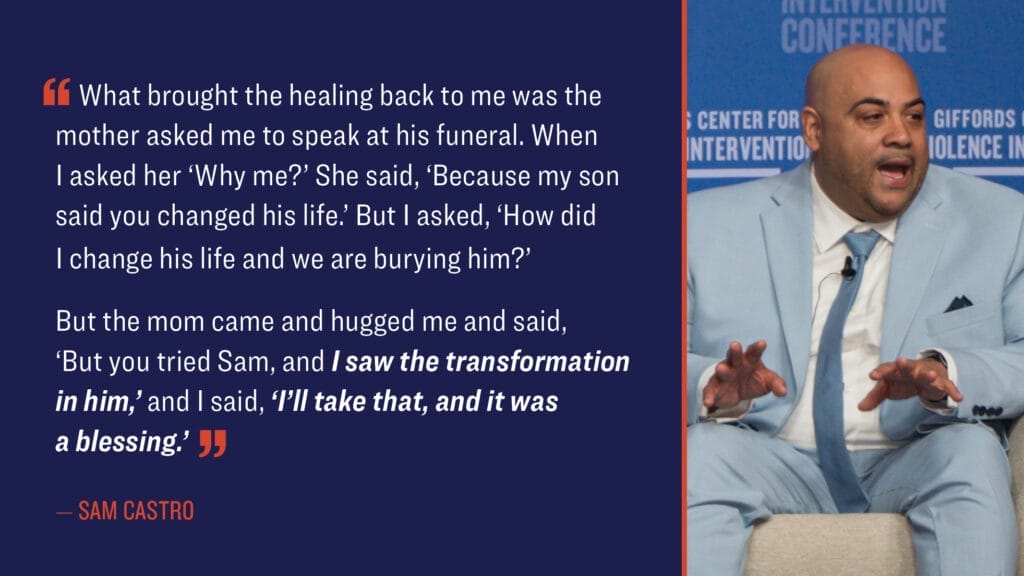
Sam’s vulnerability reflected the difficult truths that frontline leaders face in this work as they transform their pain into purpose. For me, this moment further contextualized the proof that homegrown peacemakers exemplify an irrefutable investment in their communities by showing up every day to interrupt violence. It also demonstrated that even through devastating loss, their work is transforming our communities for the better and people are noticing.
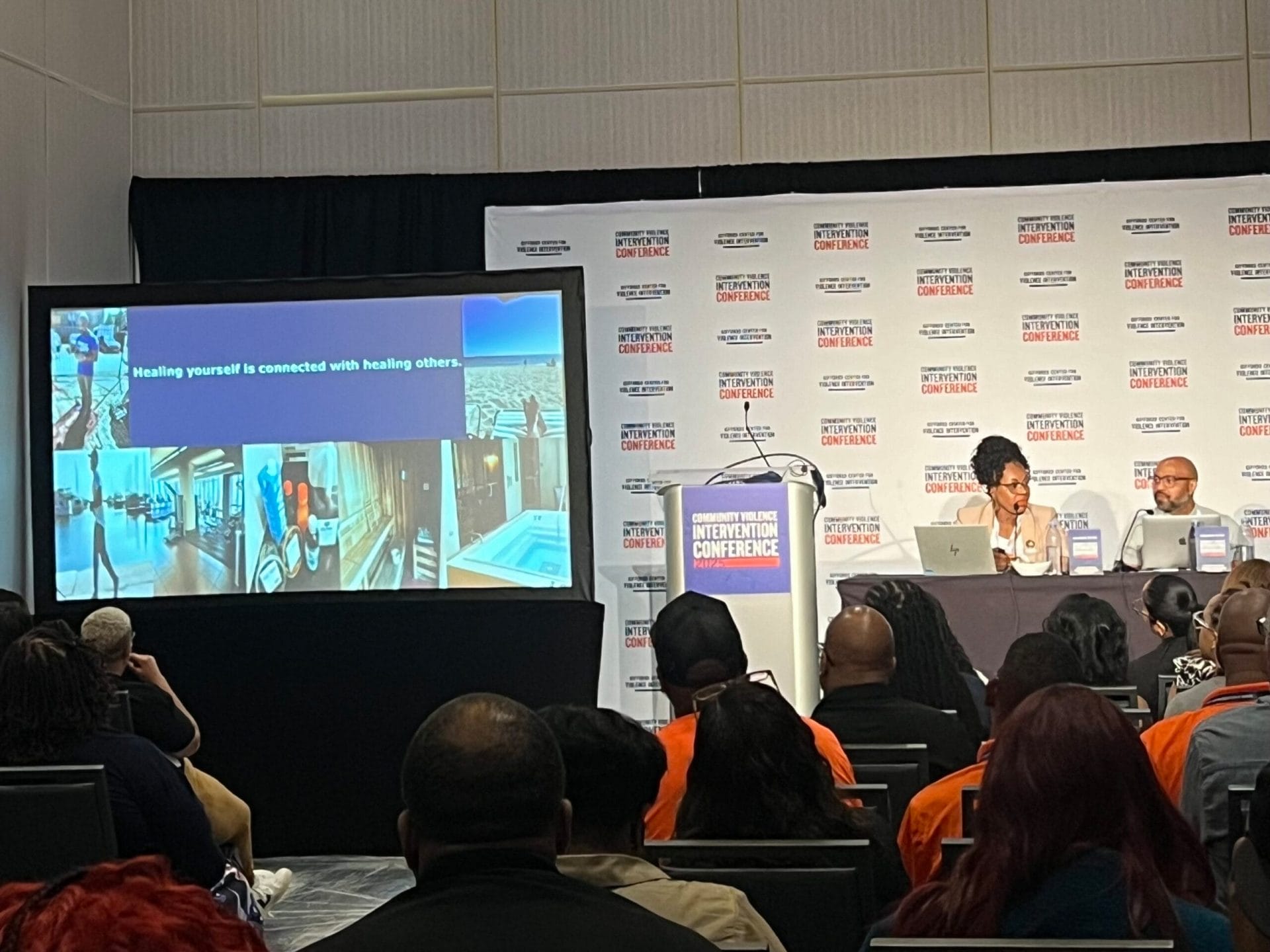
Later that day, I participated in one of the most impactful breakout sessions of my conference experience: “Prioritizing Our Peace: A Healing-Centered Approach to Wellness for Frontline CVI Workers,” led by Tony Woods of Public Equity and Deidre McClellan of Safe Streets. These experts illustrated a new model of workforce care that centers healing and goes beyond just resilience strategies alone.
Tony opened the session with a presentation slide that read, “Healing yourself is connected with healing others.” As someone who has seen programs have to compromise mental wellness investments for their staff due to insufficient funding, I listened intently as Deidre explored best practices for weaving mental and emotional wellness into CVI programs, not as a bonus but as fundamental to program operations. I watched the room transform from a simple presentation to an engaging dialogue between frontline workers, mental health practitioners, and others involved in this work.
Day 2
The following day I was struck by the mainstage plenary called “The Weight We Carry,” which honored key elements to the field’s strength that are often overlooked: women’s leadership and their emotional labor contributions to CVI. Facilitated by Timmeka Perkins from the Annie E. Casey Foundation, Dyann Barrientos from Garden Pathways, and Nichelle Sadler from UTEC, the session honored the women who lead, nurture, and hold a significant weight in this work, often without credit or compensation for the toll it takes. The audience responded with not one but two standing ovations, a rare moment of collective recognition for contributions that usually happen quietly—without applause.
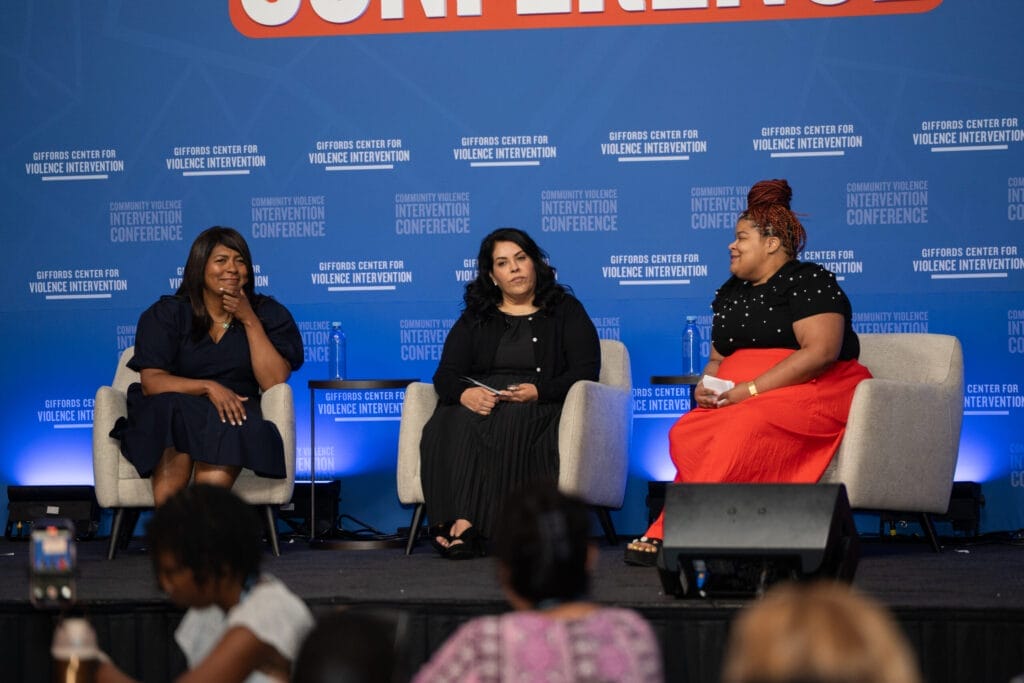
As a woman of color in this movement, it was validating to hear women leaders affirm the experience of navigating tensions that come with being emotional and cultural anchors in our roles while also attempting to keep our teams grounded in the work. Their honesty reflected back an experience I’ve lived but don’t often hear acknowledged out loud, and their diverse perspectives provided me with motivation that I didn’t even know I needed.
My experience also included the opportunity to proudly facilitate a plenary session, “From Alignment to Action: Cross-Movement Thought Partnership on Coalition Building,” in which I was joined by some of my mentors: Adzi Vokhiwa from Community Justice, Alicia B. Nichols from Onboard Consulting, and Will Simpson from EJUSA. During this plenary session, we surfaced crucial lessons in coalition building within the CVI field and the domestic violence movement.
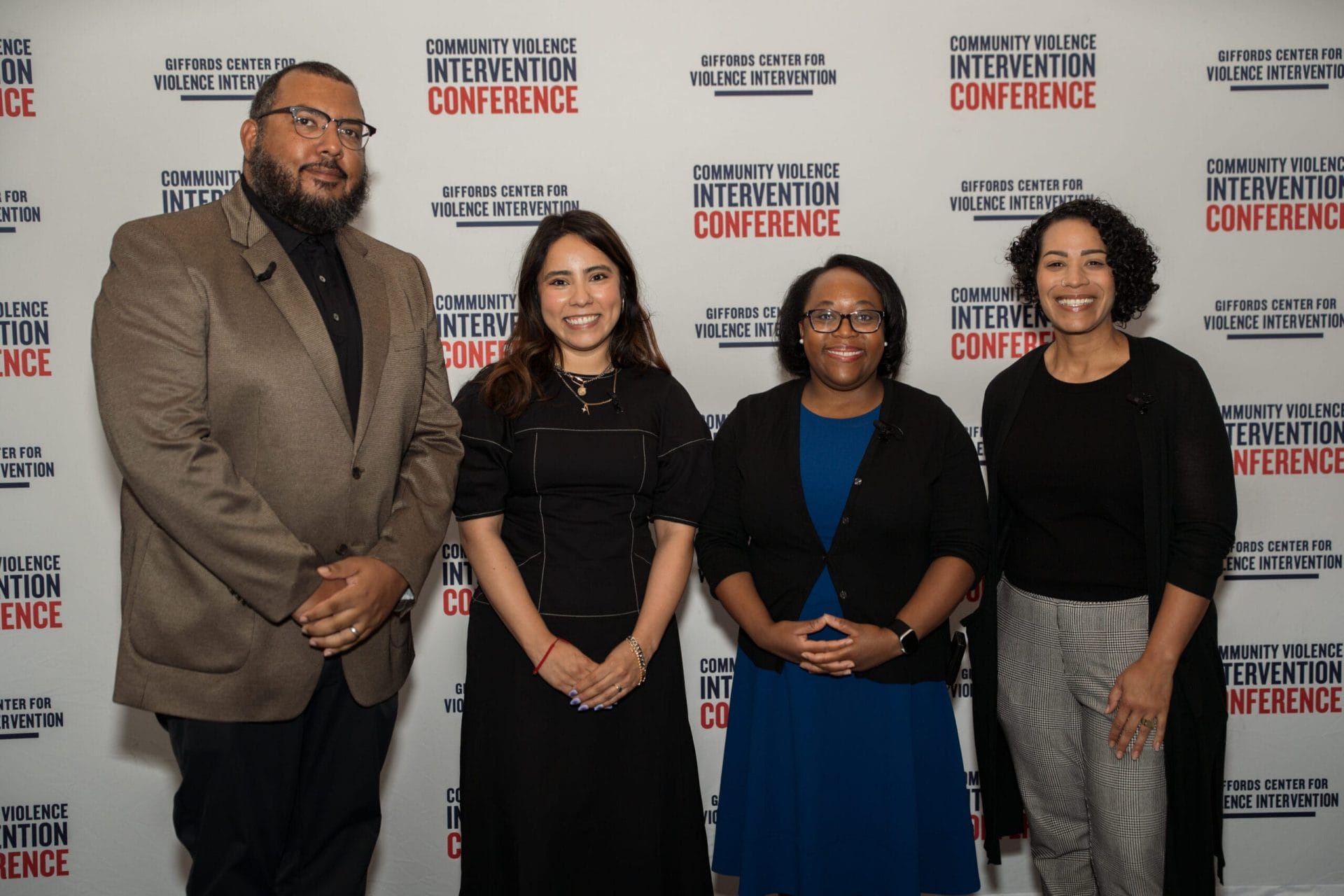
At the root of this conversation, they emphasized the importance of designing policy and advocacy in lock step with peacemakers and organizing practices that activate values alignment across coalition stakeholders for lasting coalitions. While I personally can attest to the strength the panelists instill in me, I was proud to watch the audience take note and engage with them in real time.
That session, like so many others at the conference, reinforced to me that CVI is not just about strategies or policies. It’s about people. It’s about saving lives from gun violence. It’s about the weight we carry, the healing we create, and the relationships we build to sustain this work, especially in moments of uncertainty.
I’m leaving this experience carrying both gratitude and a deeper sense of duty. Our movement is under attack in ways that are real and personal, but this event proved to me that when we gather with intention, when we center connection, healing, and purpose, we do more than share ideas—we create momentum. And while trusting the process wasn’t always comfortable, it taught me something essential: we are stronger when we build together, and this work will outlast any attempt to silence it.
Community violence intervention saves lives from gun violence. The work of everyone in this field is indispensable, and GIFFORDS Center for Violence Intervention is grateful to be a part of this community. To everyone who joined us in Los Angeles, thank you for trusting us with your stories and your time. Thank you for believing in this work and in each other. Our movement is still standing, still growing, and still shaping the future of community safety—not just in policy rooms, but in every room where people come together with love, courage, and purpose.
STAY CONNECTED
Interventions are most effective when they are supported by strong community networks. Sign up for Giffords Center for Violence Intervention’s newsletter to learn more about what’s happening in the field, relevant legislation, and funding opportunities.
SPOTLIGHT
TRACKING CVI LEGISLATION
Community violence intervention is a crucial approach to fighting gun violence. Keep up to date on the latest CVI legislation in your state with the Giffords Community Violence Intervention Policy Analysis & Tracking Hub—CVI-PATH.
Read More