Americans Want Stronger Gun Laws
The majority of Americans understand that our gun violence crisis is unacceptable—and they want real solutions implemented to combat it.
Since the 1990s, Gallup has asked people every year about their opinions on America’s gun laws.
And for more than a decade—in every poll since October 2014—a majority of the American public has said that our nation’s laws need to keep guns away from people at risk of causing harm.
It isn’t just the idea of better laws that Americans support: When the nation’s leading researchers and pollsters ask people about specific policy proposals—like background checks and safe storage laws—support is resoundingly high. And notably, this support is high among Democrats, Republicans, gun owners, and non-gun owners alike. The majority of Americans understand that our gun violence crisis is unacceptable and want real solutions implemented to combat it.
These surveys prove that our nation’s failure to enact comprehensive gun safety laws that benefit every American is not due to a lack of public support for these proposals, nor is it a product of us not having evidence demonstrating that these laws work. Rather, it is a result of elected officials being swayed by a small minority of voices bolstered by gun industry CEOs who only care about boosting profits.
As a result, some of the nation’s most popular gun safety solutions are implemented in a woefully small number of states, meaning that too many Americans are deprived of the lifesaving protections these laws offer.
There is a long list of evidence-based measures that have proven to reduce gun violence—and the public overwhelmingly supports them.
Background Checks
Background checks are a foundational policy to ensure that people with demonstrated histories of violence and risk cannot access firearms. While federal law requires that a background check be conducted whenever a person attempts to buy a gun from a licensed gun dealer, federal law does not address sales between unlicensed individuals, including non-dealers who sell guns to strangers out of their car, online, or at gun shows.

In effect, this creates a loophole where people—including people with felony convictions or a history of domestic violence—can easily circumvent the background check system and obtain firearms even though they are legally prohibited from doing so.
Nineteen states and DC have closed this loophole, requiring background checks to be conducted for transactions between unlicensed sellers. Other states like Pennsylvania and Nebraska have closed the background check loophole for only handgun purchases. We know that since 1994, more than five million people have been denied a purchase of a firearm because of the background check system, demonstrating how critical this system is.
Public Carry Laws
Strong standards that regulate the carrying of firearms in public are critical for protecting public safety. Study after study shows that when states roll back regulations—like background checks and firearm safety training—for individuals who want to carry guns in public, violent crime and interpersonal gun violence spike. One study found that states which weakened concealed carry permitting laws saw 11% higher rates of homicide committed with handguns compared to states with stronger permitting systems.
Despite clear evidence of the risk of doing so, states across the country have dramatically weakened their public carry laws in recent years. Twenty-seven states have removed the permitting requirement for the carry of concealed weapons altogether, and 25 of those states have done so since 2015. This deeply unpopular policy is bad for public safety and Americans know it: Only 24% of Americans support allowing a person to carry a loaded firearm in public, without obtaining a permit or license.
Minimum Age Laws
Laws imposing minimum age requirements for the possession and purchase of firearms are intended to decrease access to firearms by young people and, correspondingly, to decrease homicides and suicides among this population. While federal law does require that a person be 21 to purchase a handgun from a licensed dealer, some states have raised the age for all gun purchases—including purchases from unlicensed sellers and long gun purchases—to 21. One study found that state laws raising the minimum legal age to purchase firearms to 21 years were associated with a 12% decline in rates of firearm suicides among 18-to-20-year-olds.
Nine states—California, Colorado, Delaware, Florida, Hawaii, Illinois, New York, Rhode Island, and Vermont—have raised the age to 21 for the purchase of any firearm. Additional states have raised the age for the purchase of certain categories of firearms, such as assault weapons.
Our country sets minimum ages for driving, voting, and drinking alcohol to encourage responsible behavior. 79% of people believe we should impose a similar standard for firearms and increase the minimum age for buying guns to 21 years old.
Extreme Risk Laws
In many instances of gun violence, family members or friends notice warning signs that people close to them are at elevated risk of harming themselves or others. Extreme risk protection laws empower families, household members, law enforcement agencies, and other key members of the community to act on these warning signs and petition a judge for an order to temporarily suspend a person’s access to firearms before they commit violence.
Source
Aaron J. Kivisto and Peter Lee Phalen, “Effects of Risk–based Firearm Seizure Laws in Connecticut and Indiana on Suicide Rates, 1981–2015,” Psychiatric Services 69, no. 8 (2018): 855–862.
States with these laws have used them to intervene when mass shootings, suicides, and other forms of violence are threatened. And these laws already show promising results: Connecticut’s and Indiana’s extreme risk laws have been shown to reduce firearm suicide rates in these states by 14% and 7.5%, respectively.
These laws have exploded in recent years: 21 states and DC now have extreme risk laws and 16 of those laws were enacted since 2018. Most recently, Maine enacted an ERPO through a ballot initiative, showing the broad appeal of these policies. But more states need to enact this highly popular policy. According to surveys, 76% of Americans say they support allowing law enforcement officers to ask the court to temporarily remove guns from an individual who is at risk of harming themselves or others. An even higher percentage—77%—support expanding these orders to allow family members to petition.
Location Restrictions
Certain public places like bars, schools, and government buildings face elevated and unique risks of gun violence. For instance, people under the influence of alcohol are both more likely to be shot and more likely to kill someone else because alcohol increases the likelihood of risk-taking and can impair judgement. Keeping guns out of places where there is a higher risk of conflict and potentially heated emotions—like polling places, protests, and sports stadiums—can also reduce the risk of impulsive violence turning deadly.
A number of states have taken important steps in recent years to ensure that these sensitive areas remain free of guns. To protect public safety, all states should ensure that sensitive area restrictions are in place and are routinely enforced—after all, these measures have broad public support. For example, 75% of Americans support prohibiting guns in bars, and 71% of Americans support prohibiting guns in places where protests and rallies are held and at sports stadiums.
Safe Storage Laws
Safely storing guns is a critical behavior to prevent firearm death and injury—particularly among children. Studies show that between 70–90% of guns used in youth suicides, unintentional shootings among children, and school shootings perpetrated by shooters under the age of 18 are acquired from the home or the homes of relatives or friends.
In fact, one study found that households that locked both firearms and ammunition were associated with a 78% lower risk of self-inflicted firearm injuries and an 85% lower risk of unintentional firearm injuries among children and teens, compared to those that locked neither. Estimates suggest that even modest increases in the number of American homes safely storing firearms could prevent almost a third of youth gun deaths due to suicide and unintentional firearm injury.
Laws that require the safe storage of firearms are effective and supported by a majority of Americans. A 2025 poll found that 74% of Americans support laws that require a person to lock up the guns in their home when not in use. However, only six states—California, Connecticut, Massachusetts, Oregon, Rhode Island, and, as of this year, Hawaii—have laws that actually require this behavior. Several other states have weaker child access prevention laws, which help encourage safe storage behavior by holding adults accountable if minors get access to firearms.
Permit-to-Purchase Laws
Permit-to-purchase laws require an individual to obtain a license or permit from a state or local authority before buying a firearm. These laws require potential gun owners to apply for a license which may involve submitting fingerprints, undergoing a thorough background check, and taking safety training.
These laws have proven remarkably effective. When Connecticut passed a licensing law, its firearm homicide rate decreased by 28% and its firearm suicide rate decreased by 33%. States with licensing laws that require an in-person application or fingerprinting also have 56% fewer fatal mass shootings.
A permit-to-purchase law borrows elements from other familiar systems we have in place to protect public safety, like driver licensing systems and professional licensing systems. Permit-to-purchase laws are also supported by majorities of the American public: 72% of Americans support requiring a person to obtain a license from a local law enforcement agency before buying a gun. While states like Washington and Oregon have recently implemented these policies, only 16 states are protected by these critical, evidence-based policies.
Community Violence Intervention
In many communities, gun violence spreads much like a communicable disease: A person who is exposed to gun violence is significantly more likely to commit or be a victim of gun violence themselves. Community violence intervention (CVI) strategies are designed to interrupt this transmission of violence by engaging those at highest risk and providing individually tailored support services.

These interventions have been proven to result in both relatively quick and sustained reductions in serious gun violence—as well as substantial cost savings. For example, one program implemented in Sacramento was associated with a 22% reduction in homicides in intervention areas as well as a savings to the city of between $18 to $41 per dollar invested in the program.
CVI strategies are inherently non-punitive and community-led, and there is an increasing understanding that effective gun laws must be paired with these programs to fully tackle gun violence. 72% of Americans support funding community-based gun violence prevention programs that provide outreach, conflict mediation, and social support for those at high risk of gun violence.
In 2025, 21 states provided at least some direct state-level funding to support these strategies in communities, including states which have historically taken little action to address gun violence like Texas. However, for CVI to be as effective as possible, federal and state governments need to allocate more comprehensive and sustained funding.
Gun safety laws are supported not just by scientific evidence. They’re supported by the vast majority of the American public—and it is far past time for leaders to step up and enact them across the country.
While some states have taken important strides to protect the public, too many are ignoring the will of their residents and denying them the vital protections they support to protect themselves, their families, and their communities. We won’t end this nation’s gun violence epidemic until our leaders take action.
TAKE ACTION
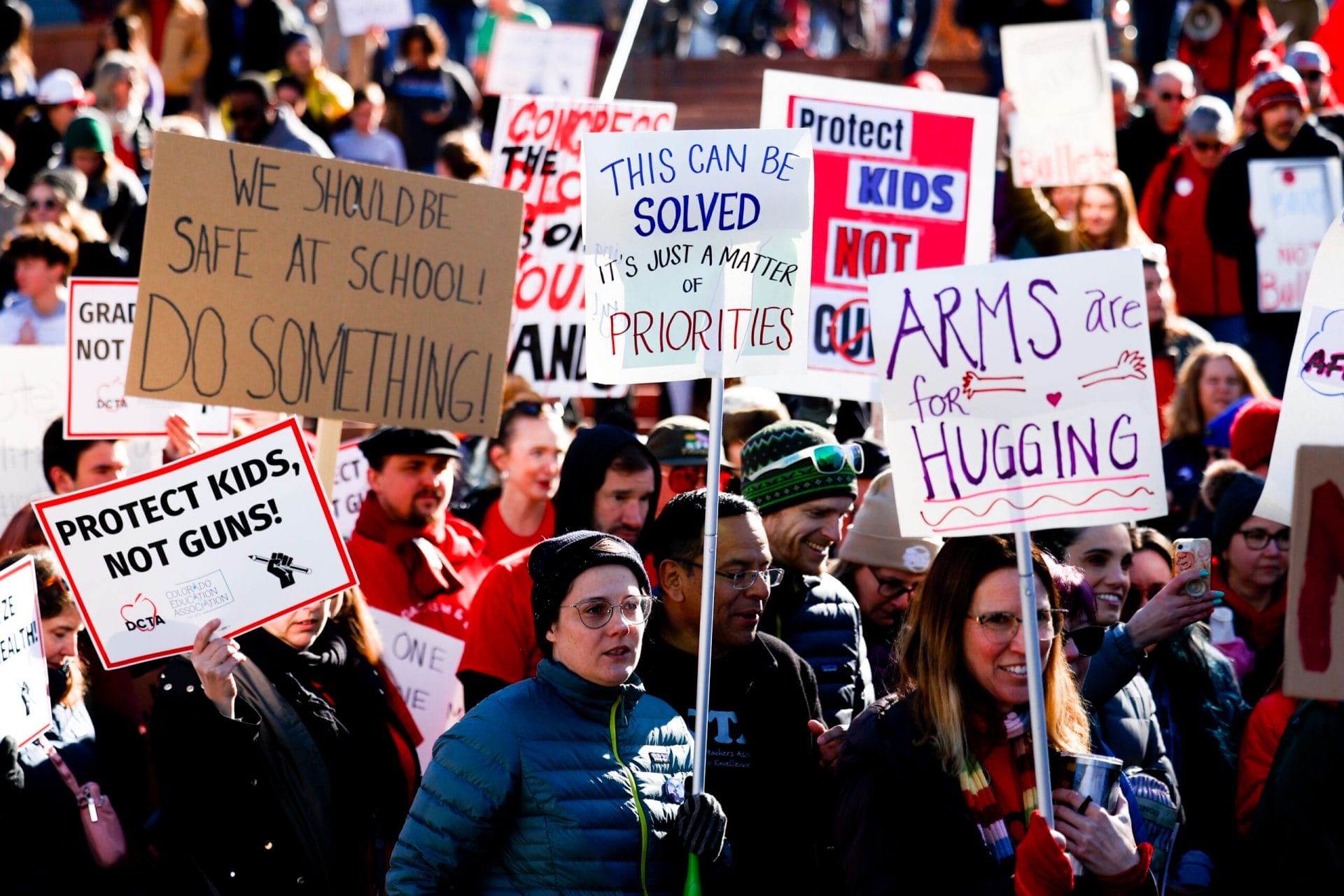
The gun safety movement is on the march: Americans from different background are united in standing up for safer schools and communities. Join us to make your voice heard and power our next wave of victories.
GET INVOLVED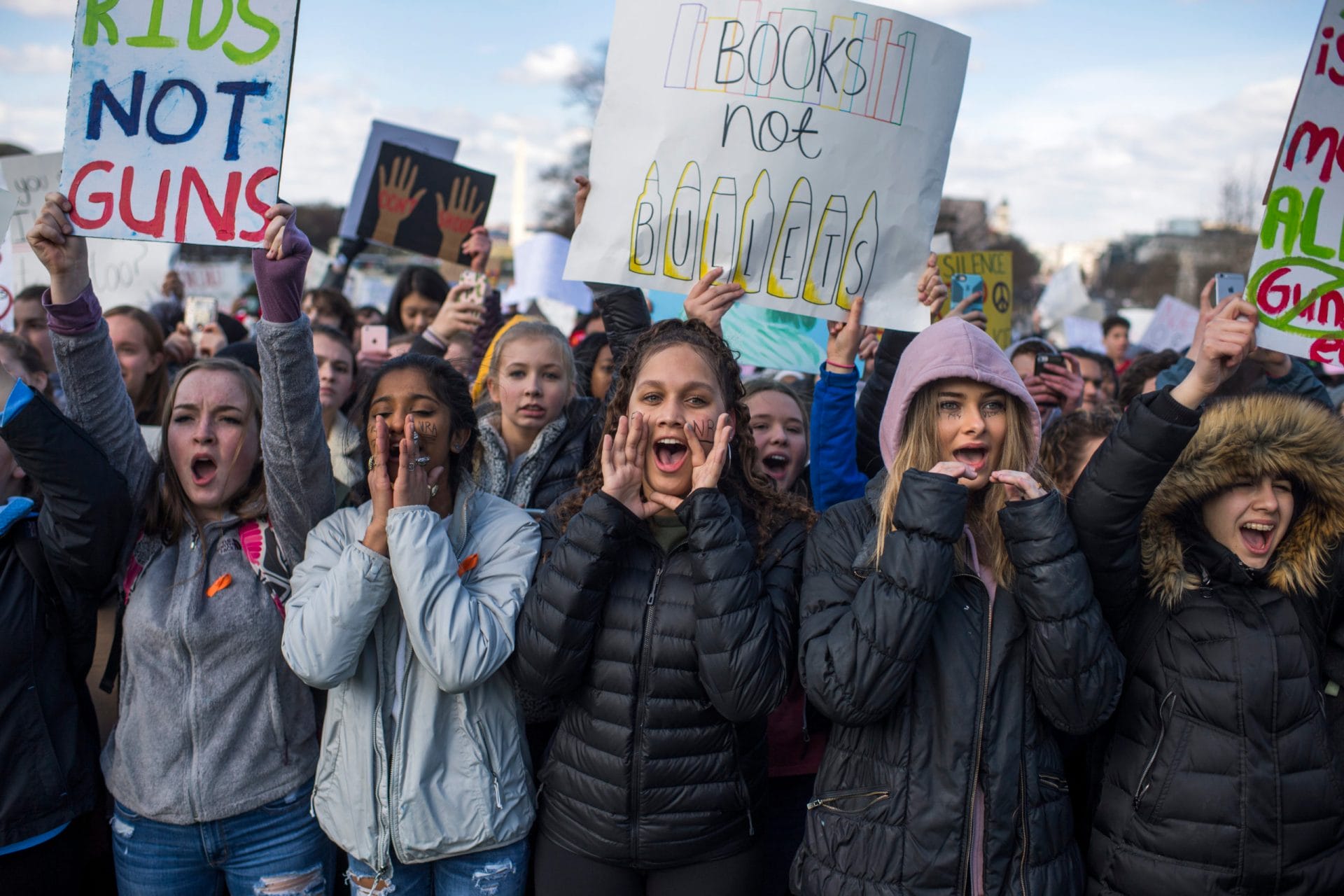

SPOTLIGHT
GUN VIOLENCE STATISTICS
Explore facts, figures, and original analysis compiled by our experts. To end our gun violence crisis, we need to better understand where, how, and why violence occurs.
Learn More