Federal Cuts Are Weakening Lifelines for Survivors of Violence
Survivors rely on government support in the wake of violence. With federal retreat, states must lean on community violence intervention to keep them safe.
A young woman arrives at the hospital after surviving a violent assault by her partner.
In the aftermath of trauma, her mind is in survival mode. Every decision narrows to what’s right in front of her—safety, shelter, food. When staff ask if she wants to involve police, she hesitates. More than anything, she wants to feel safe and seen.

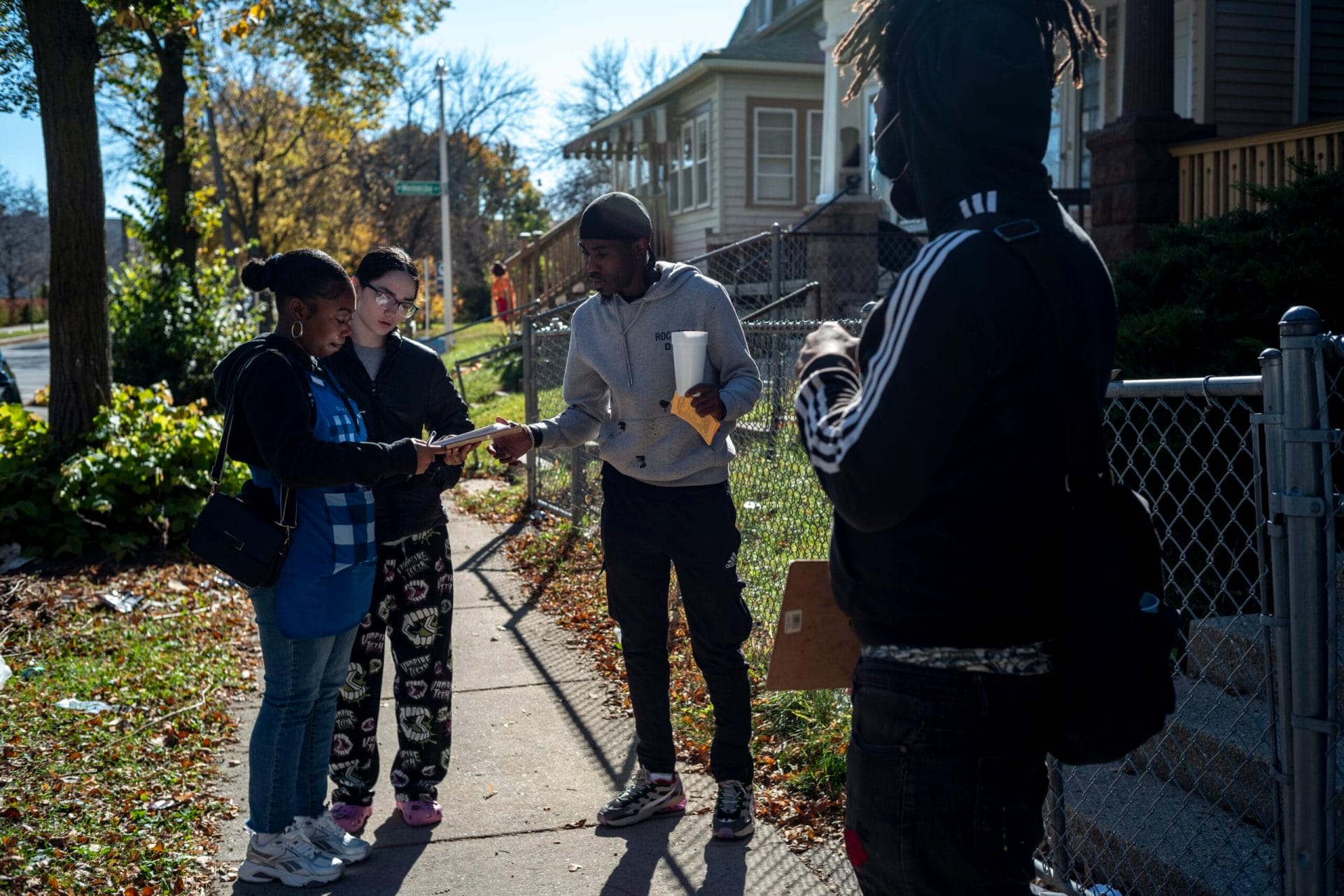
The hospital contacts a community violence intervention program that supports survivors of both community and domestic violence. Within hours, two advocates show up. One stays by her bedside, helping her reach family. The other arranges a hotel room, food stipends, and a ride to pick up her children. They provide a prepaid phone, connect her to therapy, and keep checking in until she finds stable housing.
This kind of rapid, relational care often determines whether someone escapes danger or falls back into it. It’s what community-based organizations across the country do every day. Yet federal support for public safety, healing, and victim services has steadily eroded over years, and is now facing its biggest cut yet—leaving the programs closest to survivors struggling to stay afloat.
CVI programs are the connective tissue of public safety and community well-being. They link prevention, intervention, and trauma recovery, ensuring that people most affected by violence receive care from those who understand their lives. This isn’t a symbolic impact—it’s the difference between life and death. Gun violence is now the leading cause of death for children and adolescents in America. And while new federal priorities claim to “protect America’s children,” their withdrawal from this work tells another story.

As of April, the Department of Justice decided to rescind more than $800 million in public safety grants, including roughly $150 million from the Community Violence Intervention and Prevention Initiative (CVIPI). This reversal undermines years of bipartisan investment in community-based safety strategies, destabilizing local ecosystems of care and signaling a retreat from the nation’s most effective violence intervention tools. And now, what remains of CVIPI is being reshaped in ways that make care harder to access. Community-based organizations can no longer apply directly, and new restrictions force providers to exclude undocumented clients from receiving services or risk losing funds—a mandate that has been challenged by attorneys general across the nation for other federal funding for victims, including the Victims of Crime Act.
The result is a fragmented system where survivors fall through gaps that didn’t used to exist, where trust is replaced by fear, and where the promise of care depends on who you are and where you live. For survivors, this doesn’t feel like a funding decision. It feels like being abandoned and forgotten.
Agencies are being asked to meet growing needs with fewer resources, forcing them to make painful decisions about which programs survive. For example, a state might have to decide whether to sustain a 24-hour domestic violence hotline or keep a trauma recovery team on staff. Smaller, community-based organizations often lose out to larger institutions that have more administrative capacity, even when the smaller groups have stronger relationships with survivors and neighborhoods most affected by violence. As funding tightens, service delivery becomes fragmented, response times slow, and the people doing the work stretch themselves thin to fill the gaps. In fact, many even cover shifts or pay for essentials out of pocket to keep programs running. That level of sacrifice is not sustainable.
This is a difficult moment, but not a sudden one. States now face a choice: Protect the lifelines that keep survivors, families, and communities safe, or watch them collapse beyond repair.
MEDIA REQUESTS
Our experts can speak to the full spectrum of gun violence prevention issues. Have a question? Email us at media@giffords.org.
Contact
The Victims of Crime Act (VOCA) offers one of the clearest examples of how federal disinvestment reverberates on the ground. The Crime Victims Fund (CVF), which supplies VOCA dollars, is the largest federal source of victim services funding. Managed by the Office for Victims of Crime (OVC), it pools money collected from federal criminal fines and settlements, then distributes those funds to states through various grant programs, including the annual VOCA Victim Assistance grant. States use victim assistance grants to fund local organizations providing services such as:
- Crisis counseling, grief counseling, and case management
- Legal and housing assistance
- Shelter and relocation support
- Services for victims of domestic violence, sexual assault, and human trafficking
When deposits into the CVF decline, every step of that chain weakens. States receive smaller allocations, administrators reduce award amounts or skip renewals, and local programs are forced to do more with less.
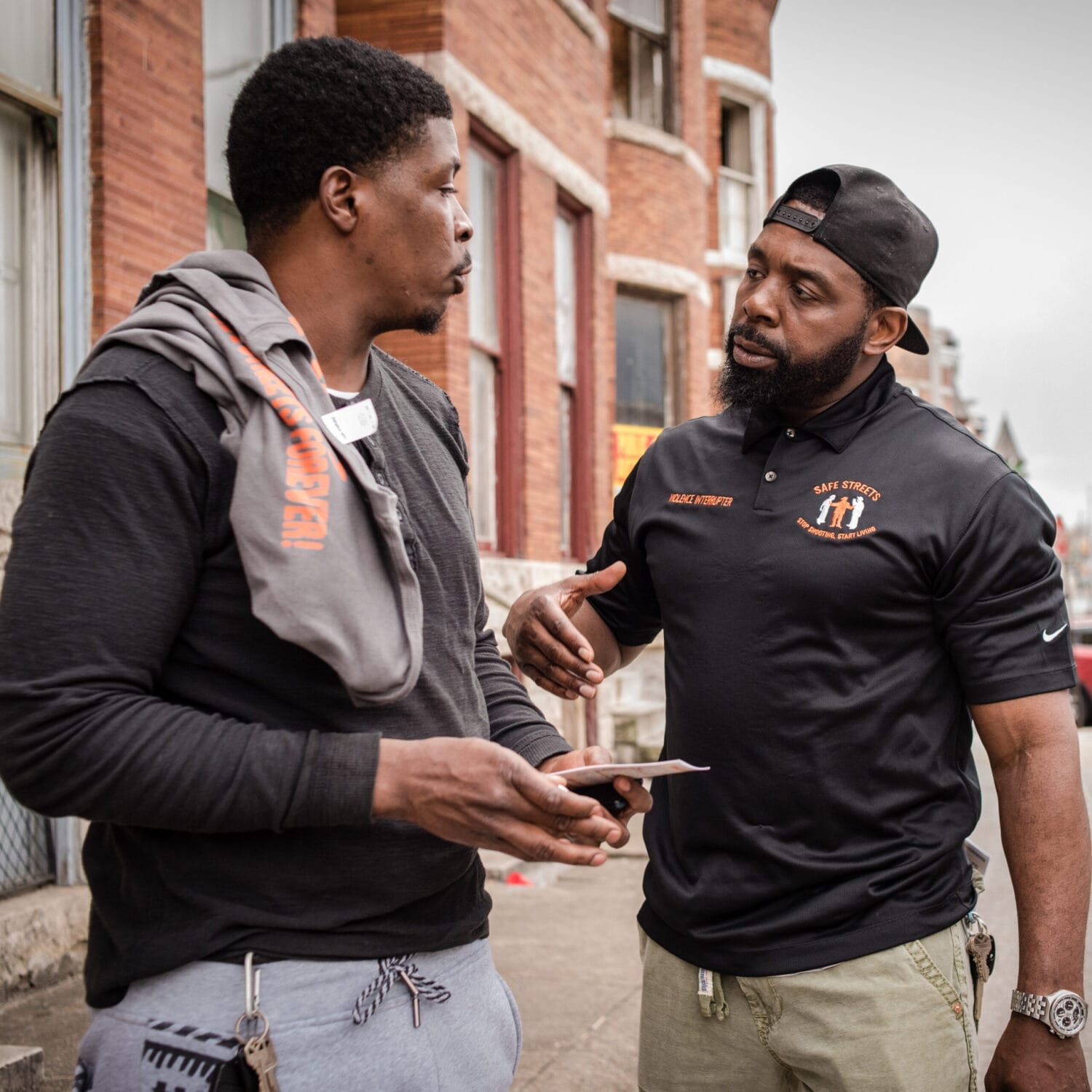
In the case of CVI, VOCA was one of several federal streams that helped sustain the broader network of survivor support for victims of traumatic injuries. As VOCA deposits decline and DOJ grants vanish, that network is unraveling. Each cut breaks another link in the chain of care—leaving survivors without consistent support, and outreach workers without the resources to follow through. The result is a system that can start care but not sustain it, which is its own form of harm. Without state intervention to protect and stabilize CVI, continuity of care will remain the first casualty of every federal retreat.
In 2021, Congress passed the VOCA Fix to Sustain the Crime Victims Fund Act, a bipartisan measure meant to stabilize the fund in part by redirecting certain financial penalties and deferred prosecution settlements into the CVF. It offered temporary relief, but hasn’t closed the funding gap. Deposits remain well below pre-pandemic levels, and most states have seen year-over-year declines in their VOCA allocations.
The strain on VOCA isn’t an isolated issue, but rather a snapshot of a wider funding crisis affecting community safety work nationwide. When federal dollars for victim services, CVI, and trauma recovery become less predictable, states are left to decide which priorities live and which die. Without stronger state-level investment and accountability, the communities most affected by violence end up bearing the cost of federal volatility.
Federal funding will continue to fluctuate. What matters now is how states respond. Policymakers, agency leaders, and advocates must act to keep lifelines intact.
Integrate CVI and survivor services into core state safety budgets.
States should treat community violence intervention, prevention, and victim assistance as permanent components of their public safety and health infrastructure. Funding should be built into base agency budgets, not left to the uncertainty of request for proposal processes. State actors should also challenge unethical federal mandates for funding usage that limits access to care for survivors of violence. This approach stabilizes essential programs, ensures continuity during federal shortfalls, and signals that healing and prevention are fundamental to public safety.
Prioritize established CVI programs with proven impact.
States should identify core CVI providers with consistent performance and multi-year track records of working with high-risk populations. These organizations should receive priority consideration for baseline funding and contracting to prevent service gaps. This approach protects specialized expertise that takes years to build and cannot be replaced through short-term or newly created programs. And if a state sets aside dedicated funding for CVI, those dollars must go to organizations that are actually doing CVI work, not programs that simply rebrand existing services to compete for funds.
Fix state funding systems to prevent payment delays.
States must adopt clear disbursement timelines and require agencies to issue quarterly advances rather than reimbursement-only payments. States can publicly track disbursement rates and hold administrators accountable for delays. Timely payments protect staffing stability and prevent service disruptions, especially for smaller nonprofits without cash reserves. In too many cases, effective programs have been placed on “high-risk” status because of state-level administrative delays that have ultimately penalized them for problems they did not cause. This kind of bureaucratic failure drains capacity, damages credibility, and keeps resources from reaching survivors when they’re needed most.
Use multi-year performance contracts to build stability and accountability.
States should authorize three- to five-year contracts for organizations that meet outcome and fiscal standards. Long-term agreements allow programs to retain skilled staff, plan for evaluation, and maintain trust with the communities they serve. They also reduce the administrative burden that comes from reapplying for survival every 12 months.
Establish permanent coordination structures across state agencies.
Either as part of or in addition to existing Offices of Violence Prevention, states must create a standing interagency council or lead office responsible for coordinating CVI, survivor support, and trauma recovery programs. They should include credible messengers and survivors as advisors to align funding streams, eliminate duplication, and ensure that prevention, intervention, and recovery are managed as a single, connected continuum of care.
The people who meet survivors in their hardest moments should not have to fight to keep doing their jobs. They keep communities stable when systems fray, often with little assurance that their work will continue. That uncertainty leaves survivors vulnerable and weakens the very safety nets meant to protect them. States have the power to fix this and the duty to act. Protecting survivors is not a matter of preference or politics. It is the test of responsible government.
CHAMPIONS FOR PEACE
Our Champions for Peace series honors the people working on the ground to stop violence in their communities before it happens. If someone comes to mind as you read this, take a moment to nominate them.
Learn More
SPOTLIGHT
COMMUNITY INTERVENTION
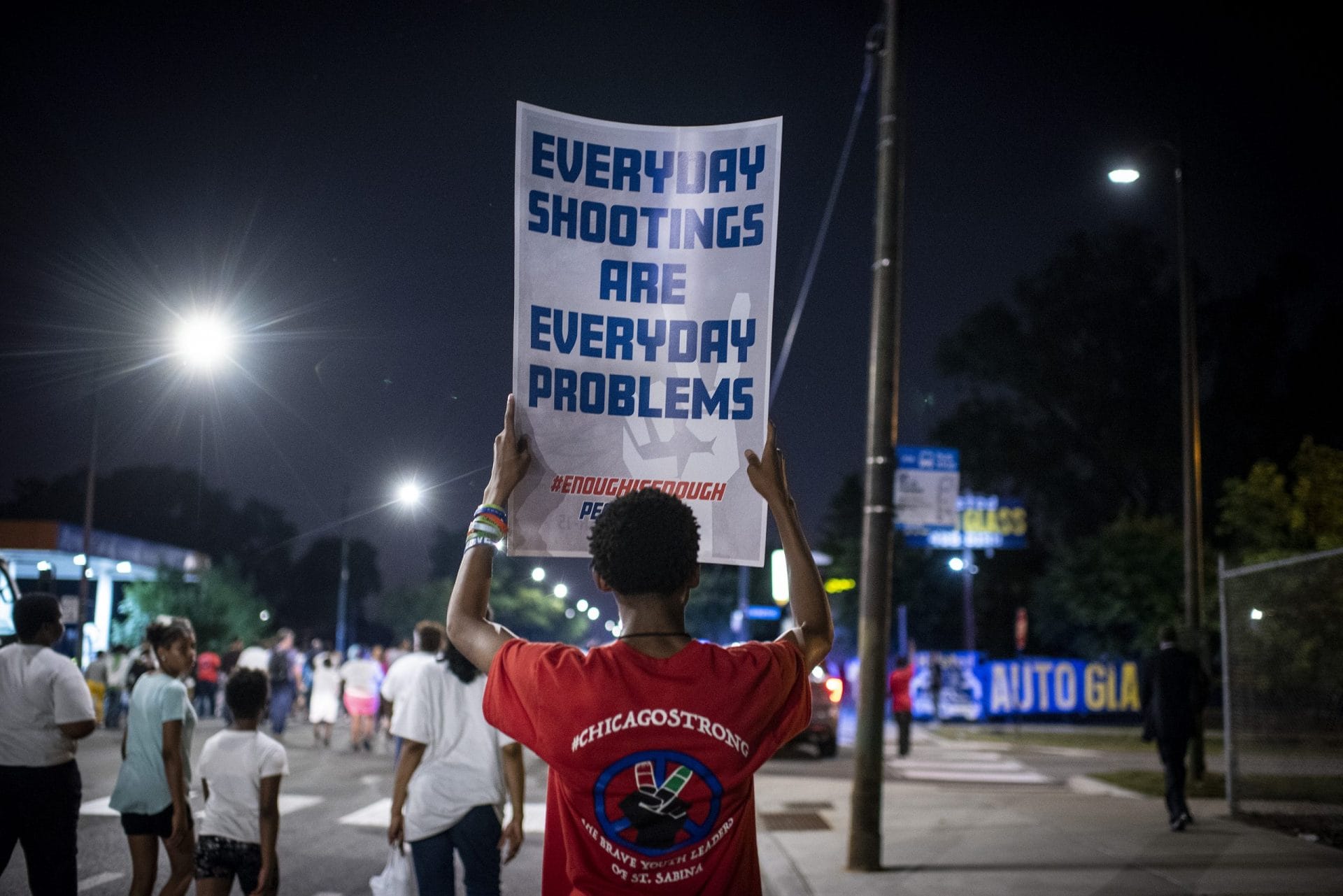
Community violence intervention focuses on reducing the daily homicides and shootings that contribute to our country’s gun violence epidemic. We created Giffords Center for Violence Intervention to champion community-based efforts to save lives and improve public safety.
Read More