
Champions for Peace: A Conversation with Diego Lopez
Community violence intervention relies on concerned individuals willing to serve as peacemakers within their communities. They work tirelessly to prevent violence by engaging those at highest risk of using or being injured by a gun to alter the trajectory of their lives and curb the spread of violence. In this series, we hope to highlight the invaluable contributions of CVI workers and foster a deeper understanding of CVI from the perspective of the frontlines.
Our Champion for Peace this quarter is Diego Lopez, a team lead and peacebuilder with COMPASS Youth Collaborative in Hartford, Connecticut. For 15 years, Diego has worked with young people and families impacted by violence through outreach, mentorship, crisis response, and violence interruption. Drawing on his own experiences with incarceration and gun violence, he helps others navigate challenges he knows firsthand.
This interview is edited for length and clarity.
Diego Lopez
Peacebuilders Team Lead for COMPASS Youth Collaborative | Hartford, Connecticut

GIFFORDS Center for Violence Intervention: What does community violence intervention mean to you?
To me, community violence intervention means going out into the community and meeting the people affected by violence where they’re at. Whether it be in the emergency room, whether it be in their homes, or whether it be on the block, in the hallways, so that we can try to interrupt the violence.
What brought you to this work, and how do you stay motivated?
A lot of what brought me to the work has been life experiences. I did 16 years in prison. I’m a full-time gunshot victim. A lot of what brought me to the work is what I’ve been through and trying to make every effort to make my wrongs right and contribute back to the community that I destroyed.
How do I stay motivated? How do you not stay motivated when you got great outcomes? Community violence intervention is a rollercoaster, but for the most part, the wins are huge. When you get a kid to graduate, or when you get a kid to just go to school for two days consistently after he ain’t been in school in three years, those are the things that keep me motivated and driven, keep me getting up every day.
What do you wish more people understood about addressing violence?
I think there’s a root cause to violence that a lot of people don’t know about. A lot of people look at violence as people having choices and then not making the right choices, and I believe that’s not how violence should be interpreted.
I think violence should be interpreted through what you’ve been through, what life has dealt you, and how you’ve been treated in life. So I think the misconception of it just being people’s choices is something that I would like to get out.
What is the hardest part of your job?
The hardest part of my job is probably sometimes delivering the message that it works. I think a lot of people that don’t understand violence don’t understand the effect that we have on the community.

We know people that have had service providers showing up at their door their whole lives, and they’ve never bought into that. Then we show up, and they buy into it because of our own experiences, because we share experiences.
In Hartford, we had a real dip in violence, and I feel that we had a direct effect on the violence because we was directly working with the drivers of violence. Not to say that we didn’t lose young people to violence. Some of them were killed, and some of them were arrested for murders. But the work itself had a direct effect on the violence going down in Hartford.
I don’t think that we get the credit for it. When the news talks about violence going down, they’re talking about the police department or these other things that they put in place, and they leave us out of it.
How many lives have we saved? We talk about how many lives we lost, but how many times have we interrupted violence and saved lives? There might have been a year with 20 homicides, but there might have been 60 homicides if we weren’t there for the other 40.
And I know that for sure, because there’s been times where we’re at the scene and young people are there with weapons and ready to do what they do. Because we’re there, we’re able to kind of stabilize the situation.
What is your biggest hope for the future of your work and the field of CVI?
My biggest hope is that we’re looked at in the same way police officers are looked at, and that we’re written in budgets in the same way. We provide public safety in the same manner they do, but it’s just different. We’re not arresting people.
We’re giving people skills to be able to kind of cope with their situations, kind of manage their emotions. We’re not showing up with handcuffs, we’re showing up with skills, but the work is the same.
What I would like to see in the future is that we’re not looking for funds, that the funds are being provided.
I spoke to this gentleman the other day. We did an interview in the paper about the switches and the Glocks, and I kind of told him, whatever y’all pass in Congress, it’s not really gonna affect us on the streets because these guns are illegally being purchased. They’re illegally being trafficked.
Now, what could help us is if we bring the gun manufacturers to the table so that they could start funding this type of work, or hold them responsible for what’s happening in the streets, the same way we held all these medical companies responsible.
I believe that if we could hold them responsible, then we could get at least a grip on the amount of weapons that are being distributed in our community and hold them responsible in a way that they need to support this type of work. If you believe that this is a problem, and you know that it’s a problem, why are you not part of the solution?
I hope that this work continues. I hope that we have champions in Congress and in D.C. to help us really push this agenda, because it’s really for our community’s sake. It ain’t even for anybody else but for our people.
Thank you, Diego Lopez, and the team at COMPASS Youth Collaborative. We look forward to bringing you more conversations with other dedicated peacemakers.
CHAMPIONS FOR PEACE
Our Champions for Peace series honors the people working on the ground to stop violence in their communities before it happens. If someone comes to mind as you read this, take a moment to nominate them.
Learn More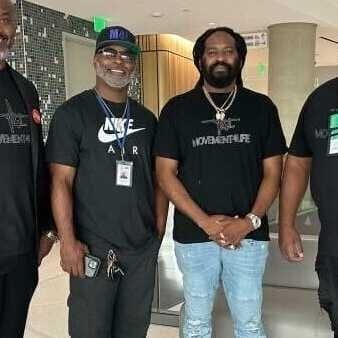
EVENT
2026 CVI CONFERENCE
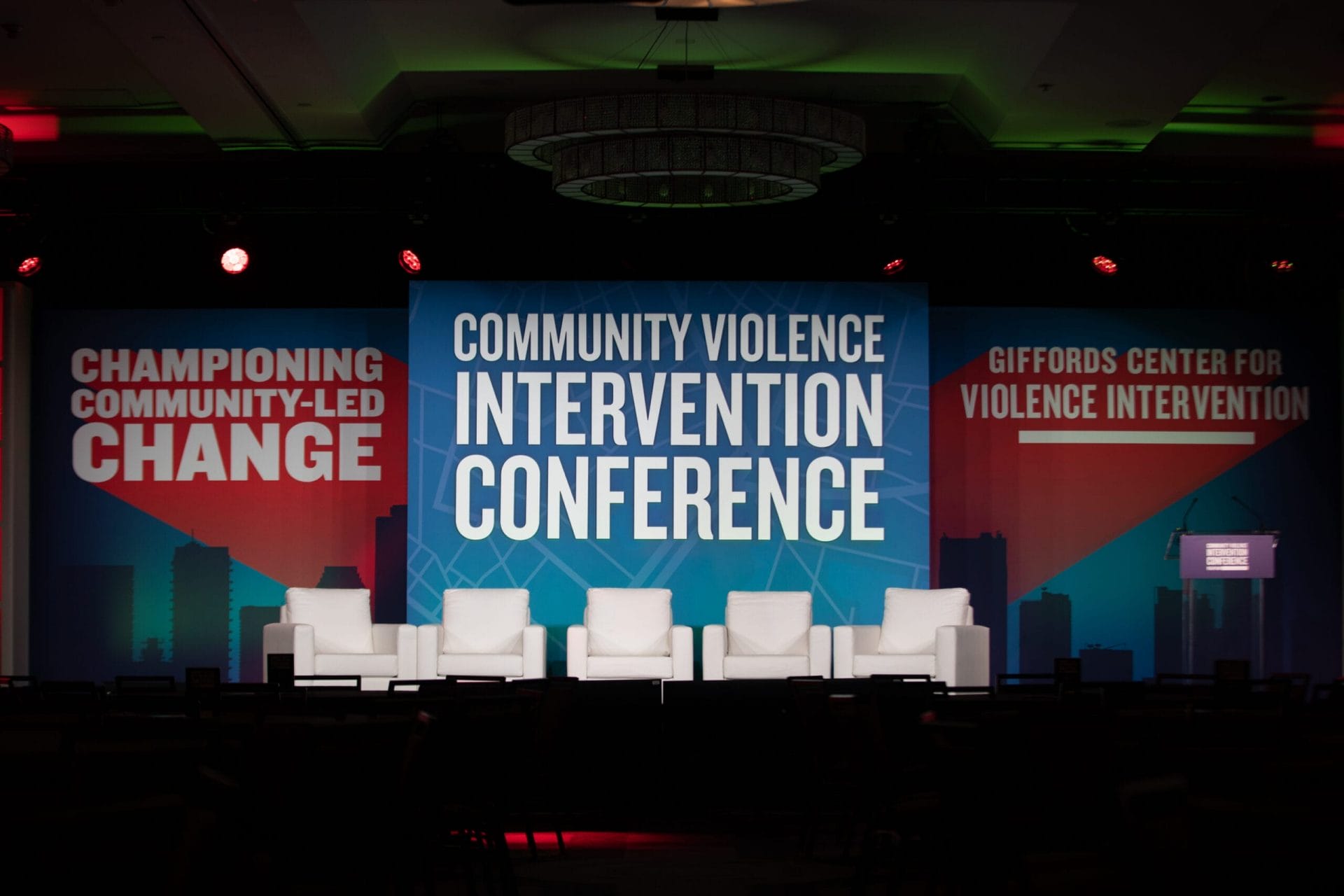
Giffords Center for Violence Intervention will host the 2026 Community Violence Intervention Conference in Los Angeles on July 20 & 21.
The Latest

GIFFORDS statement on shooting at Bend, OR elementary school

GIFFORDS endorses Xavier Becerra for governor of California
