
Champions for Peace: A Conversation with Jason Little
Community violence intervention relies on concerned individuals willing to serve as peacemakers within their communities. They work tirelessly to prevent violence by engaging those at highest risk of using or being injured by a gun to alter the trajectory of their lives and curb the spread of violence. In this series, we hope to highlight the invaluable contributions of CVI workers and foster a deeper understanding of CVI from the perspective of the frontlines.
This quarter, we are celebrating Jason Little as our Champion for Peace. Jason is the director of strategic initiatives at Chicago CRED, where he helps lead violence prevention strategy, program development, partner coordination, and training efforts across Chicago. A native of North Lawndale with more than nine years of experience in community violence intervention, Jason has dedicated his career to strengthening CVI programs, supporting frontline staff, developing leaders, and creating safer pathways for young people and families.
This interview is edited for length and clarity.
Jason Little
Director of Strategic Initiatives, Chicago CRED | Chicago, Illinois

GIFFORDS Center for Violence Intervention: What does community violence intervention mean to you?
I always look at community violence intervention and think about my own life. Community violence intervention is a bridge we build within the community to help people cross into the life they should be living. But the thing is, you need people to help you build that bridge—that’s your outreach workers, your clinicians, and people from the community who are now doing the work we do to help young people build bridges.
It’s always about building bridges, not walls. Because when we build walls, we are caged in. When we build bridges, we open up lanes to different places we can go.
What brought you to this work, and how do you stay motivated?
When I was 21 years old, I became a victim of gun violence. Even though I didn’t start the work until I was 35, I think a lot of seeds got planted in me to help people.
I started this work with my youth pastor, Pastor Phil Jackson, with the Firehouse Community Arts Center. He met with Arne Duncan, and they were bringing this violence prevention program to Chicago in 2017. Pastor Phil said, “You know most of the young people in the community. You should think about doing this.”
So I went over there, and I knew every young person in the room since they were kids. I also knew their parents. It was an opportunity for me to say, “You don’t have to go through what I went through”—being arrested, being shot, being put out by my mom. As I started doing the work, I got super encouraged. I started seeing some of these young people—who were just worried about dying, eating, and getting an opportunity—say, “I could be successful.”
How do I stay motivated? I always think of two things: trauma and watching program participants win.
I think back to my first participant who was killed. He had just gotten his high school diploma. We moved him out of the community to Indiana, probably about 30 or 45 minutes away from Chicago. But the one thing we didn’t address was him returning; he kept going back and forth because we didn’t provide him with opportunities when he moved to Indiana. We should have had more opportunities for him out there in Indiana. Whenever we move someone now, we think about what they can do where we’re moving them so they don’t have to come back to the community. That motivated me to say, “Look, I know it can work, but we’ve got to add this extra oomph.”
But it’s also watching them graduate and watching the ones who are now working jobs. We had one participant who ended up moving to Arkansas, got married, has four beautiful children, and is now driving trucks. That motivates me because these are all the things we discussed when we worked on his initial assessment.
What do you wish more people understood about addressing violence?

I don’t think people look at it as a public health crisis. This is the same as COVID and the flu—this is a public health crisis. Dealing with what we deal with, people need to understand that we have to come up with a cure for our communities. And I say “we” because it’s going to take us to save us. We’ve got to get more people understanding that they can stop violence in their community, because stopping violence in the community starts at home.
I think more people can do the work, but we also have to get the community trained up to understand what they’re dealing with. If people understood how important we are—if we weren’t doing the work we were doing, can you imagine how many people would be getting shot and killed? If we weren’t out there every day? If we didn’t have initiatives? I think people have to understand how important we are.
What is the hardest part of your job?
There are different parts; I can’t just say one.
There’s losing participants. When they die, they become a number, a statistic. When we lose someone, you have to think about how many people are affected. Everybody has somebody who loves them; even someone who gets high, makes bad decisions, or is dealing with mental health issues on the street. When something happens to someone’s loved one, it doesn’t just affect that one person. It affects the family and the entire community, creating more trauma.
What has this work taught you that you wish you had known when you started?
One of the main things this work taught me that I wish I had known sooner is about burnout; about being able to step back and take care of yourself. This is coming from a person who lost his family because of this work. I lost my youngest son and my fiancée because I was so involved in the work, I wasn’t taking care of them. I was giving the work my best and them the rest.

It also taught me about development—that we don’t have to be outreach workers forever. I don’t think we talk enough about building benches and development. That’s one thing I want to do.
I’m already thinking about what’s next. I meet with funders and think about what it would be like to do philanthropy work. What do I need to start building my resume to join one of those teams? And then, who’s going to take my position?
So, I don’t think we build enough benches. I don’t think we really talk about burnout and knowing when to step back. And then there’s the education part—educating us. Because where we come from, education wasn’t a big push. We knew how to gang-bang, but not read. We knew how to gang-bang, but not do math. We didn’t know government and politics.
Part of this is getting to know who you are, not the character you built. Because we built characters in the street. J-Dogg was the character. Jason Little is the man. I had to learn how to be Jason Little and put J-Dogg over here. Once I realized that, I knew this was who I was supposed to be, but I had built this character.
What advice would you give to someone who is newer to the CVI field?
The best advice I would give them is to learn as much as possible. Learn how to do every position that’s in the organization, not just focus on yours. Especially for guys who come into outreach from the streets: learn how to do everything. Learn how to do every job, so you’re able to step in whenever you are needed.
Also, ask a lot of questions. There’s no such thing as a dumb question. When you don’t know something, ask. For the people who come from educational backgrounds—the clinicians who don’t come from the streets—learn everything you need to learn about the communities you’re working in. Know the groups. Know what’s going on. Ask questions. Do outreach. Build those relationships. Again, build bridges with everybody you work with. Don’t build walls, and don’t think you know it all.
What is your biggest hope for the future of your work and the field of CVI?
My hope is that they put me out of my job—that the community doesn’t need me anymore. I want a world—not just Chicago but around the world—where Black and Brown folks affected by gun violence are no longer labeled as “at-risk.” I want them to just be seen as people. People who are just living.
We live in a world where, in some communities, we have kids from the age of four to 15 who don’t know how to ride bikes. Sometimes I drive from my job to my home, which is about 20 minutes, and I count how many kids I see riding bikes. Or I ask them, “Do you know how to ride a bike?” And they’ll say, “No, I don’t even have a bike. I don’t ride them.” All because we don’t feel safe.
I want our communities to feel like communities again—not prisoners of our own homes.
Thank you, Jason Little and the team at Chicago CRED. We look forward to bringing you more conversations with other dedicated peacemakers.
CHAMPIONS FOR PEACE
Our Champions for Peace series honors the people working on the ground to stop violence in their communities before it happens. If someone comes to mind as you read this, take a moment to nominate them.
Learn More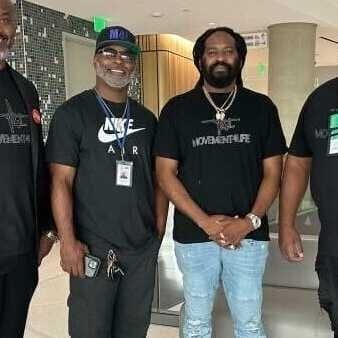
SPOTLIGHT
TRACKING CVI LEGISLATION
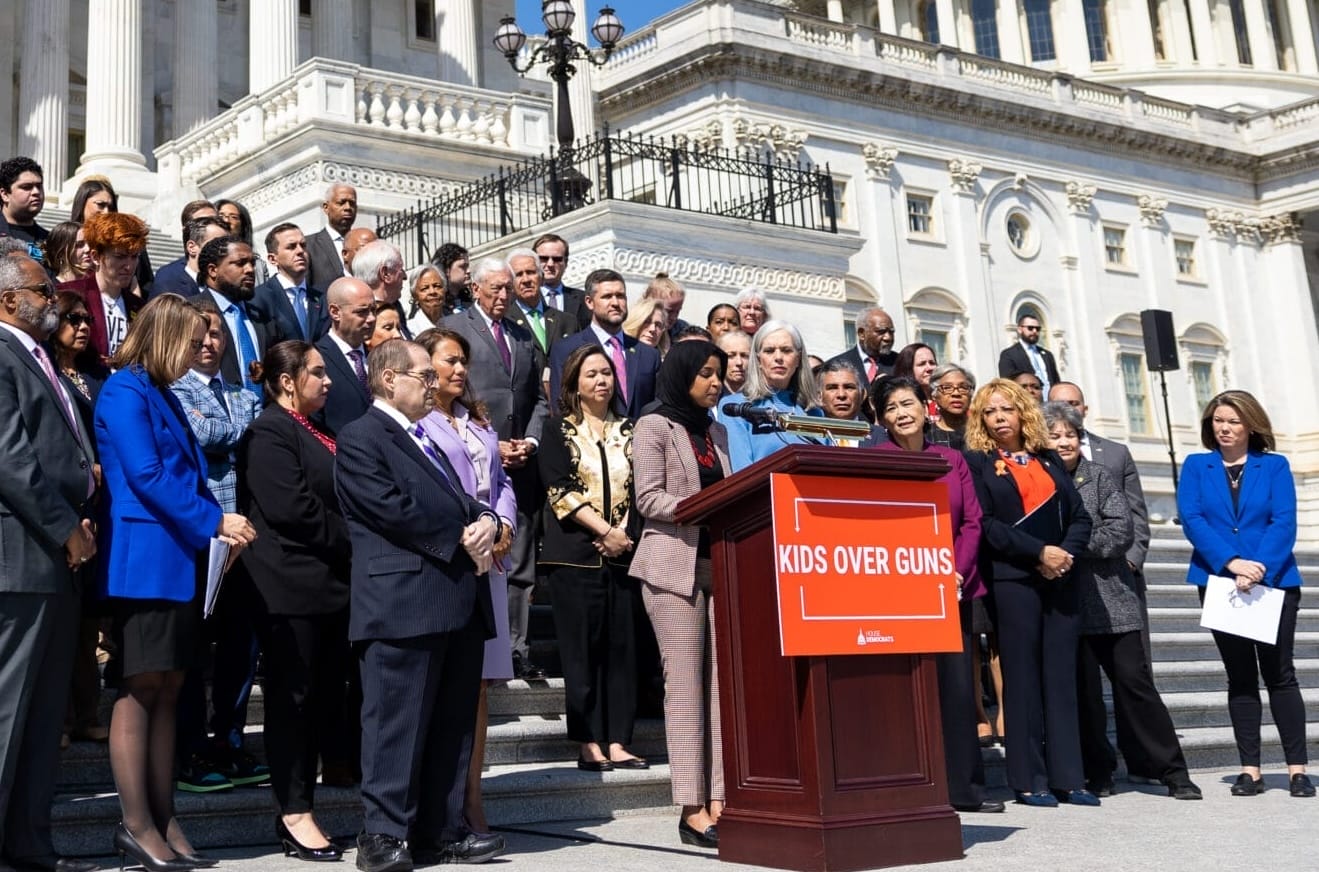
Community violence intervention is a crucial approach to fighting gun violence. Keep up to date on the latest CVI legislation in your state with the Giffords Community Violence Intervention Policy Analysis & Tracking Hub—CVI-PATH.
Read More
STAY CONNECTED
Interventions are most effective when they are supported by strong community networks. Sign up for Giffords Center for Violence Intervention’s newsletter to learn more about what’s happening in the field, relevant legislation, and funding opportunities.