State Blueprints: Saving Community Violence Intervention Programs
The federal government is rolling back gun safety regulations. Here’s how your state can protect itself from gun violence.
President Trump’s second term has been marred by uncertainty and chaos. Lost in the deluge of disarray has been a lot of action regarding guns and gun violence since he took office—and, as expected, all of it is terrible for the safety of Americans.
This post is part of an ongoing series exploring policies states have the responsibility to pursue as federal leadership falters. Our recommendations provide a blueprint for states to follow, including a list of concrete steps and model laws state lawmakers should use.
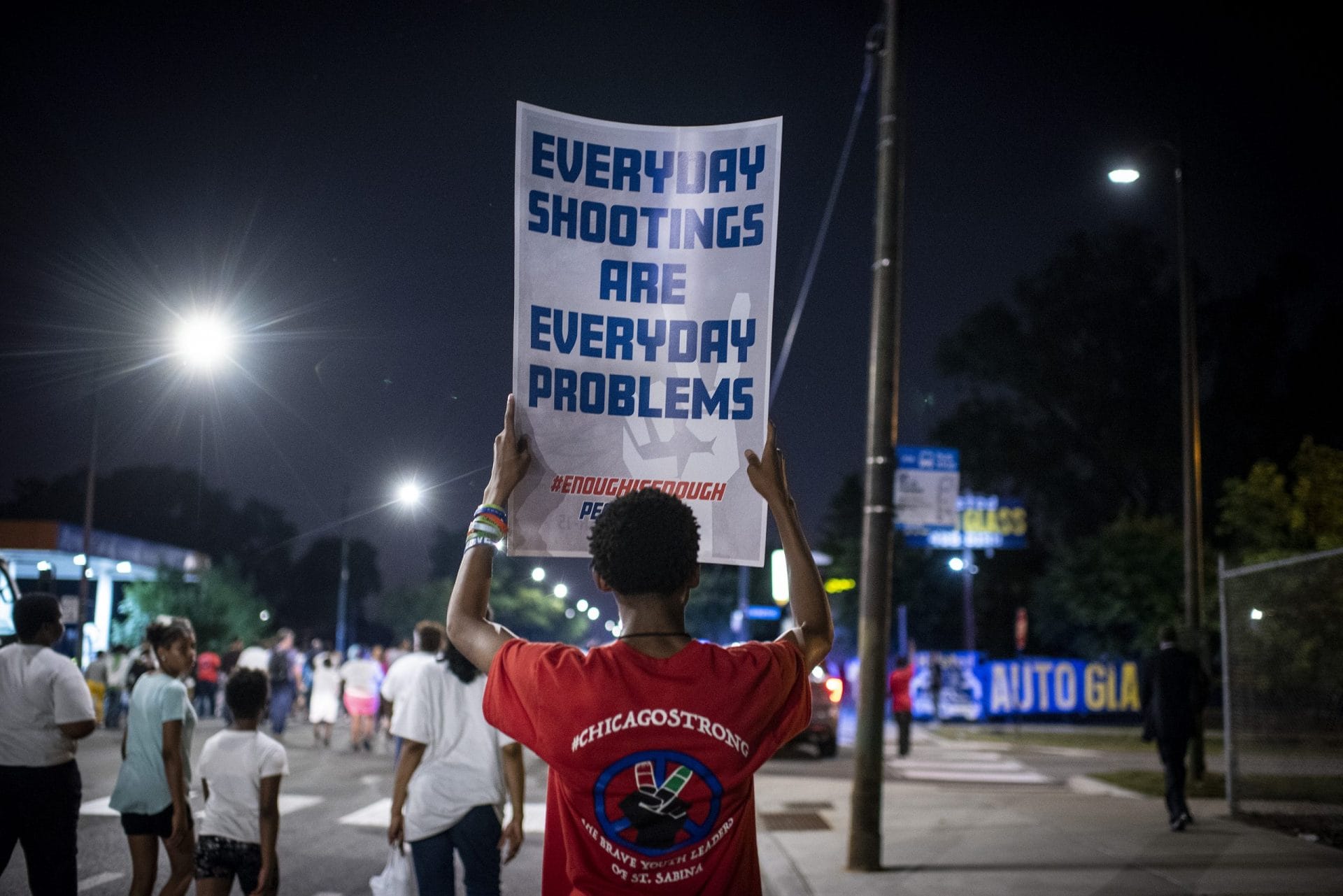
Community violence is one of the most prevalent drivers of the gun violence epidemic, and community violence intervention (CVI) is one of its most effective solutions.
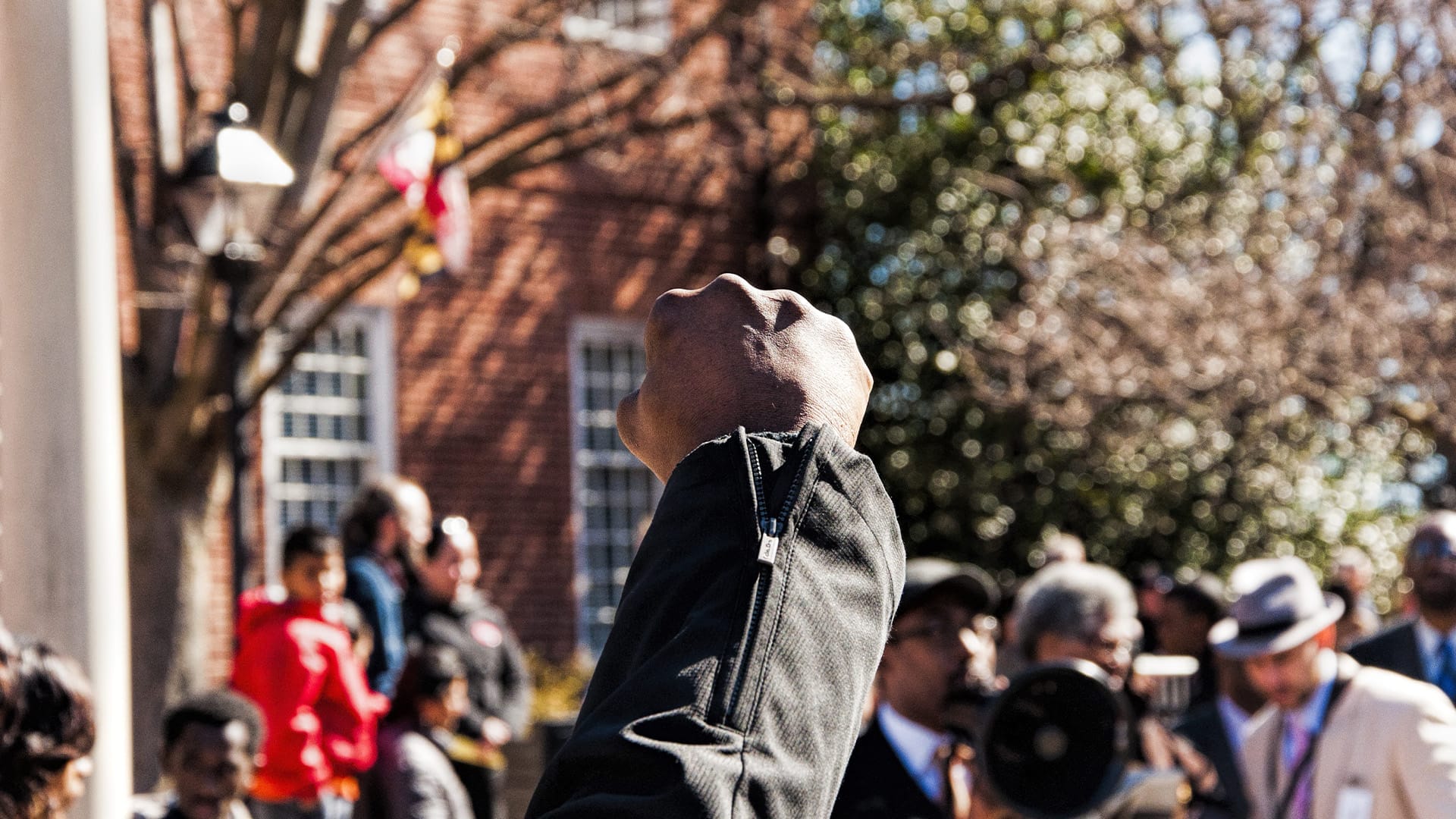
In recent years, there have been substantial, bipartisan federal investments in CVI, helping propel the field further than ever. But the Trump administration has cut funding and slashed future investments, putting CVI programs and workers—and the lives they save—in limbo.
But states can fight back. By allocating state funds for CVI work and creating sustainable, long-term funding streams for CVI, states can help fill in the dangerous void left by federal actions and build a safer future for their residents.
What Is CVI?
Community violence is defined by the CDC as violence between “unrelated individuals, who may or may not know each other, generally outside the home.” This encompasses homicides, shootings, stabbings, and physical assaults, the burden of which tends to fall hardest on Black and Latino communities in cities nationwide.
Community violence intervention encompasses a range of non-punitive, community-led strategies that are designed to:
- Interrupt the transmission of violence by engaging those at highest risk.
- Provide targeted social services to these individuals to help reduce risk.
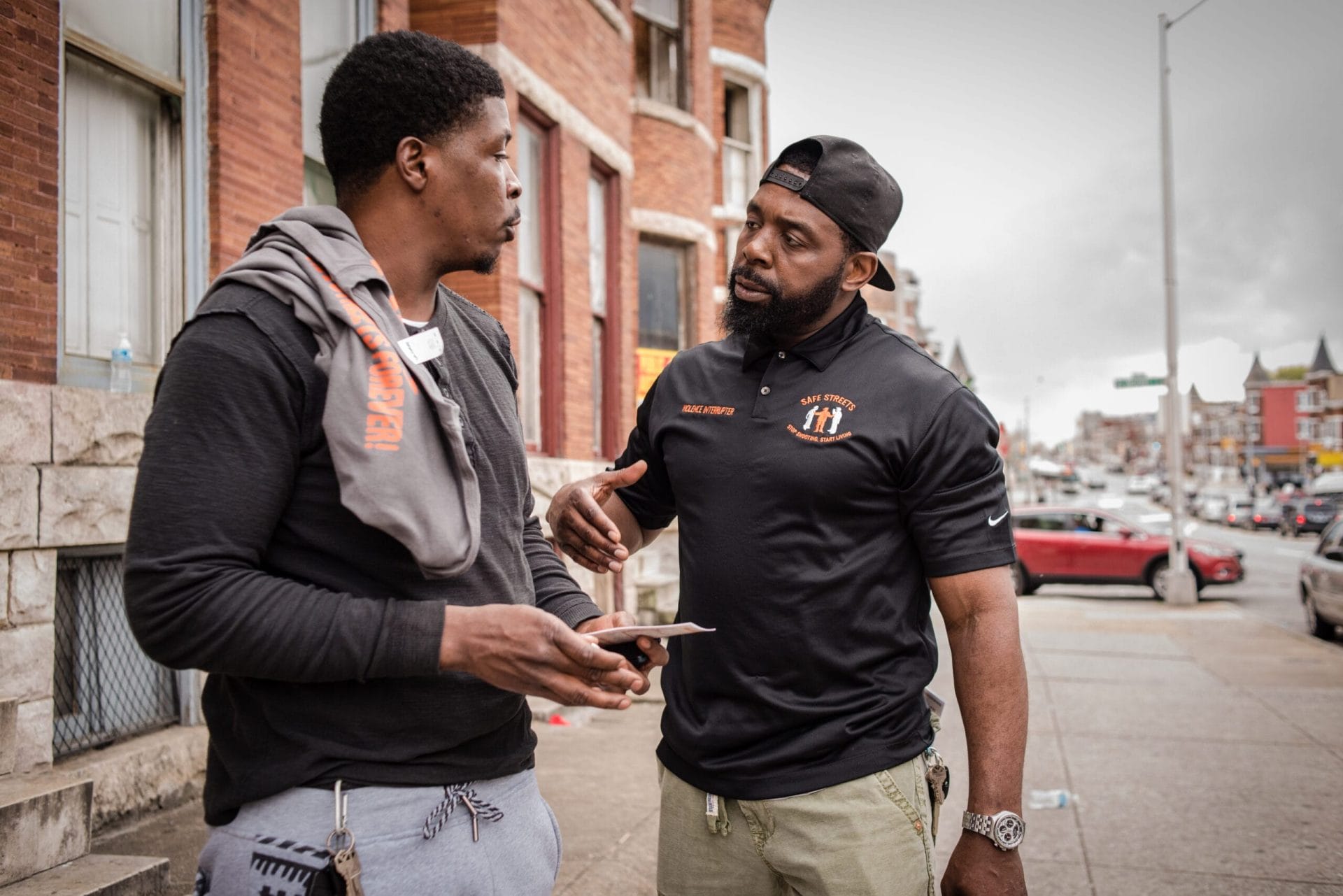
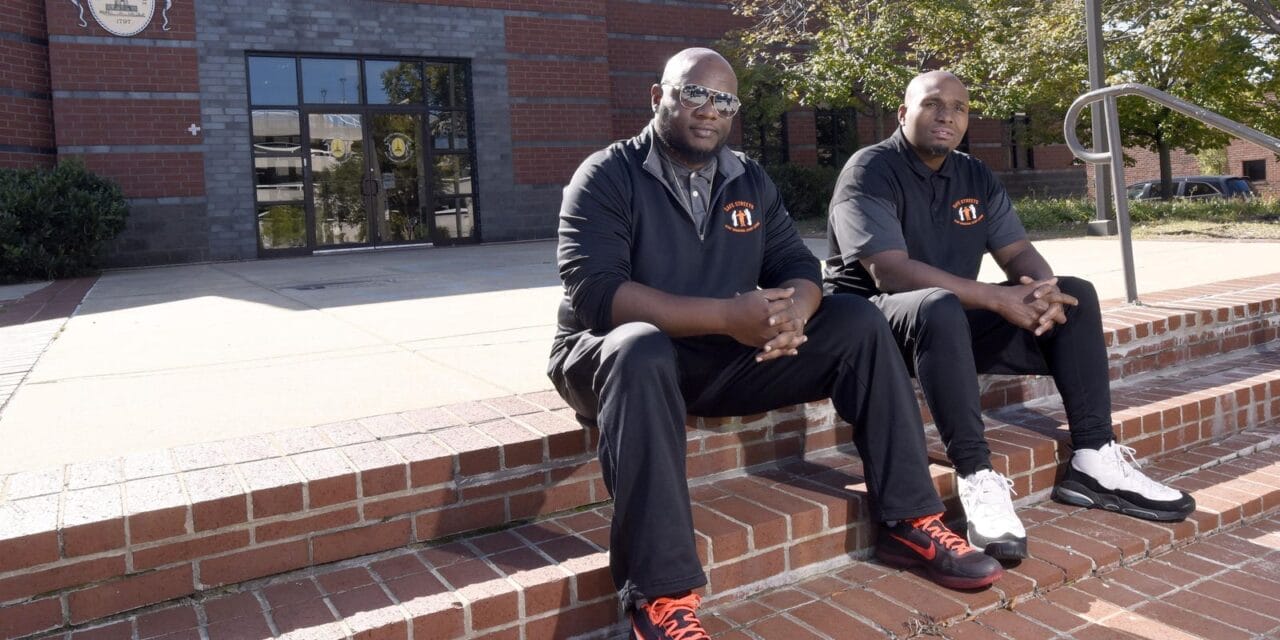
CVI strategies are rooted in a public health approach to gun violence, recognizing that violence is often contagious but also preventable through targeted interventions. The experts who practice this intervention tend to be members of an affected community who are trained to leverage their relationships and are committed to promoting peace. A few models of CVI include hospital-based violence intervention programs, street outreach and violence interruption, as well as case management and transformational mentoring programs.
It’s important to remember that gun violence imposes a substantial economic burden on all Americans—but its solutions don’t. It’s easy to imagine how quickly the costs of a shooting can add up, from the initial investigation and medical treatment of victims to the long term incarceration of offenders and rehabilitation care for survivors.
For instance, a single trip to the emergency room to be treated for a gunshot wound costs $1,388, on average. If you are then hospitalized from the gunshot injury, the median medical cost is typically around $27,820, adjusted for 2022 inflation. And that’s just the starting point—hospitalization costs for abdominal injuries average $66,780, and head and neck injuries average $81,000. And the average cost to imprison people who are tried and convicted of homicide offenses is nearly $500,000 per homicide, even taking into account the fact that many homicides go unsolved and never result in arrest.
Putting aside the lives saved by CVI, investing in community violence intervention costs considerably less than paying for the consequences of gun violence—the burden of which falls largely on taxpayers. For example:
- Advance Peace in California returns an estimated $18 to $41 in savings per dollar spent on the program.
- In Massachusetts, the Safe and Successful Youth Initiative returns $5.10 in savings for every dollar invested.
- Chicago’s READI program generated an estimated $122 million in savings over 20 months, with every dollar invested yielding $3 to $7 in cost savings.
- The National Institute for Criminal Justice Reform estimates that each homicide incurs a direct cost of $1.2 million, and each violent injury incurs a direct cost of $625,000.
Local governments are best positioned to support comprehensive CVI strategies by providing sustainable funding and resources to programs that offer those at highest risk the opportunity to explore alternatives to engaging in violent activities. No singular approach will eliminate community violence—a CVI strategy is only as strong as its coordinated community networks.
Federal Investments in CVI
Historically, Congress has prioritized appropriating billions of dollars to support law enforcement, with a heavy emphasis on funds to hire law enforcement personnel while failing to invest significantly in CVI-focused efforts. This changed with President Biden’s American Rescue Plan Act (ARPA) in 2021: The national CVI coalition Invest In Us and its allies helped secure the federal government’s largest-ever investment in community-based violence intervention and prevention programs.
In 2022, Congress included a five-year, $250 million investment in CVI in the Bipartisan Safer Communities Act (BSCA) that funded the new Community-Based Violence Intervention and Prevention Initiative (CVIPI) grant program within the Department of Justice.
Through many executive actions, including the establishment of the White House Office of Gun Violence Prevention, the Biden administration made clear that the federal government should seek to address systemic barriers to upward mobility and took concrete steps to encourage increased investment in CVI.
In a devastating and dangerous reversal of previous policy, in April 2025, the Trump administration abruptly rescinded over $800 million in grants to local gun violence prevention and crime reduction programs, including $145 million in CVIPI grants across 37 states. These cuts were part of a broader disinvestment in community safety and support systems, as cancelled grants were also aimed at crime victim support, domestic violence assistance, and drug addiction intervention.
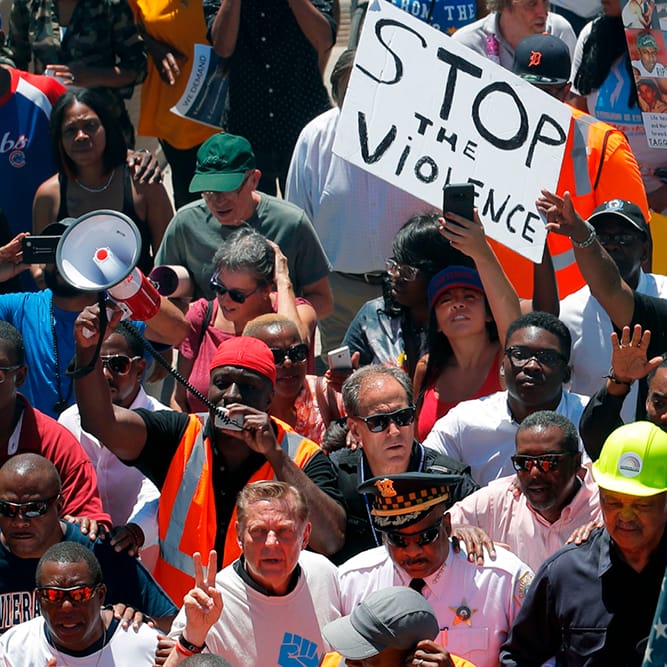
The Department of Justice called these crucial initiatives “wasteful” spending. It claimed they were terminated in part because the administration wants to focus on “protecting American children,” yet the leading cause of death of American children is gun violence, which these programs target and reduce.
The cancellation of this CVIPI funding is a profound setback for violence prevention efforts nationwide and represents a threat to recent gains in violence reduction. It has already destabilized the vital networks of community organizations, healthcare providers, and public safety agencies collaborating to implement CVI strategies. Below is a snapshot of the impact of these cuts:
- Fresno, California: Advance Peace, a program lauded by the city’s former police commissioner, had a $2 million grant revoked, causing staff reductions. Fresno’s homicide rates have steadily declined since the program’s introduction, down 59% from 74 homicides in 2021 to 30 in 2024.
- Oakland, California: Youth ALIVE! lost its $2 million grant to support the nation’s first hospital-based violence intervention program. Oakland homicides have dropped 34% since the start of the COVID-19 pandemic.
- Los Angeles, California: Urban Peace Institute lost its $1.5 million CVIPI grant to support the training and certification of street outreach workers. UPI runs a coalition of CVI organizations in Los Angeles, where shootings were down nearly 20% in 2024.
- Baltimore, Maryland: LifeBridge Health, which supports therapy groups for gun violence survivors and operates six Safe Streets sites in Baltimore, lost $1.2 million. The Living Classrooms Foundation had a $1 million grant terminated for direct, mobile medical services. Roca lost $1 million for services to non-fatal shooting victims. These organizations were an integral part in a multi-year decline in homicides and shootings. The city, which is on pace for its lowest homicide rate ever, saw a 23% decrease in homicides in 2024 after a 20% reduction in 2023.
- Portland, Oregon: Multnomah County, where Portland is located, along with four nonprofits doing community violence intervention work, had $6 million in funding cut. Oregon law enforcement has credited violence prevention work for steady improvements in shooting rates. So far in 2025, shooting rates are down 59% compared to 2022.
Undermining CVIPI abandons effective, evidence-informed strategies precisely when they are needed the most. This action signals a troubling disregard for proven, non-punitive approaches to public safety that work from the ground up within communities, as well as ignorance of the true cost of gun violence. It reverses a significant bipartisan commitment to violence prevention and ultimately makes communities less safe by withdrawing support from programs designed to heal trauma, interrupt cycles of violence, and offer pathways to safety and opportunity.
Allocate State Funds for CVI Programs
In response to the federal government’s abandonment of CVIPI, states must step in to provide the necessary funding to sustain and expand these essential programs. State legislatures should allocate significant, dedicated funding in their annual budgets to support local CVI initiatives, allowing programs the certainty they need to build long-term solutions.
Funding can be administered through a designated state agency via grants to community-based organizations implementing CVI strategies. If your state has an office of gun violence prevention, this office can distribute these grants. If not, existing state agencies such as the state’s department of health or justice may distribute them. Funding priorities should include:
- Supporting programs with demonstrated effectiveness or those using evidence-based models.
- Investing in capacity-building for community organizations, including training, data collection, and program management.
- Ensuring services are delivered in a culturally competent manner by trusted members of the community.
- Prioritizing investment in communities experiencing the highest rates of gun violence.
Create Sustainable Long-Term Funding Streams for CVI
While annual budget appropriations are important, relying solely on them leaves CVI programs vulnerable to shifting political priorities and unpredictable budget cycles. To ensure long-term stability and effectiveness, states should establish sustainable, dedicated funding streams for CVI.
A promising model is outlined in California’s Assembly Bill 28 (AB 28), which was enacted in 2023. This landmark legislation, modeled after a federal tax on firearms funding wildlife conservation, created the Gun Violence Prevention and School Safety Fund by imposing an 11% excise tax on the gross receipts of firearm and ammunition retailers, manufacturers, and vendors operating in the state. This tax effectively links the industry that profits from the sale of products associated with gun violence to the funding of solutions.
Revenue generated by AB 28 is specifically allocated to support a range of evidence-based violence reduction programs. Future legislation can similarly fund programs such as:
- Community violence intervention and prevention programs
- Initiatives to improve school safety
- Court programs centered on firearm relinquishment
- Gun violence research
- Services for victims and survivors of gun violence
- Gun violence data collection and reporting systems
Dedicated funding streams like the one created by AB 28 or Colorado’s House Bill 24-1349 provide CVI programs with the stability and predictability needed to operate effectively in the long term. Reliable funding enables organizations to retain trained staff, foster lasting relationships and trust within communities, engage in long-term planning, and consistently deliver services without the constant threat of funding cuts.
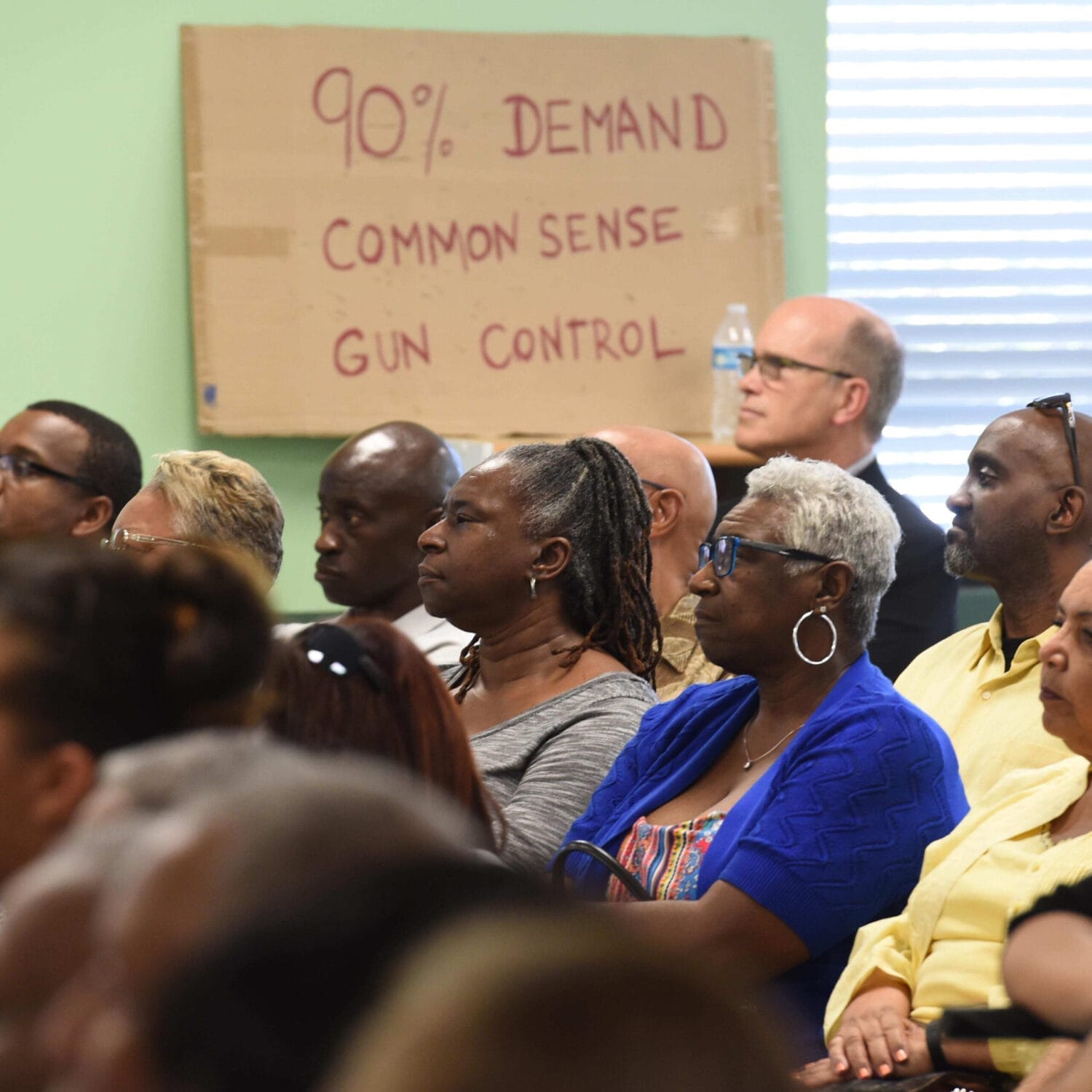
Furthermore, models like AB 28 establish an important principle of shared responsibility for addressing the cost of gun violence. By creating a direct financial link between the commercial sale of firearms and ammunition and the funding required to mitigate gun violence, such policies represent a significant innovation.
In lieu of an excise tax like AB 28, states can pursue other potential mechanisms for sustainable funding, such as dedicating a percentage of existing state revenue sources or establishing specific fees related to firearms or public safety.
Despite the volatile federal landscape, hope resides in the proven power of state action. States have the responsibility—and opportunity—to mitigate the deadly consequences of federal rollbacks by protecting community violence intervention.
We know fewer people die from gun violence in states that care enough to pass gun safety laws. And it’s especially true for children—between 2011 and 2023, states with strong gun laws saw a decrease in children dying from guns, while states with weaker gun laws saw an increase in children dying from guns.
Solving this crisis is a matter of willpower, and GIFFORDS Law Center is ready and able to help. We work with state partners across the country to implement lifesaving legislation and help protect states’ hard-won progress on gun safety. Reach out today if you have questions, thoughts, or are ready to start drafting legislation.
HERE TO HELP
Interested in partnering with us to draft, enact, or implement lifesaving gun safety legislation in your community? Our attorneys provide free assistance to lawmakers, public officials, and advocates working toward solutions to the gun violence crisis.
CONTACT US
SPOTLIGHT
COMMUNITY INTERVENTION
Community violence intervention focuses on reducing the daily homicides and shootings that contribute to our country’s gun violence epidemic. We created Giffords Center for Violence Intervention to champion community-based efforts to save lives and improve public safety.
Read More