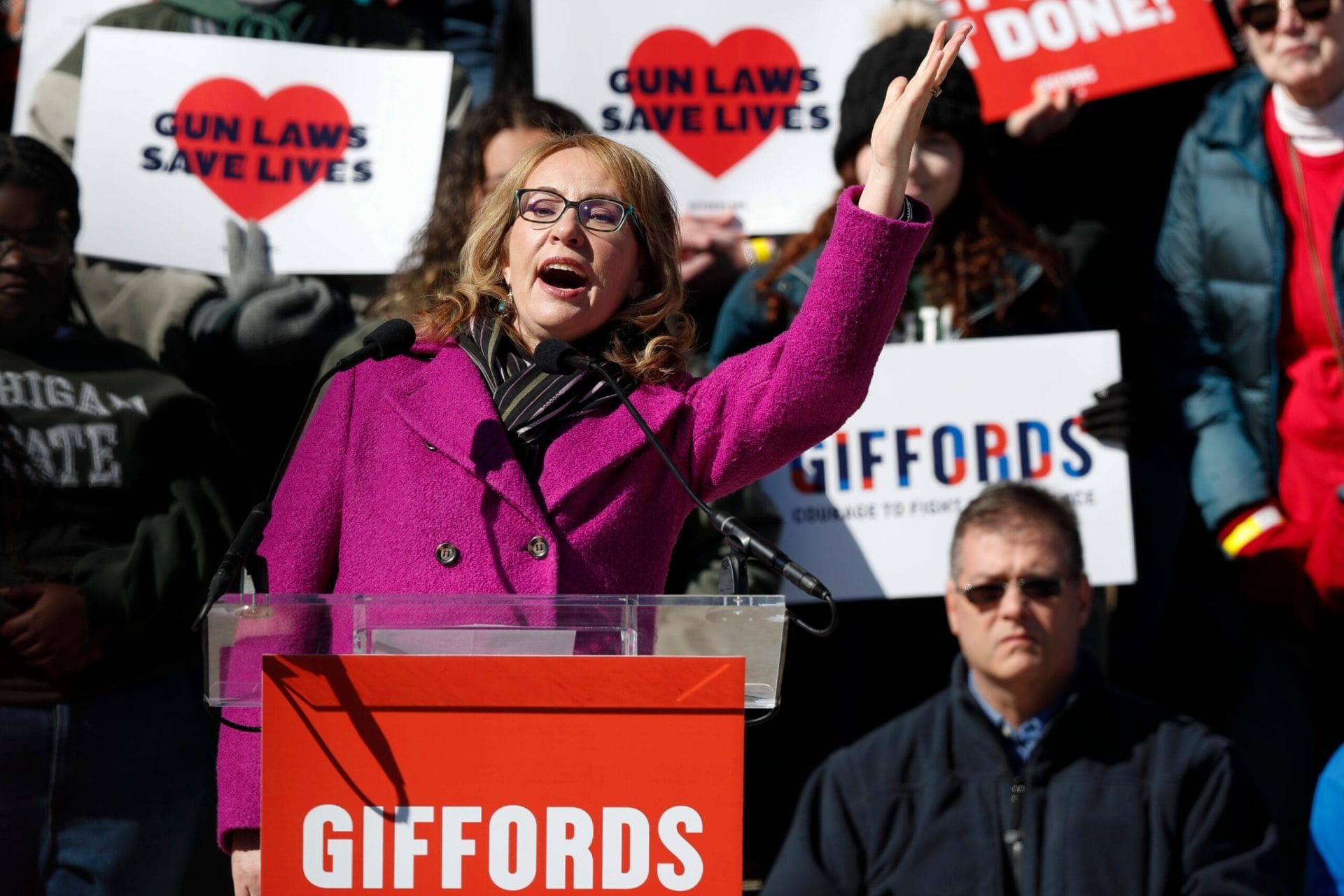
15 Years of Lifesaving Progress
On January 8, 2026, we’re reflecting on just how far the gun violence prevention movement has come since Gabby Giffords was shot.
Fifteen years ago today, GIFFORDS founder and former Congresswoman Gabby Giffords was shot in the head by an assassin—and she survived.
She was hosting a local “Congress on Your Corner” event with her constituents at the time. In total, 13 people were injured, and six others were killed. It was clear that Gabby’s immediate recovery journey would be a full-time job, so she stepped down from Congress one year after the shooting. As she often tells it, she relearned how to walk “one step at a time,” and how to talk “one word at a time.”
But then another horrific shooting rocked the nation, this time at Sandy Hook Elementary School in Newtown, Connecticut. On December 14, 2012, 20 children and six educators were killed when a shooter entered the school. Nearly two years after Gabby’s own shooting, she knew her life had a new mission: ending gun violence.
Gabby founded what is known today as GIFFORDS in early 2013. The organization’s first charge? Partnering with Sandy Hook parents to advocate in Congress for the passage of a strong background check law. Despite relentless efforts, the bipartisan legislation fell short of the Senate’s 60-vote threshold.
While the loss was maddening, that failure gave rise to the modern gun violence movement as it exists today.
Back in 2011, advocating for gun laws was a political nonstarter. There was no debate or movement on this issue. Even after a mentally ill man legally passed a background check, bought a gun, and tried to kill a sitting congresswoman, the lone debate in Washington DC wasn’t about guns—it was about violent rhetoric.
For nearly 20 years up until that point, the gun lobby essentially had free rein over America. The gun industry and the NRA used that time to build a war chest, inflate membership rolls, and spread propaganda—all while becoming more and more extreme.
But then the momentum changed. Gabby was shot. Twenty six- and seven-year-olds were murdered at school. The brutality shocked the nation and spurred action. Despite the failed background checks legislation, gun violence prevention advocates weren’t giving up. Organizations formed, grassroots support spread, and states began to step up while the federal government struggled.
There’s a common refrain that Congress’s refusal to pass definitive legislation to curb gun violence means the NRA has “won.” That frustration is warranted, but defeatism is not. In the 15 years since Gabby was shot, advocates built up a movement to take on—and beat—the gun lobby. And we’ve been successful.
Since the Tucson shooting, a wave of gun safety laws has swept the country. States have enacted more than 820 new gun laws during this time, from background checks and extreme risk protection orders to industry responsibility laws and funding for community violence intervention. This momentum in the states led to the enactment of the Bipartisan Safer Communities Act in 2022, the first new federal gun law in almost 30 years. The movement has also tackled emerging threats that had low profiles in 2011, like ghost guns, Glock switches, and bump stocks.
In our 2012 Annual Gun Law Scorecard, only three states received A or A- grades (California, Massachusetts, and New York). In 2025, 13 states earned an A or A-. This is incredible progress, and we thought we’d break down some of the details for you below.
Background Checks
There’s a dangerous gap in our federal gun laws that allows anyone to buy a gun from an unlicensed seller—people who sell guns online, at gun shows, or anywhere else without a federal license—without passing a background check. This means guns easily find their way into the hands of criminals, abusers, gun traffickers, and others who should not have access to them.
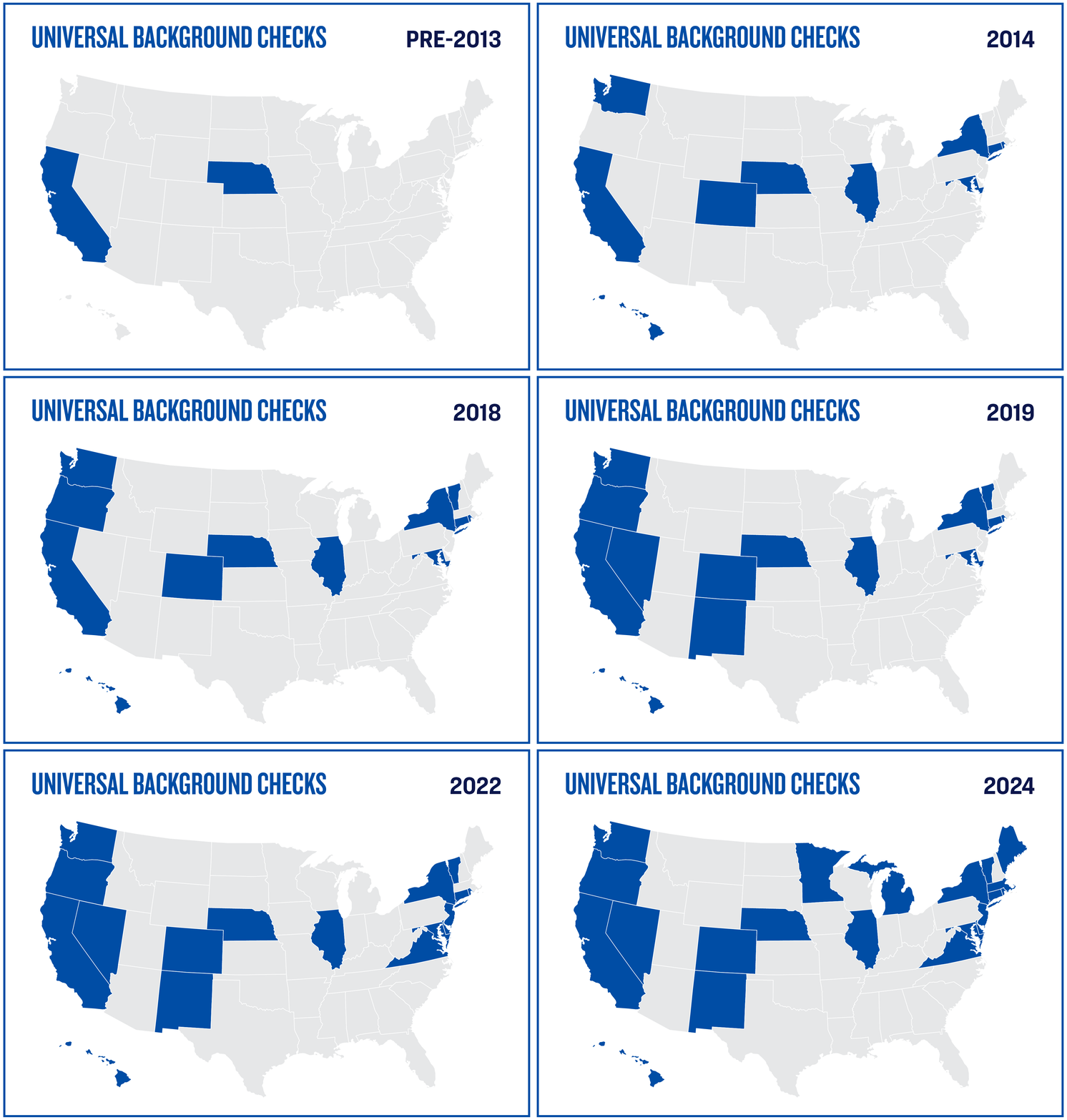
One of the best ways to keep guns away from dangerous people is by prohibiting all gun sales without a background check, regardless of whether it is being sold in a store or out of the back of a truck. And over the last 15 years, 30 states have passed 81 significant new laws ensuring that strong background checks occur on every gun sale.
Extreme Risk Protection Orders
Too often, it’s reported in the days after a shooting that friends, family, coworkers, or neighbors had recently become troubled by the perpetrator’s behavior—but they had no place to go with their concerns. Even law enforcement, in those moments, are limited in what they can do.
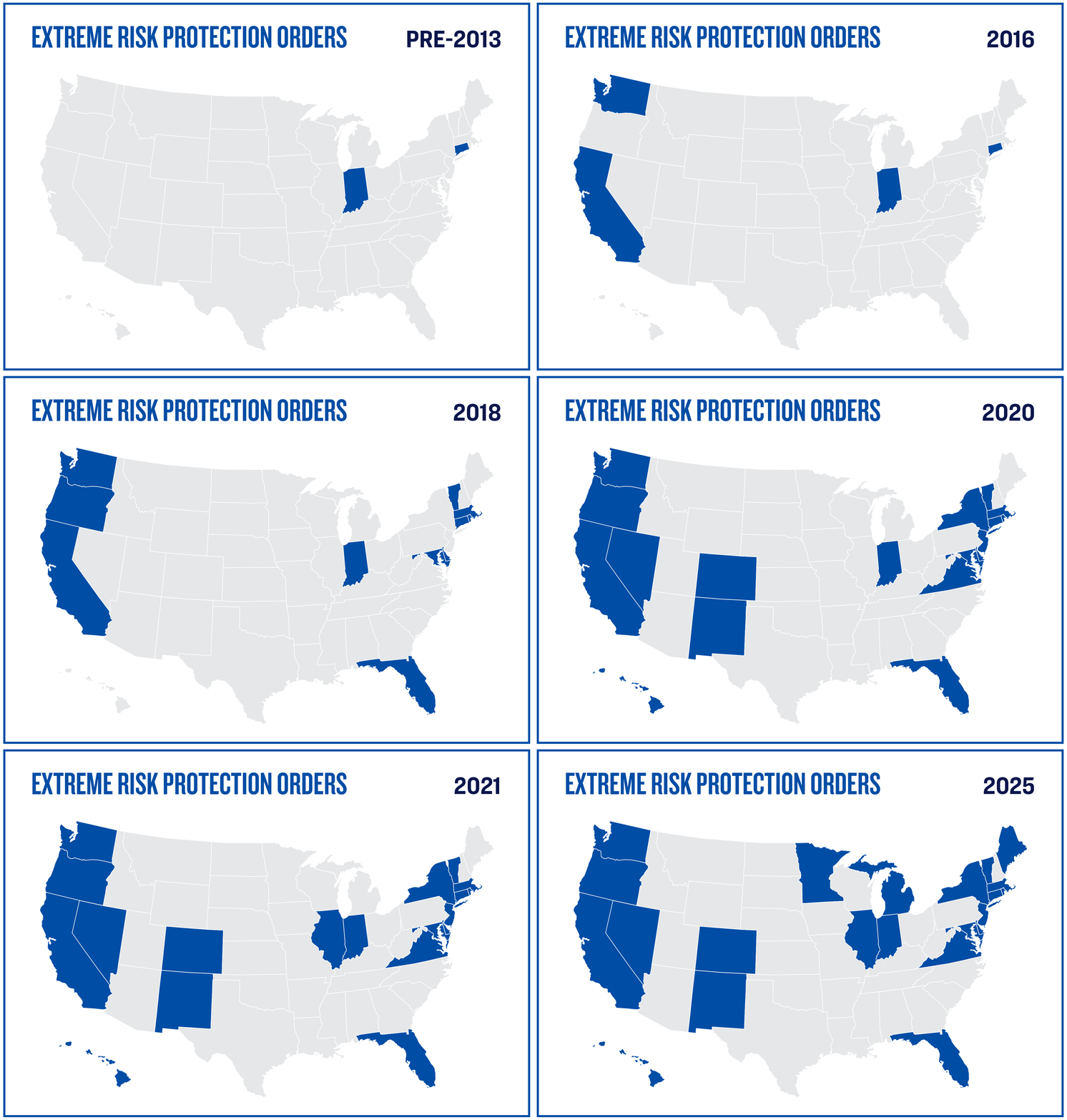
States have begun to solve that problem by establishing extreme risk protection order (ERPO) laws, often referred to as “red flag laws,” which allow doctors, family members, or law enforcement to temporarily remove firearms from those deemed, through due process, at heightened risk of harming themselves or others. Over the last 15 years, 21 states have passed 50 significant new laws to establish risk protection orders to keep communities safe.
Community Violence Intervention
Community violence is one of the most prevalent drivers of the gun violence epidemic in America. It’s defined by the CDC as violence between “unrelated individuals, who may or may not know each other, generally outside the home,” and it disproportionately impacts Black and Latino communities. Community violence intervention (CVI) is designed to combat this violence through evidence-based, community-led strategies that interrupt the transmission of violence by engaging those at highest risk.
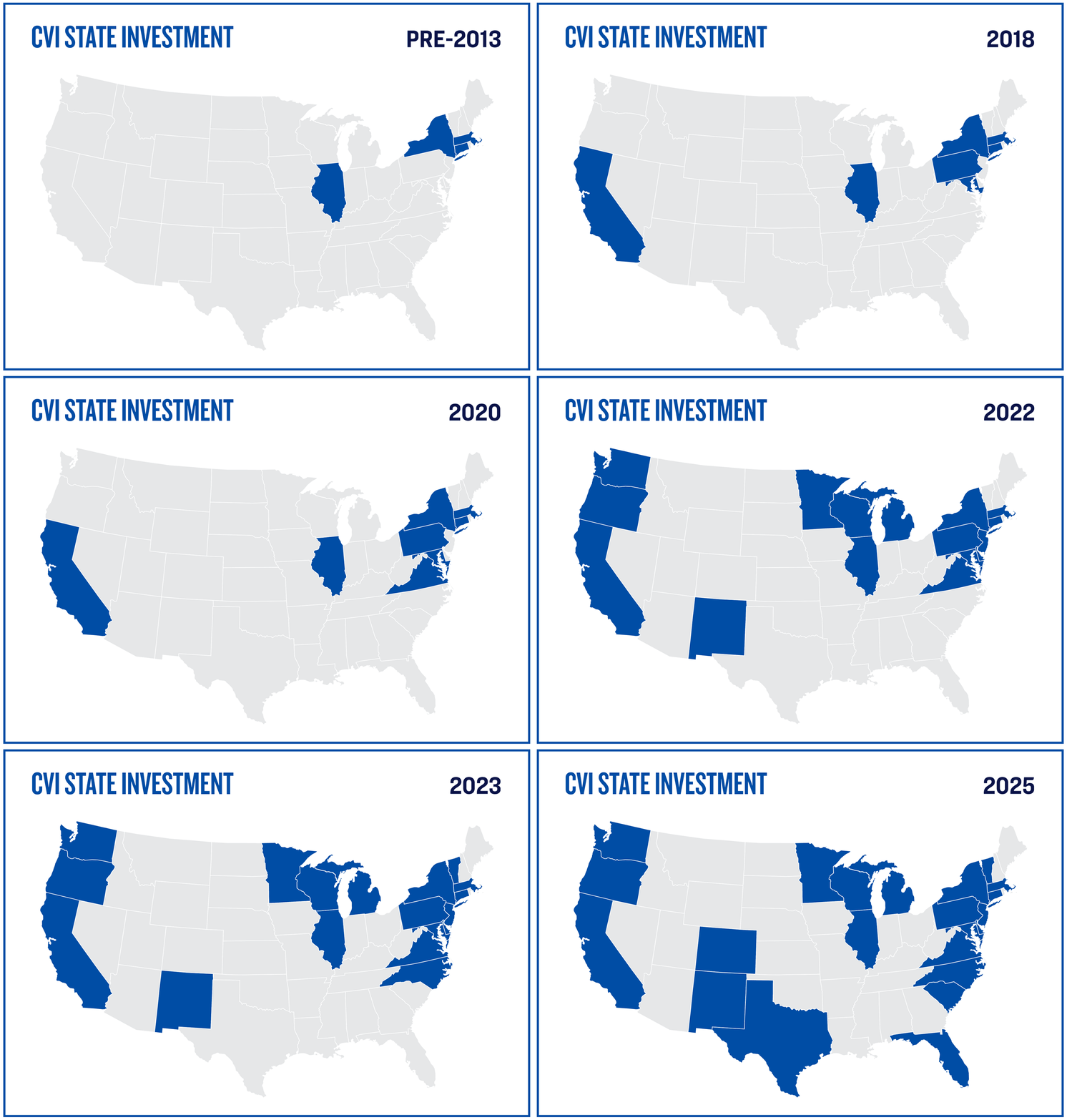
But CVI only works with comprehensive, sustained investments, which it so often doesn’t have. In fact, 2022 was the first time Congress established a dedicated grant program to support CVI efforts. But states have filled in the gaps over the years by investing in local CVI work and the lives it’s saved. Over the last 15 years, 18 states have begun to invest in community violence intervention, bringing the total of states that invest in CVI to 22.
Gun Industry Responsibility
In 2005, Congress passed the Protection of Lawful Commerce in Arms Act to give the gun industry unique immunity from most civil liability, which has fueled irresponsible behavior and allowed the industry to escape most accountability. It was the biggest special interest giveaway in the history of the United States.
But there is still a way to hold the gun industry accountable—the power lies with the states. If states enact laws creating a standard of conduct for the marketing and sale of firearms, and the gun industry knowingly violates these standards in the state and those firearms are used to cause harm, then victims, survivors, or public entities can file a lawsuit against the manufacturer or seller.
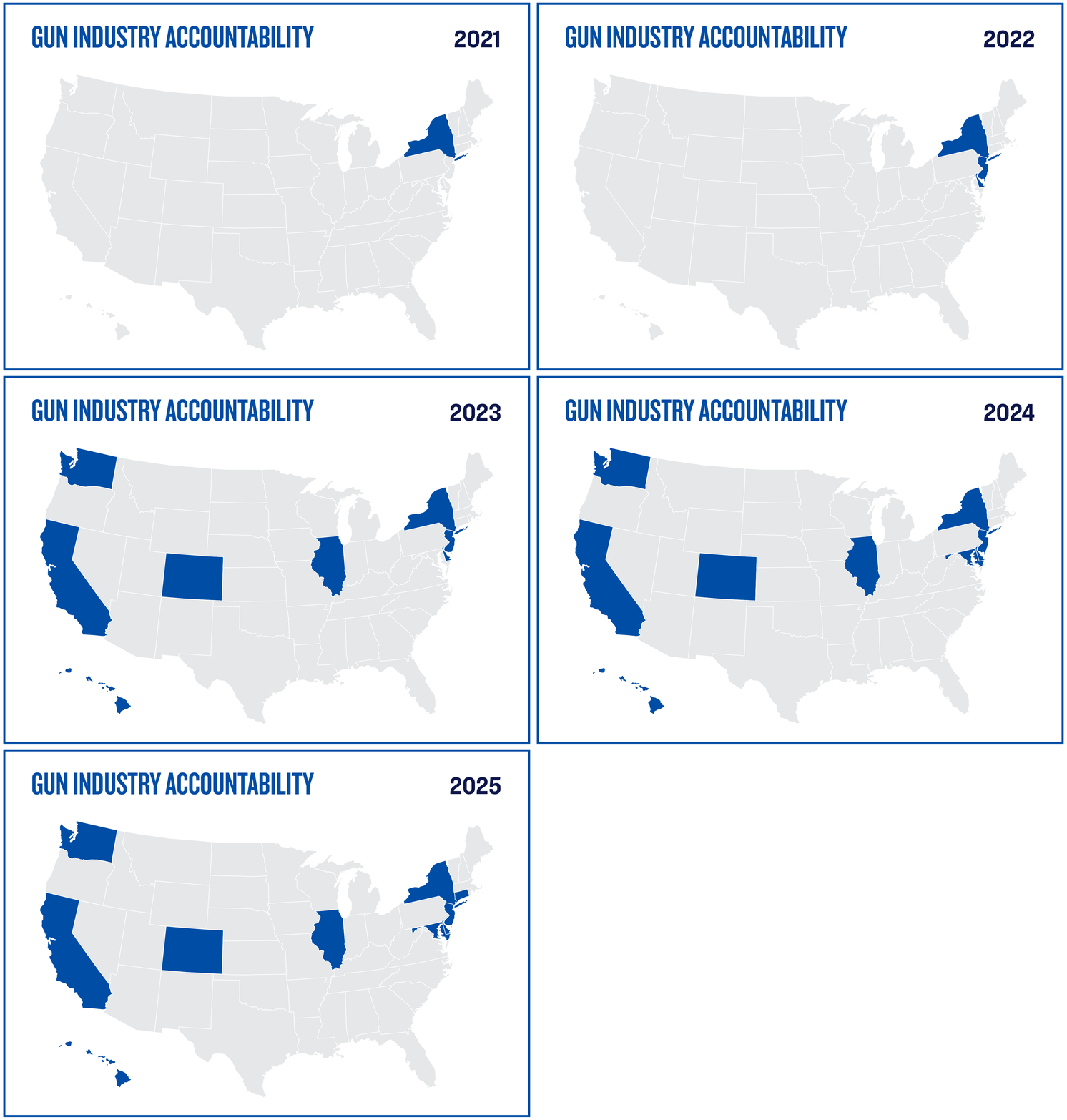
GIFFORDS and allies in the gun violence prevention movement have worked diligently alongside state lawmakers to put in place laws that empower victims and survivors to bring suits against bad actors in the industry. Over the last 15 years, 10 states have enacted 12 laws to ensure that bad actors in the gun industry can be held accountable in court.
Offices of Gun Violence Prevention
Addressing gun violence requires leadership and coordination, and governments at all levels are equipped to take action. The key is establishing a comprehensive and proactive strategy to fighting gun violence—and ensuring violence reduction remains a priority.
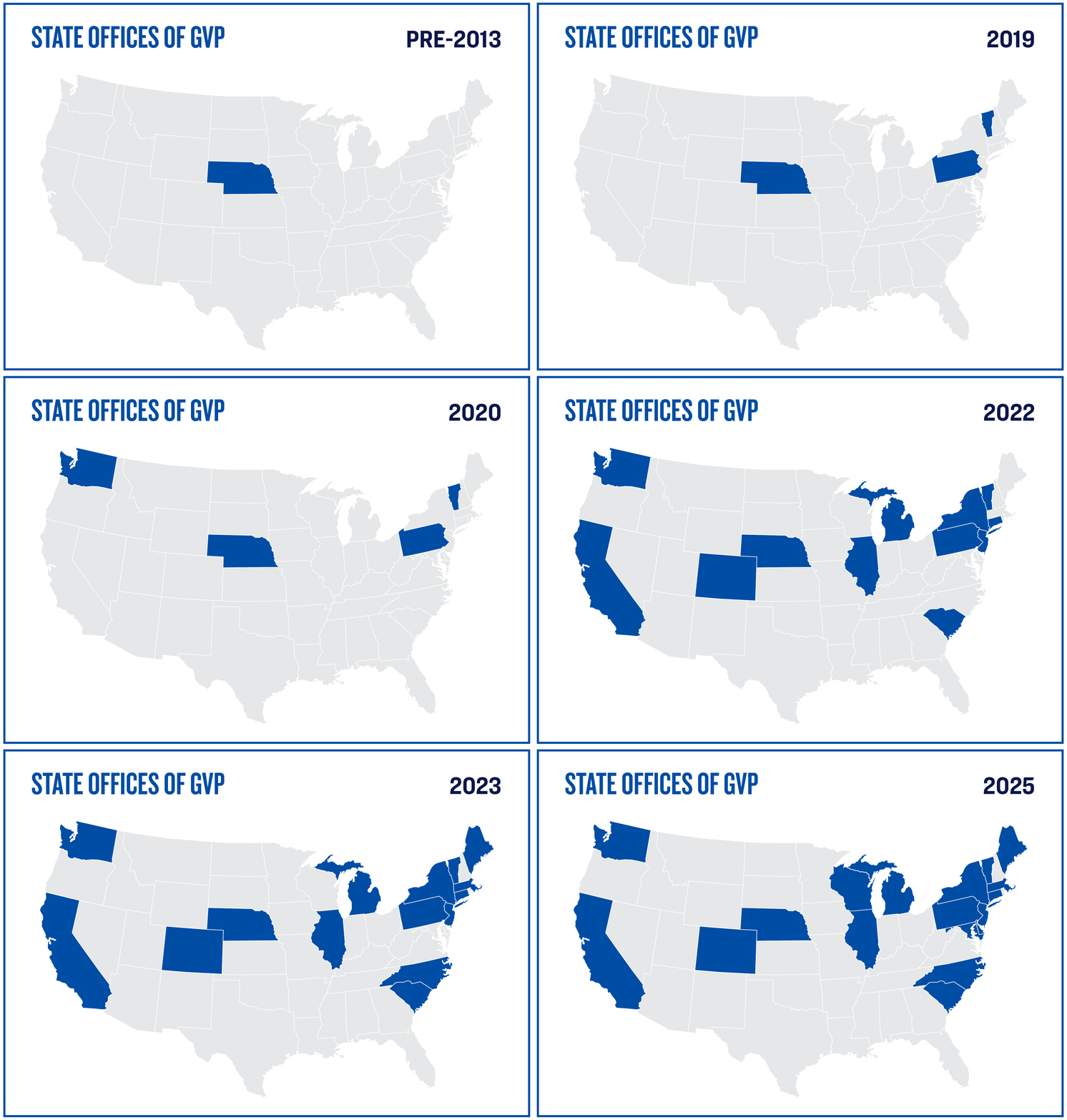
That’s where offices of violence prevention come in. At every level of government, these offices play a critical role in developing and executing a unified gun violence prevention strategy, while also coordinating violence prevention efforts across different agencies and providing a hub for data collection. Over the last 15 years, 17 states created offices of violence or gun violence prevention (OGVPs).
In 2023, President Joe Biden created the first-ever White House Office of Gun Violence Prevention, which was a huge step from the federal government in addressing this nation’s gun violence epidemic. President Trump eliminated the office in early 2025 as a favor to his gun industry CEO campaign donors.
Gun violence prevention has historically come in waves. In the 1930s, after Prohibition gave rise to Al Capone–like Gangland shootings, the National Firearms Act tackled tommy guns and sawed-off shotguns. When a wave of high profile assassinations and attempts horrified the American public from the 1960s through 1980s, Congress passed the Gun Control Act and eventually established the background check system through the Brady Handgun Violence Prevention Act of 1993.
After stalling for decades, the modern gun violence movement that launched after Sandy Hook and Gabby’s attempted assassination has set the stage for the next wave of lifesaving progress, including 2022’s Bipartisan Safer Communities Act. We have made momentous progress in the years since, and we aren’t slowing down anytime soon. The long list of state advancements above should serve as a playbook for future leaders looking for proven, popular policies that reduce crime and protect communities from gun violence.
GET THE FACTS
Gun violence is a complex problem, and while there’s no one-size-fits-all solution, we must act. Our reports bring you the latest cutting-edge research and analysis about strategies to end our country’s gun violence crisis at every level.
Learn More

SPOTLIGHT
GUN LAW SCORECARD
Every year, the data is clear: States with strong gun laws have less gun violence. See how your state compares in our annual ranking.
Read MoreThe Latest

City of Philadelphia and DA Krasner File Lawsuit Against GLOCK, Inc., For the Company’s Role in Gun Violence Crisis
GIFFORDS urges Minnesota Republicans to pass commonsense gun laws