
Gun Law Trendwatch: How States Are Moving Forward in 2026
So far this year, a dozen states have passed new gun safety laws.
Every year, the attorneys and experts at GIFFORDS Law Center track the hundreds of gun-related bills moving through state legislatures across the country. And every year, we analyze the trends we’re seeing, from popular policies to gun lobby attempts to undermine our safety.
Most state legislatures are in session from January to May, which means there’s a limited amount of time to get bills passed and signed into law. During this time, we publish a regular edition of Gun Law Trendwatch, our publication that highlights the latest developments in gun policy, public safety wins, and efforts to make our communities less safe. You can find our analyses of 2026 gun legislation on our Trendwatch page.
So far this year, states have prioritized passing laws that protect children and teens from accessing guns, hold gun dealers accountable for reckless actions, restrict the creation and spread of ghost guns, protect victims of domestic violence, and more. In fact, 12 states have passed new gun safety laws this year.
Notably, Virginia passed a slate of gun violence prevention bills covering a wide range of policy issues, including an industry accountability bill—which makes the commonwealth the 11th state to create standards of conduct for the gun industry and set up a pathway to hold the industry accountable for any dangerous behavior.
This year hasn’t been all wins. The gun lobby ceaselessly works to undermine our progress, weakening existing safety laws and lobbying against some of our biggest goals. Wyoming made it a crime to enforce an extreme risk protection order. Kentucky and Utah both expanded gun industry immunity. But we successfully fought back against incredibly reckless gun lobby bills, including the Sig Sauer–funded immunity bill in Florida, as well as attempts to repeal gun safety laws, including the waiting period law in Maine.
We have about four months left in the year—which means states like California, Illinois, and New Jersey still have time to notch even more wins to protect their communities. We’ll continue monitoring their progress and report back at the end of the year, but, for now, let’s take a look at the gun-related legislation states have passed so far in 2026.
As the federal government has taken steps to weaken gun laws, state legislatures have continued to work independently to keep their residents safe.
Community Violence Intervention
So far this year, we’ve seen several states continue their investments in community violence intervention (CVI). For more information on CVI legislation, see GIFFORDS’s Community Violence Intervention Policy Analysis & Tracking Hub (PATH).
- Virginia (HB 1523) enacted a bill to establish requirements for use of the title “certified violence prevention professional” and direct the Board of Health to establish requirements for the education and training of these professionals, as well as qualifications for training entities and limitations on the number of approved training entities. This new law moves the state towards Medicaid reimbursement for CVI work and helps to professionalize the field by authorizing the health board to create a process to recognize and certify violence prevention professionals.
- Virginia also enacted a law (HB 969/SB 364), directing the secretary of public safety to convene a work group to develop policy and legislative recommendations for the establishment of the Virginia Gun Violence Prevention Center. Additionally, the commonwealth appropriated over $50 million for CVI purposes (HB 30).
- Minnesota (SF 4760) and Colorado (HB 1165) appropriated $5 million and $3 million for CVI-related purposes, respectively.
- While California hasn’t wrapped up its session this year—meaning most bills are still moving through the legislature—the state continues to prioritize CVI. GIFFORDS is sponsoring AB 2378, which would establish an Office of Community Violence Intervention to administer the California Violence Intervention and Prevention (CalVIP) Grant Program. The bill will also create the infrastructure and platform the program needs to help California violence intervention professionals continue their growth.
Glock Switches
In recent years, many states have banned auto sears, which attach easily to some models of handguns and convert them from semiautomatic to automatic fire—effectively creating a machine gun. These devices are frequently called “Glock switches” because of their pervasive use on Glock pistols, which are uniquely easy to convert to automatic fire.
However, it’s still far too easy to buy or make these deadly devices. That’s why states have now turned to addressing the handguns themselves.
- California (AB 1127) enacted legislation this year prohibiting the sale of handgun models that can be readily converted by hand, or using common household tools, into a machine gun.
- Connecticut (HB 5043), Maryland (SB 334), and New York (S.9005) all passed similar laws this year.
Domestic Violence
When abusers have access to firearms, their intimate partners are five times more likely to be killed. That’s why it’s critical that state laws not only prohibit an abusive partner from purchasing and possessing firearms, but set out specific procedures for how that partner must surrender all firearms they currently possess. This session, we saw a number of states—with both Democrat and Republican support—impose stricter standards for abusive partners surrendering firearms:
- In Minnesota, lawmakers improved firearm relinquishment procedures that apply when a domestic violence protective order is issued (HF 4075), requiring firearms to be surrendered “as soon as reasonably practicable,” and necessitating compliance hearings to ensure the proper procedures have been followed.
- Vermont (H.606) limited situations in which an individual required to surrender a firearm may do so to someone other than law enforcement or a firearm dealer. It also requires the individual to submit proof to the court documenting who is now in possession of their firearms and a notification to the victim before firearms are returned to the individual, if they are not permanently prohibited from possessing them.
- Virginia (SB 160) closed the “intimate partner loophole” for domestic violence firearm prohibitions to ensure that abusive partners may not access firearms, regardless of whether they ever lived with, were married to, or had children with the victim. The commonwealth also added firearm relinquishment procedures for individuals convicted of domestic assault and battery (SB 38).
Meanwhile, in partnership with the California Department of Justice, GIFFORDS is working to improve California’s nation-leading array of protection orders that carry firearm prohibitions. The Pathways to Safety Act (AB 1753) addresses implementation barriers and strives for stronger protections for people suffering from violence. The bill has passed the state assembly and, as of publication, is pending in the senate Appropriations Committee.
Ghost Guns and 3D Printers
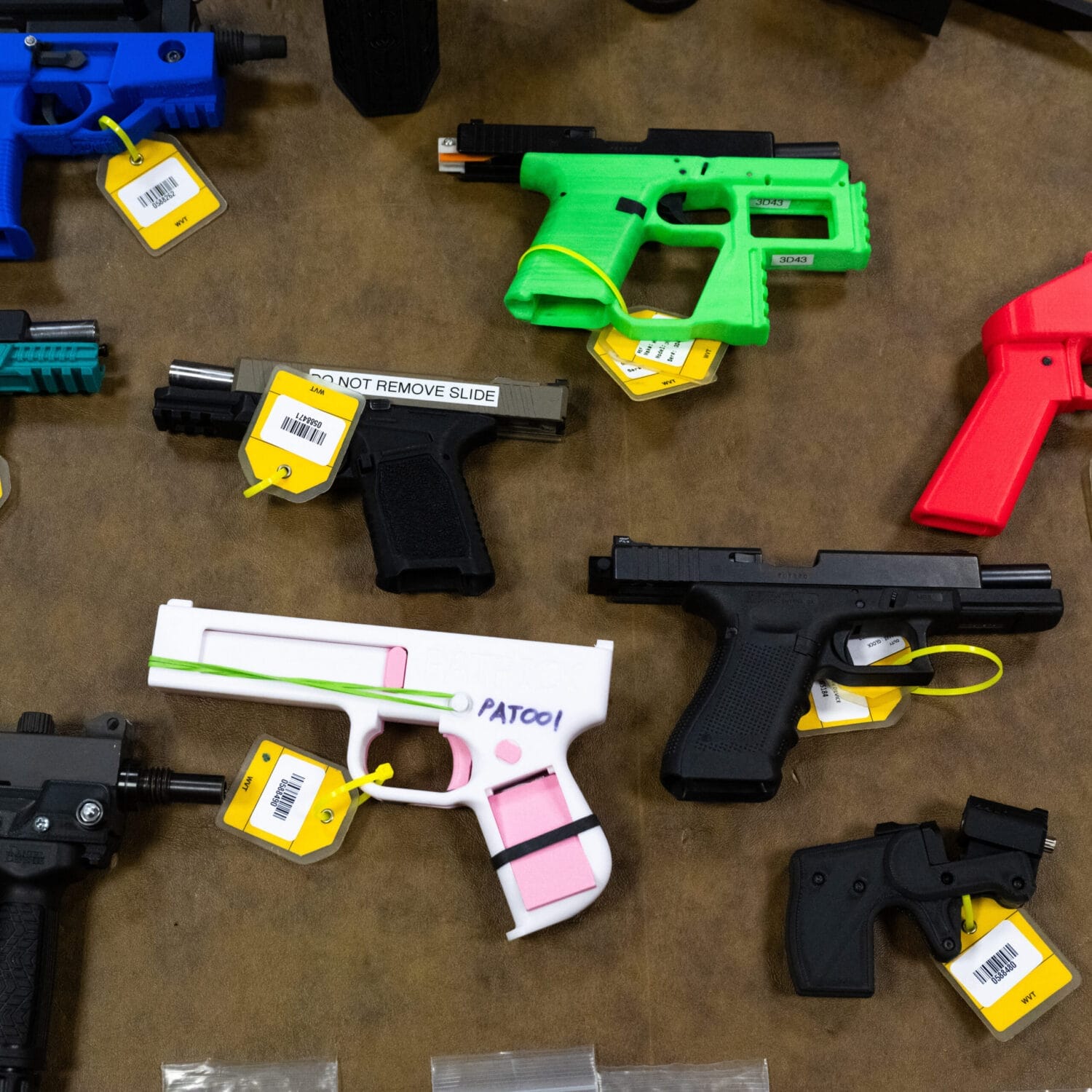
As 3D printers have become cheaper and more common, individuals who cannot pass a background check or who want a firearm prohibited by their states’ laws have turned to 3D printing to make the firearms they can’t legally purchase. Fortunately, many states have begun to pass laws restricting the use of 3D printers to make firearms.
- Colorado (HB 1144) prohibited manufacturing a firearm, unfinished frame or receiver, large-capacity magazine, or rapid-fire device with a 3D printer or CNC milling machine without a federal firearms license.
- New Jersey, which previously banned 3D printing firearms without a license, also prohibited the possession of the digital code used to 3D print firearms with the intent to manufacture a firearm (AB 4975).
- New York (S. 9005) became the first state to require that all 3D printers for sale come with blocking technology to prevent the printer’s use to manufacture firearms and conversion devices. This requirement will go into effect as soon as technologically feasible. This law also prohibits possessing the digital firearm manufacturing code used by 3D printers to create a firearm with the intent to use it to manufacture one or to distribute it to someone who is prohibited from possessing firearms or is not properly licensed to manufacture firearms.
- In Washington, lawmakers banned not only the 3D printing of firearms, but also the distribution of a digital firearm manufacturing code (HB 2320).
California already prohibits using a 3D printer to make firearms, but is now considering a bill that would require blocking technology on 3D printers akin to New York’s law (AB 2047). Meanwhile, other states have continued to pass laws regarding ghost guns more generally.
- Maine (HB 745) required the serialization of all firearms.
- Virginia (HB 40) also required serialization of all firearms, and banned ghost guns that are not regulated as firearms under federal law.
Gun Industry Accountability
Effective oversight of the gun industry is a cornerstone of preventing gun violence—including regulating gun dealers and holding the industry accountable for irresponsible practices. Historically, oversight of firearms dealers has been mainly the purview of the ATF. Among other things, the agency is in charge of licensing federal firearms dealers, tracing guns used in crimes, and analyzing intelligence in shooting investigations. Recent steps by the Trump administration, however, have left the agency “rudderless, leaderless and demoralized.”
Despite federal restrictions, states continue to pursue accountability—especially with regards to rogue gun dealers.
- California’s Department of Justice is finalizing regulations that will enable it to revoke approval to operate in the state for dealers that commit serious violations of state law. In addition, the state assembly passed a bill (AB 1810) that buttresses that power in statute and enables the DOJ to prohibit someone who fails to correct violations of law from operating in California’s firearm industry for a year.
- Colorado (HB 1265) enacted a bill that would require all law enforcement departments to utilize the crime gun tracing software eTrace and share data with one another to better track the movement of a weapon recovered from a crime scene. Not only will this help solve gun crimes, it will also hold accountable the industry members whose practices enabled these dangerous gun sales.
- Virginia became the 11th state to build a pathway to justice for victims of the gun industry’s dangerous behavior by passing the Firearm Industry Responsibility Act (SB 27/HB 21). While the federal Protection of Lawful Commerce in Arms Act (PLCAA) provides the gun industry with broad immunity from lawsuits, if states enact laws laying out standards of conduct for the marketing and sale of guns—and then when the gun industry breaks these standards—victims can seek justice in court. This is what the Firearm Industry Responsibility Act does: It allows the attorney general and victims of violence to hold gun industry members accountable in civil litigation for reckless and illegal conduct that results in harm.
Safe Storage and Child Access Prevention
Comprehensive child access prevention and safe storage laws are an incredibly effective tool to curb gun deaths and injuries among children and teens. More than half of all gun owners store at least one gun unsafely—without any locks or other safe storage measures. But with just a few commonsense measures, gun owners can protect their families and communities.
- Delaware (HB 141) ensured every gun purchaser receives a notice about the responsibilities of gun ownership, including the responsibility to store guns safely.
- In New York, GIFFORDS, New Yorkers Against Gun Violence and other gun violence prevention groups have worked across multiple legislative sessions to pass Francesco’s law (S. 9629). The bill, now awaiting Governor Hochul’s signature, is named for 17-year-old Francesco Cochran, who died by firearm suicide after gaining access to an unsecured firearm. Current New York law only requires secure storage of firearms if the owner resides with a minor, or someone the owner knows or has reason to know is prohibited from possessing firearms for certain reasons. This bill would extend the safe storage requirement to all circumstances when the firearm is out of the owner’s immediate possession or control.
- Virginia (HB 110) prohibited leaving a handgun in an unattended vehicle unless the firearm is placed out of plain view in a locked, hard-sided container. The commonwealth also required anyone in possession of a firearm in a residence where they know a minor or prohibited person is present to store the firearm in a locked container or lock it with a gun lock anytime they are not carrying the firearm on their person (SB 348).
Spotlight: A Major Gun Safety Package in Virginia
Lawmakers in Virginia went above and beyond this session to protect their communities from gun violence. In April, Governor Spanberger signed a package of gun safety measures into law. Many of these bills aren’t new; they’ve been passed by the legislature before, but were vetoed by the previous Republican governor. GIFFORDS experts played a crucial role in helping draft these bills, testify in support of them, and push them over the finish line this year.

This gun safety package covers a wide range of policy areas, but let’s start with a big one: gun industry accountability. With the passage of HB 21/SB 27, Virginia became the 11th state to pass a law to hold the gun industry accountable for dangerous or harmful conduct.
As explained above, while PLCAA provides the gun industry with exceptional immunity—a perk that other industries, like cars and tobacco, don’t receive—states only need to enact laws laying out standards of conduct for the marketing and sale of guns. This means that when the gun industry breaks these standards, victims can seek justice in court.
Passing laws that create these standards of conduct for the gun industry is a relatively new trend; New York became the first state to pass one in 2021. But since then, 10 other states have stepped up and done the same. Virginia is just the latest.
Governor Spanberger also signed bills to:
- Ban ghost guns (SB 323/HB 40)
- Strengthen existing red flag laws and the systems that track this data (SB 495/HB 901, HB 896, HB 1071, and HB 1096)
- Close the intimate partner loophole (SB 160)
- Create firearm relinquishment procedures for those convicted of domestic assault and battery (SB 38)
- Strengthen safe storage laws (SB 348, SB 109, and SB 496)
- Establish the Virginia Gun Violence Prevention Center (SB 364)
- Restrict most guns on public college and university campuses (SB 272)
- Raise the age to purchase handguns from 18 to 21 (HB 1525)
- Ban the sale and open carrying of assault weapons and large-capacity magazines (HB 217 and HB 1524)
This list isn’t exhaustive; we just wanted to highlight some of our favorites. The enactment of this slate of gun safety measures is a testament to the dedication of Virginia lawmakers—and the communities they represent—to strengthen public safety and save lives.
HERE TO HELP
Interested in partnering with us to draft, enact, or implement lifesaving gun safety legislation in your community? Our attorneys provide free assistance to lawmakers, public officials, and advocates working toward solutions to the gun violence crisis.
CONTACT US
The gun lobby has done real harm in state legislatures this year—including protecting the gun industry from accountability, criminalizing police officers if they enforce court-ordered extreme risk protection orders (ERPOs), and reducing the age for people to be able to carry a concealed gun.
Anti-ERPO Laws
Several red states have anti-ERPO laws on the books, which make it more difficult for law enforcement to carry out an extreme risk protection order.
This year, Wyoming lawmakers added a criminal penalty—carrying up to a year in jail, a fine of up to $2,000, or both—to the state’s law prohibiting state and local authorities from enforcing a red flag order against Wyoming residents (HB 90). State law already allowed authorized lawsuits and a civil penalty of up to $50,000 if state or local authorities enforced “any federal statute, rule, executive order, judicial order or judicial findings or any state statute, rule, executive order, judicial order or judicial findings that would enforce a red flag gun seizure” against Wyoming residents.
Pandering to the Firearm Industry
Firearm industry members already enjoy special protection from lawsuits under PLCAA, which means they are immune from liability for harm they cause in many circumstances.
However, some states have chosen to extend these companies even more protection. This session, both Kentucky (HB 78) and Utah (HB 214) passed laws that will prevent victims of gun violence from using existing state nuisance and negligence laws to sue firearm industry members for the harm that resulted from their own dangerous conduct. Both laws ensure that if anyone does sue firearms manufacturers or dealers, they must pay the attorney’s fees and court costs if the lawsuit is thrown out under the restrictive law.
Similarly, in order to further increase gun industry profits, South Dakota (SB 2) repealed its law requiring gun silencers to be federally registered. Similar bills failed in Arizona, where it was vetoed by the governor, and in other states.
Weakening Concealed Carry Regulations
Both Wyoming (H 96) and Kentucky (HB 312) reduced the age required to get a concealed carry permit from 21 to 18. Meanwhile, Utah enacted legislation (H 84) allowing adults 21 and older to carry a concealed weapon at an institution of higher education without a concealed carry permit.
In North Carolina, a permitless carry bill (S 50) that Governor Stein vetoed in 2025 remains a threat. It would allow any adult 18 or older to carry concealed guns in public without a permit and without basic firearm safety training—both of which are currently required by state law. The North Carolina Senate voted to override his veto, and there’s still time for the state house of representatives to follow suit.
Miscellaneous Reckless Gun Lobby Bills
In Arkansas, lawmakers last year referred a Right to Keep and Bear Arms state constitutional amendment to this year’s November ballot. That amendment includes “that the right to keep and bear arms includes without limitation the possession and use of ammunition, firearm accessories, and firearm components.” This reckless language could deter future legislatures from banning machine gun conversion devices, incendiary or exploding rounds, and other products that endanger the public.
Indiana Governor Braun prohibited property and casualty insurers from requiring policyholders to post gun-free zone notices (HB 1274).
Not every gun lobby effort resulted in a dangerous law or rollback. In several states, thanks to common sense and determined lawmakers, its efforts to further weaken gun laws were unrealized.

Once again, Arizona’s Republican majority attempted to severely weaken public safety by passing a number of gun lobby bills. They fought to legalize the possession and use of silencers (SB 1069), prohibit public colleges and universities from deciding to ban firearms from their campuses (SB 1068), and outlawed credit card companies from using merchant category codes to track suspicious firearm and ammunition purchases (SB 1058). Fortunately, Governor Hobbs vetoed all three bills.
Additionally, a bill that would have incentivized arming school employees and provided them immunity for using firearms during a crisis failed to pass during Arizona’s session.
In Florida, gun manufacturer Sig Sauer came out swinging. It sought even more immunity from lawsuits, and for a particularly insidious reason: The Sig Sauer P320 handgun has been widely reported to fire without the trigger being pulled, injuring gun owners and law enforcement across the country. But instead of taking it off the market, the company is instead trying to create roadblocks for future lawsuits so it can continue to sell the gun.
After donating hundreds of thousands of dollars to state Republicans, Sig Sauer and the gun lobby aggressively pushed to grant itself broad immunity from lawsuits for selling defective guns (HB 1551). Thankfully, following vigorous opposition from Democrats in the legislature, members of law enforcement, and organizations like GIFFORDS, this bill failed to pass through the state senate.
In addition to the Sig Sauer bill, the gun lobby and Republicans in Florida continued to attempt to roll back the gun safety reforms that were enacted after the Parkland shooting in 2018—including removing the minimum age requirement to purchase a firearm (HB 133). Due to pressure from Democrats, advocates, and community leaders, they were unable to do so.
In recent years following the tragic shooting in Lewiston, lawmakers in Maine have enacted a 72-hour waiting period before purchasing a firearm, which has subsequently been upheld by the courts. Additionally, in 2025, Mainers at the ballot box overwhelmingly voted to enact a commonsense red flag law.
This year, the gun lobby pushed for the repeal of both of these lifesaving policies—and it failed on both fronts. Lawmakers rejected the gun industry’s demands and upheld the will of the electorate, ensuring these proven policies remain in effect and continue to reduce gun deaths in the state.
Our experts are constantly tracking which gun laws are introduced and moving in states across the country. This helps us get a better sense of trends and where we can best focus our resources, and it also helps lawmakers and advocates monitor the state of their state and use this information to inform future efforts to pass gun safety bills—or to block dangerous gun lobby ones. If you’re interested in bringing strong gun violence prevention bills to your state, reach out to our team for more information.
We’ve been on the ground in a variety of states this year, and we’ve seen some big victories. But not all state legislative sessions are over, so our work isn’t done yet. For the rest of the year, we’ll be working with our partners to codify more gun safety laws, setting goals for next year’s sessions, and pushing back when the gun lobby—and the Republicans it supports—get too comfortable. You’ll hear from us again at the end of the year to provide a full Trendwatch edition of 2026’s state legislative wins.

SPOTLIGHT
GUN LAW SCORECARD
Every year, the data is clear: States with strong gun laws have less gun violence. See how your state compares in our annual ranking.
Read MoreThe Latest

GIFFORDS statement on shooting at Bend, OR elementary school

GIFFORDS endorses Xavier Becerra for governor of California
